TL;DR
- Core challenge: Exporters receive many buyer inquiries on Alibaba and Global Sources, but converting them into orders requires a structured, fast, and compliant response workflow.
- Key steps: Triage inquiries by quality, send a professional first response within 24 hours, qualify the buyer, provide clear quotes and product info, handle negotiations, and follow up systematically.
- Compliance angle: Use official resources like the U.S. ITA's Global Business Navigator chatbot for general export process questions, but never rely on it for company-specific or legal advice. Always verify critical information.
- Tool integration: Use CRM tools, email templates, and AI chatbots (like Global Business Navigator) to streamline responses, but keep human oversight for complex or high-value inquiries.
- Actionable outcome: Implement a repeatable SOP that improves response time, increases conversion, and reduces compliance risks.
Introduction
If you sell on Alibaba or Global Sources, your inbox is probably flooded with buyer inquiries—some serious, many not. The difference between a thriving export business and one that sputters often comes down to how quickly and effectively you respond. A disorganized workflow means slow replies, missed opportunities, and potential compliance headaches. This article gives you a practical, step-by-step workflow to handle buyer inquiries from these platforms, from initial triage to final follow-up.
We’ll cover how to qualify leads, craft professional responses, and use digital tools—including the U.S. ITA’s new Global Business Navigator chatbot—to support your process. You’ll also learn about common pitfalls and how to avoid them. By the end, you’ll have a repeatable SOP that saves time, boosts conversion, and keeps you compliant with export rules.
Use this guide as a training manual for your sales team or as a checklist for your own daily operations. It’s designed for small export teams that need to move fast without cutting corners.
Main Content
1. Triage: Sorting the Wheat from the Chaff
Not every inquiry deserves the same level of attention. Start by triaging each inquiry based on a few key criteria: product relevance, order size, buyer location, and the quality of the inquiry itself. A buyer who asks specific questions about your product’s specifications is more serious than one who sends a generic “send me your catalog.”
For example, a buyer from Germany asking about your CE-certified LED lights with a requested quantity of 5,000 units is a high-priority lead. A buyer from a country with known trade restrictions asking for a bulk order of a controlled item might require extra due diligence. Use a simple scoring system (e.g., 1-5) to rank inquiries and set response SLAs.
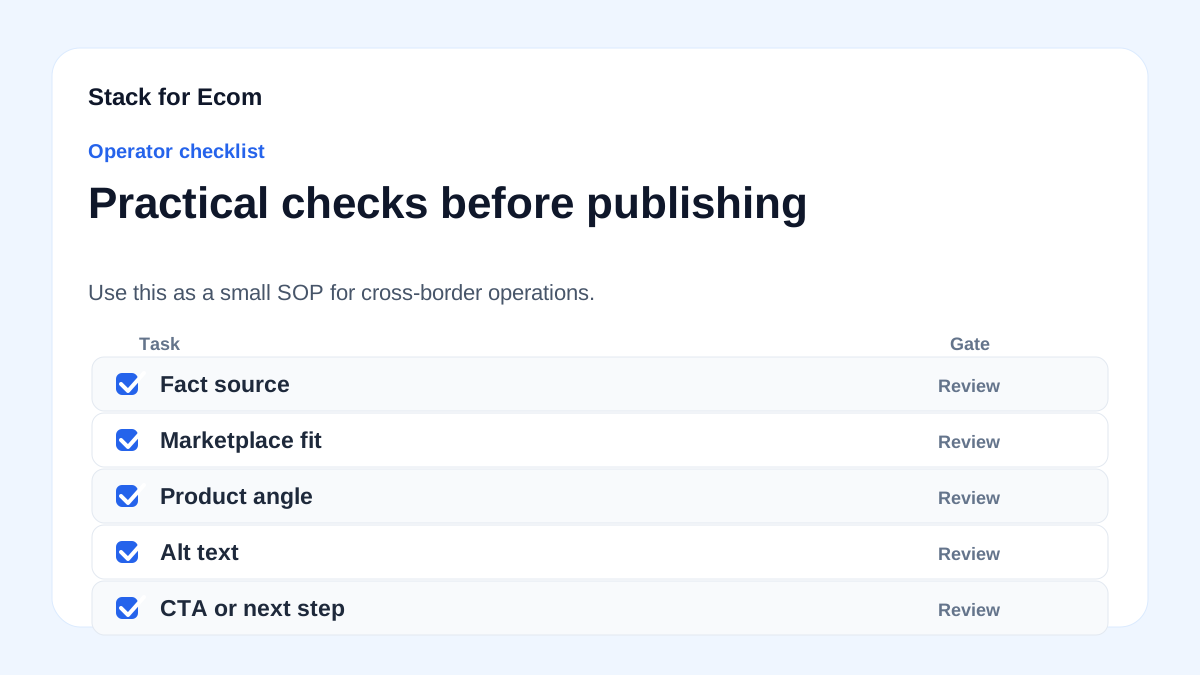
Practical tip: Create a triage checklist that includes: product match, order size, target market, and any red flags like requests for unusual payment terms or shipping destinations. This helps your team focus on leads that are most likely to convert.
2. Crafting the First Response: Speed and Professionalism
Speed matters. Studies show that responding within the first hour can significantly increase your chances of conversion. Aim to send an initial acknowledgment within 24 hours, even if it’s just a brief note saying you’ve received the inquiry and will provide a detailed quote soon. This builds trust and keeps you top-of-mind.
Your first response should be professional, concise, and personalized. Reference the buyer’s specific request, introduce your company briefly, and outline next steps. For example:
“Dear Mr. Chen, thank you for your inquiry about our stainless steel water bottles. We have received your request for 2,000 units with custom logo printing. We are preparing a detailed quote and will send it within 48 hours. Meanwhile, could you confirm your target price and delivery port?”
Use email templates to standardize responses, but always customize key details. This is where a CRM tool can help—track interactions, set reminders, and store buyer history.
Tool angle: The Global Business Navigator chatbot can help you answer general export process questions, like documentation requirements or export regulations, which you might need to reference in your response. However, it cannot provide company-specific advice, so use it only for general guidance.
3. Qualifying the Buyer: Asking the Right Questions
Before you invest hours in a detailed quote, qualify the buyer. Ask questions about their business, intended use of the product, target market, and expected order volume. This helps you tailor your offer and avoid wasting time on tire-kickers.
For example, if a buyer says they are a distributor in Brazil, you might need to check if your product complies with local regulations. If they are an end-user, they might need after-sales support. Use a qualification checklist that includes: company background, import experience, payment capability, and shipping terms.
Example: A buyer from Nigeria inquires about your solar panels. You ask about their installation partner and whether they need training. Their vague answer may signal a lack of experience, so you might require a higher deposit or a letter of credit.
Remember, the chatbot from ITA can help with general market entry questions (e.g., tariffs, export documentation), but it won’t tell you if a specific buyer is reliable. Always do your own due diligence.
4. Providing Quotes and Product Information
Once a buyer is qualified, send a detailed quote that includes product specifications, pricing (with and without shipping), payment terms, lead time, and validity period. Be transparent about any additional costs like customs duties or certifications.
Use a standardized quote template to ensure consistency. Include high-quality product images, specification sheets, and any relevant certifications (e.g., CE, RoHS). This builds credibility and reduces back-and-forth.
Example: You sell custom packaging. Your quote includes a breakdown of material costs, printing costs, and MOQ. You also mention that you can provide samples for an additional fee, which is refundable with the first order.
For complex products, consider offering a virtual meeting or video call to walk the buyer through the specs. This can be a differentiator.
5. Handling Negotiations and Closing
Negotiations are inevitable. Be prepared to discuss price, payment terms, and delivery schedules. Set clear boundaries before you start—know your minimum price and your best payment terms. Use a concession strategy: give a little on price but ask for something in return, like a larger order or faster payment.
For example, if a buyer asks for a 5% discount, you might agree if they increase the order quantity by 20% or pay a 30% deposit upfront. This keeps the deal profitable.
Once terms are agreed, send a formal purchase order or sales contract. Include all agreed-upon details to avoid misunderstandings. This is also a good time to remind the buyer about export compliance, especially if your product is regulated.
Compliance note: The Global Business Navigator chatbot is trained to decline out-of-scope requests and should not be used as legal advice. If you have questions about export controls, consult a trade attorney or use official ITA resources.
6. Following Up and Managing Relationships
After the sale, don’t disappear. Send a follow-up email to confirm the order, provide tracking information, and ask for feedback. This builds long-term relationships and encourages repeat business.
Use a CRM to schedule follow-ups at key milestones: after shipment, upon delivery, and 30 days after the buyer receives the product. This helps you catch issues early and maintain a positive reputation.
Example: You ship a batch of ceramic mugs to a buyer in Australia. After delivery, you send a survey asking about product quality and packaging. The buyer reports a few broken items. You promptly offer replacements, which earns you a five-star rating and a repeat order.
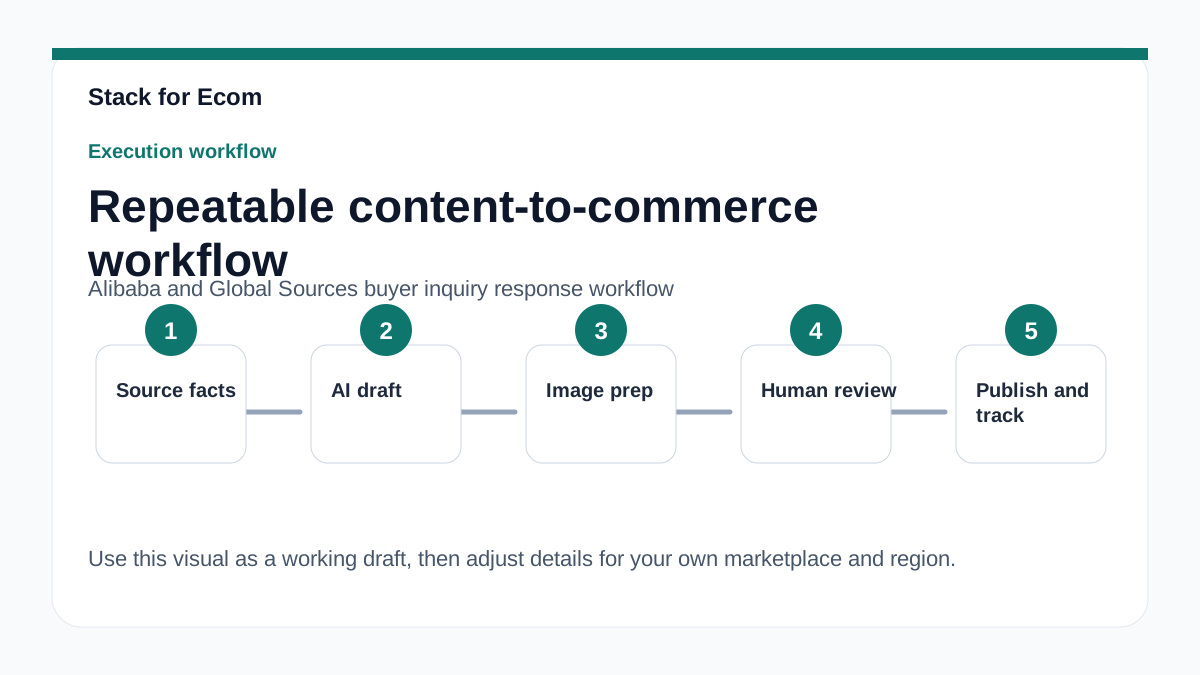
Step-by-step checklist
- Set up a shared inbox for all Alibaba and Global Sources inquiries to avoid missing messages.
- Create a triage scoring system (e.g., 1-5) based on product match, order size, and buyer location.
- Respond to every inquiry within 24 hours with a professional acknowledgment.
- Use a qualification checklist to gather buyer details: company, market, volume, and payment capability.
- Prepare a standard quote template with clear pricing, lead times, and payment terms.
- Include product specs and certifications in your quote to reduce back-and-forth.
- Set negotiation boundaries (minimum price, payment terms) before entering discussions.
- Send a formal contract or PO after verbal agreement, including all terms.
- Schedule follow-ups at shipment, delivery, and post-delivery to ensure satisfaction.
- Log all interactions in a CRM to track history and identify repeat buyers.
- Use official resources (like ITA’s Global Business Navigator) for general export process questions, but verify critical details.
- Review your workflow monthly to identify bottlenecks and improve response times.
Potential pitfalls
- Slow response times: Delays can lose deals to competitors. Prevention: Set a 24-hour SLA and use automated acknowledgments if needed.
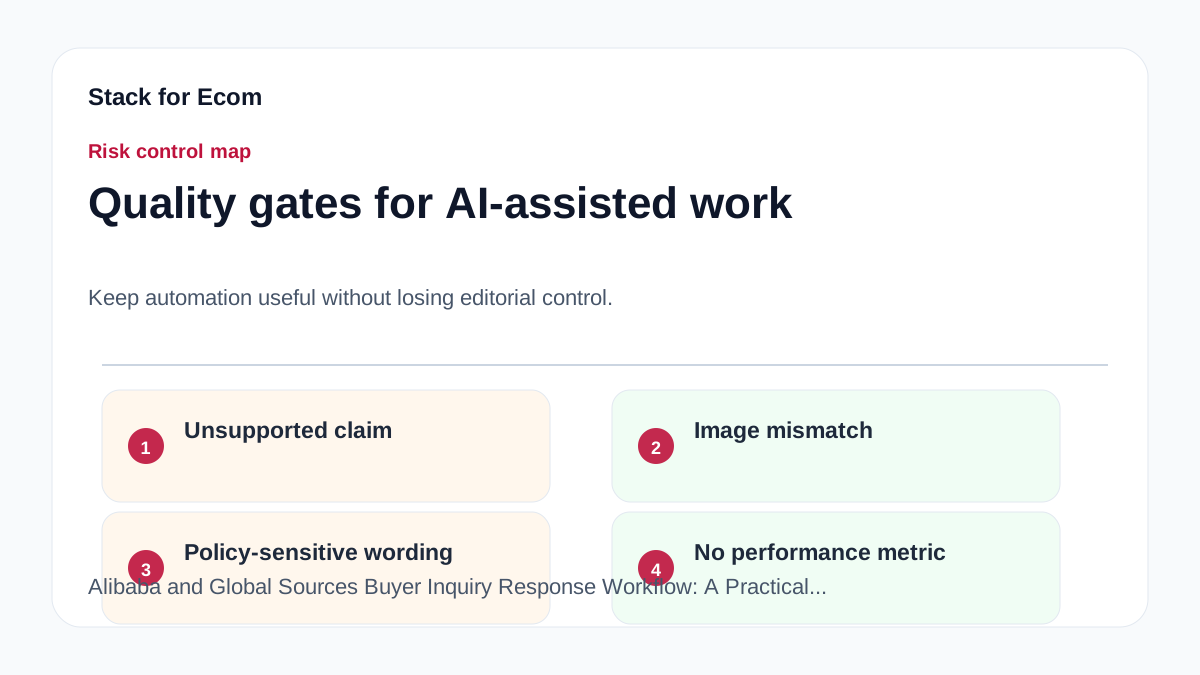
- Ignoring red flags: Some inquiries may be scams or involve restricted products. Prevention: Use a red-flag checklist and verify buyer credentials.
- Over-relying on AI chatbots: Chatbots like Global Business Navigator may produce inaccurate or incomplete information. Prevention: Always double-check responses with official sources or experts.
- Sharing sensitive data: Entering PII or proprietary info into chatbots can be risky. Prevention: Never input sensitive data; use generic terms.
- Misunderstanding translation nuances: Chatbot translations may lose meaning, especially for acronyms. Prevention: Confirm critical details in writing and ask for clarification.
- Not following up: Many deals die after the first quote. Prevention: Set follow-up reminders and send value-added content.
- Ignoring compliance: Export rules are strict; inaccurate advice is not a defense. Prevention: Consult a trade attorney for complex shipments.
Suggested visuals
- Workflow diagram: A flowchart showing the inquiry response process from triage to follow-up.
- Response time chart: A bar chart showing conversion rates vs. response time (e.g., <1 hour vs. >24 hours).
- Quote template screenshot: An example of a professional quote with key fields highlighted.
- Checklist infographic: A visual checklist of the 12-step SOP for quick reference.
- Chatbot disclaimer screenshot: A screenshot of the Global Business Navigator’s beta disclaimer to emphasize verification.
- Comparison table: A table comparing response workflows of top-performing vs. average exporters.
Who this helps / Who should avoid
Who this helps:
- Small and medium-sized exporters who sell on Alibaba or Global Sources and want to streamline their inquiry management.
- Sales teams that need a structured process to handle high volumes of leads.
- New exporters who need a compliance-aware approach to buyer communication.
Who should avoid:
- Companies with a highly specialized sales process that requires deep customization—this workflow is a baseline, not a one-size-fits-all.
- Businesses that already have a mature CRM and advanced automation; they may need more sophisticated tools.
- Those selling exclusively through their own website and not using B2B platforms.
Conclusion
Handling buyer inquiries on Alibaba and Global Sources doesn’t have to be chaotic. By implementing a structured workflow—triage, respond, qualify, quote, negotiate, and follow up—you can improve response times, increase conversion rates, and reduce compliance risks. Use tools like the ITA’s Global Business Navigator for general export questions, but always verify critical information and seek professional advice when needed.
Start by adopting the checklist in this guide and adapt it to your specific products and markets. With practice, you’ll turn more inquiries into profitable orders and build lasting relationships with international buyers.
References
- https://www.trade.gov/export-solutions
- https://advertising.amazon.com/library/guides/getting-started-with-sponsored-ads
- https://support.google.com/google-ads/answer/6275312
- https://www.trade.gov/ecommerce