TL;DR
- Use a structured template to compare marketplace fees, shipping costs, and payment risks across Amazon global selling and other channels.
- Amazon global selling accounts cover multiple regions; referral fees vary by category and region; optional services like FBA add costs.
- The ITA's Global Business Navigator (beta) can help with general exporting info but is not a substitute for professional advice.
- Build a template with columns for fee types, shipping terms, payment risks, and compliance requirements.
- Verify all fee schedules and regulations for each target market before committing.
Introduction
Expanding into cross-border ecommerce is attractive, but sellers often underestimate the complexity of comparing marketplace fees, shipping costs, and payment risks across multiple regions. A product that is profitable on Amazon.com may lose money on Amazon.co.uk once you factor in currency conversion, international shipping, and different referral fee percentages. Without a structured comparison, you risk underpricing, unexpected charges, or even compliance penalties.
This article provides a practical template to help you systematically evaluate marketplaces—whether you are using Amazon Global Selling, selling via your own site, or exploring other channels. You will learn how to capture fee structures, shipping variables, and payment risks in one place. We also reference the ITA's Global Business Navigator chatbot, which can provide general export information to support your research, but we emphasize that you must verify all details independently.
Use this guide to build a reusable spreadsheet or document that you can update as fees change or as you add new markets. The template will help you compare apples to apples, avoid hidden costs, and make data-driven decisions about where to sell.
Main Content
Understanding the Fee Landscape Across Marketplaces
Marketplace fees are rarely a single flat rate. On Amazon, referral fees vary by product category and are calculated as a percentage of the total price or a minimum amount, whichever is greater. For example, a book might have a different referral fee than an electronic accessory. Additionally, if you use Fulfillment by Amazon (FBA), you pay storage and fulfillment fees on top of referral fees. Amazon Ads (like Sponsored Products) is another optional cost that can be controlled by setting budgets.
When comparing marketplaces, you need to capture not only the base commission but also any subscription fees. For Amazon, the Professional selling plan fee is $39.99 per month in the US, but if you link global accounts, you pay the lower of that amount or the sum of selling plan fees for each region with active listings. This means a seller with accounts in North America and Europe may pay less than the sum of individual fees, which is a key detail to include in your template.
Other marketplaces (e.g., eBay, Etsy, Walmart) have their own fee structures, but the same logic applies: list the commission, subscription, and any additional service fees. Your template should have a row for each fee type and a column for each marketplace/region.
Shipping Costs: More Than Just Postage
Shipping costs in cross-border selling include domestic shipping to a consolidation point, international freight, customs duties, and last-mile delivery. Amazon's FBA can simplify this by handling storage and delivery, but you pay for the service. If you sell via your own site, you must calculate shipping rates per country, including any insurance and tracking.
Your template should include columns for:
- Shipping method (e.g., FBA, self-fulfilled, third-party logistics)
- Estimated shipping cost per unit to the customer
- Average delivery time
- Who pays for return shipping
- Customs and import duties (who bears the cost)
For example, selling a small gadget to a customer in Germany may incur a higher shipping cost than selling to a customer in the US, but the referral fee might be lower. Your template helps you see the total landed cost.
Payment Risk and Currency Considerations
Payment risk includes currency fluctuation, payment processing fees, chargebacks, and the risk of non-payment. When selling internationally, you may receive payments in different currencies. Your template should capture:
- Payment methods available (e.g., credit card, PayPal, bank transfer)
- Processing fees per transaction
- Currency conversion fees
- Chargeback risk level (e.g., higher for certain regions)
- Settlement time (how long until you receive funds)
Amazon handles payments for you, but you still face currency conversion risk when transferring funds to your bank. Other marketplaces may offer different payout options. Your template should have a section for payment risks, with a rating (low/medium/high) and notes on mitigation.
Compliance and Regulatory Factors
Each country has its own product requirements, including taxes, regulations, compliance, safety, and listing standards. Amazon provides tools like Manage Your Compliance and Compliance Reference to help you navigate these, but you still need to research each market. Your template should include a column for compliance requirements, with links to official resources.
The ITA's Global Business Navigator chatbot can provide general exporting information, but it cannot answer company-specific or market-specific questions. It is trained only on public Export Solutions content and may produce inaccurate responses. Use it as a starting point, but always verify with official sources and consider consulting a trade attorney or customs broker.
Building the Comparison Template
A practical template can be built in Excel or Google Sheets. Here is a suggested structure:
- Marketplace/Region – e.g., Amazon US, Amazon UK, Amazon Japan, eBay UK
- Subscription Fee – monthly or per-listing fee
- Referral Fee % – base commission
- Minimum Referral Fee – if applicable
- FBA/fulfillment fee – per unit, if used
- Advertising cost – estimated CPC or monthly budget
- Shipping cost to customer – average per unit
- Customs/duties – who pays and estimated rate
- Payment processing fee – % per transaction
- Currency conversion cost – % or fixed
- Chargeback risk – low/medium/high
- Settlement time – days
- Compliance complexity – low/medium/high with notes
- Total estimated cost per unit – sum of all relevant fees
Use this template to compare two or three markets side by side. For example, a seller of handmade jewelry might compare Amazon US vs. Etsy UK. The template will reveal that Etsy charges a listing fee and a transaction fee, but may have lower shipping costs if you use local fulfillment.
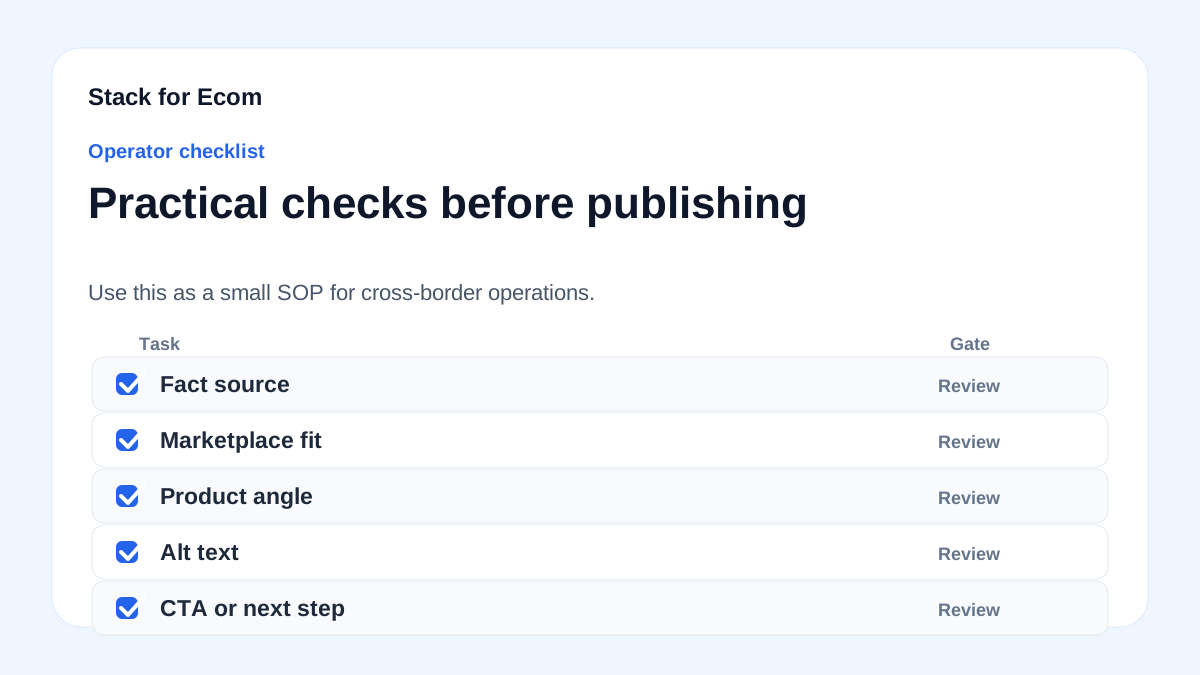
Step-by-step checklist
- List target marketplaces and regions – Include Amazon global selling regions (North America, Europe, Asia-Pacific, etc.) and any other platforms you consider.
- Gather official fee schedules – Visit each marketplace's seller page (e.g., Amazon's fee schedule per store) and note referral fees, subscription fees, and minimum amounts.
- Identify optional services – For Amazon, note FBA fees and advertising costs. For other platforms, note any promoted listing fees.
- Estimate shipping costs – Use carrier quotes or FBA fulfillment fees for a sample product. Include international shipping and last-mile delivery.
- Research customs and duties – Check import duty rates for your product category in each target country. Note who pays (seller or buyer).
- Assess payment risks – List payment methods, processing fees, currency conversion costs, and chargeback history if available.
- Review compliance requirements – Use Amazon's compliance tools or government resources (like Trade.gov) to identify product regulations, taxes, and labeling requirements.
- Fill the template – Enter all data in a spreadsheet. Use formulas to calculate total estimated cost per unit.
- Verify with official sources – Cross-check all figures with the marketplace's current fee schedule and government trade pages.
- Update regularly – Set a reminder to review fees and regulations quarterly, as they can change.
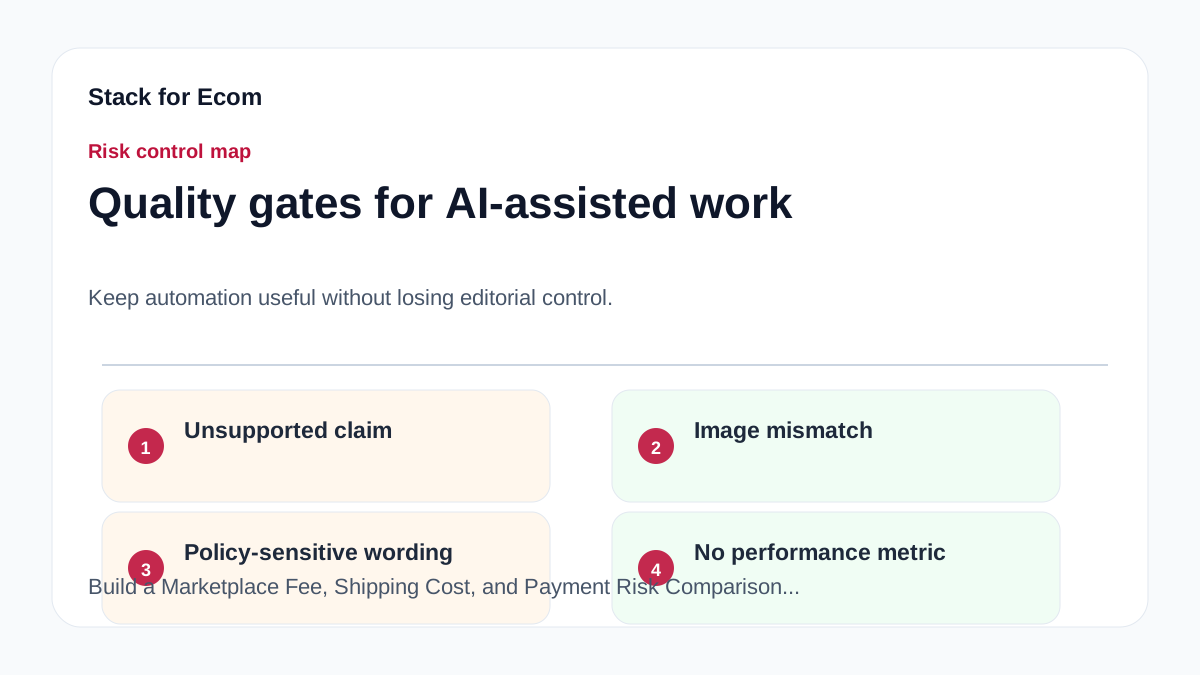
Potential pitfalls
- Ignoring minimum referral fees – Some categories have a minimum fee even if the percentage is low. Always check the fee schedule for both percentage and minimum.
- Underestimating shipping costs – International shipping can be higher than expected, especially for bulky items. Get real quotes and include insurance.
- Overlooking currency conversion fees – Payment processors often charge 2-3% above the exchange rate. Include this in your cost calculation.
- Assuming one fee schedule fits all regions – Amazon referral fees vary by store. A product may have a different fee in Japan than in the US.
- Relying solely on AI chatbots – The ITA's Global Business Navigator is a beta tool and may provide inaccurate responses. Always verify with official sources and seek professional advice for legal matters.
- Forgetting compliance costs – Product testing, certifications, and labeling can add significant cost. Include these in your template as a separate column.
- Not updating the template – Fees and regulations change. A stale template can lead to pricing errors.
Suggested visuals
- Fee comparison bar chart – Show referral fee percentages for a sample product across Amazon US, UK, and Japan.
- Shipping cost breakdown table – A table comparing FBA vs. self-fulfilled shipping costs for a sample product to different regions.
- Payment risk matrix – A 2x2 grid with currency volatility on one axis and chargeback risk on the other, plotting each marketplace.
- Screenshot of a template spreadsheet – Show a sample filled template with formulas for total cost per unit.
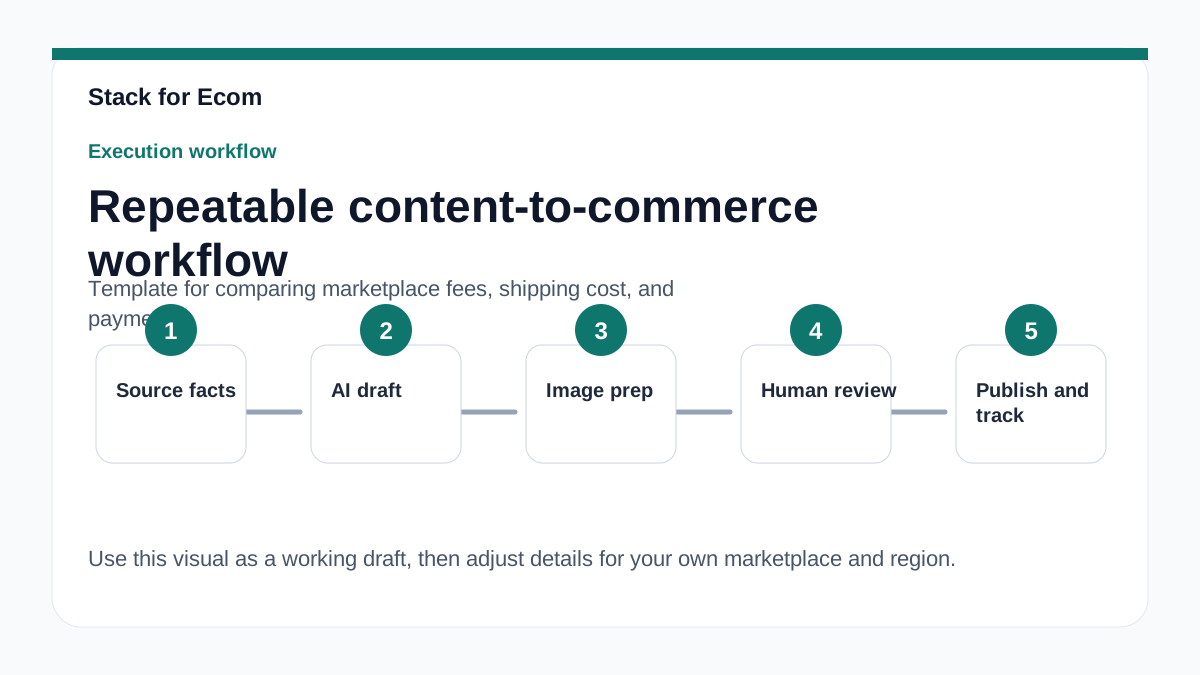
- Workflow diagram – Steps from product research to listing, highlighting where fee comparison fits.
- Compliance checklist infographic – Visual checklist of common requirements (tax registration, product safety, labeling) per region.
Who this helps / Who should avoid
Helps:
- Small and medium-sized ecommerce sellers planning to expand internationally.
- Exporters who want a structured way to compare multiple marketplaces.
- Operations teams that need a repeatable process for evaluating new markets.
Who should avoid:
- Sellers with a single domestic market and no intention to go cross-border.
- Those who prefer a quick, back-of-the-envelope calculation and are not willing to maintain a detailed template.
- Businesses with highly customized products that require extensive compliance research beyond what a template can capture.
Conclusion
Comparing marketplace fees, shipping costs, and payment risks is essential for profitable cross-border selling. A structured template helps you avoid hidden costs and make informed decisions. Use the ITA's Global Business Navigator as a starting point for general export information, but always verify with official fee schedules and trade regulations. Build your template, keep it updated, and you will be better equipped to choose the right marketplaces for your products.
References
- https://www.trade.gov/ecommerce
- https://sell.amazon.com/global-selling
- https://advertising.amazon.com/library/guides/getting-started-with-sponsored-ads
- https://www.trade.gov/export-solutions