TL;DR
Cross-border returns and after-sales processes are complex due to customs regulations, import responsibilities, and documentation requirements. This article provides a practical checklist for U.S. exporters to manage returns efficiently, avoid compliance pitfalls, and leverage tools like the ITA’s Global Business Navigator Chatbot for general guidance. Key actions include verifying import legality, ensuring accurate customs declarations, and understanding de minimis thresholds. Always double-check AI-generated advice against official sources.
Introduction
Returns are an inevitable part of cross-border ecommerce, but for U.S. exporters, they introduce layers of complexity that domestic returns don’t. When a customer in another country wants to send back a product, you must navigate customs re-entry, duty refunds, and potential compliance issues. Many small operations teams underestimate the administrative burden—mislabeling a return shipment can lead to fines, seizure, or lost customer trust. The business impact is direct: poor after-sales handling erodes margins, damages brand reputation, and can even trigger regulatory penalties.
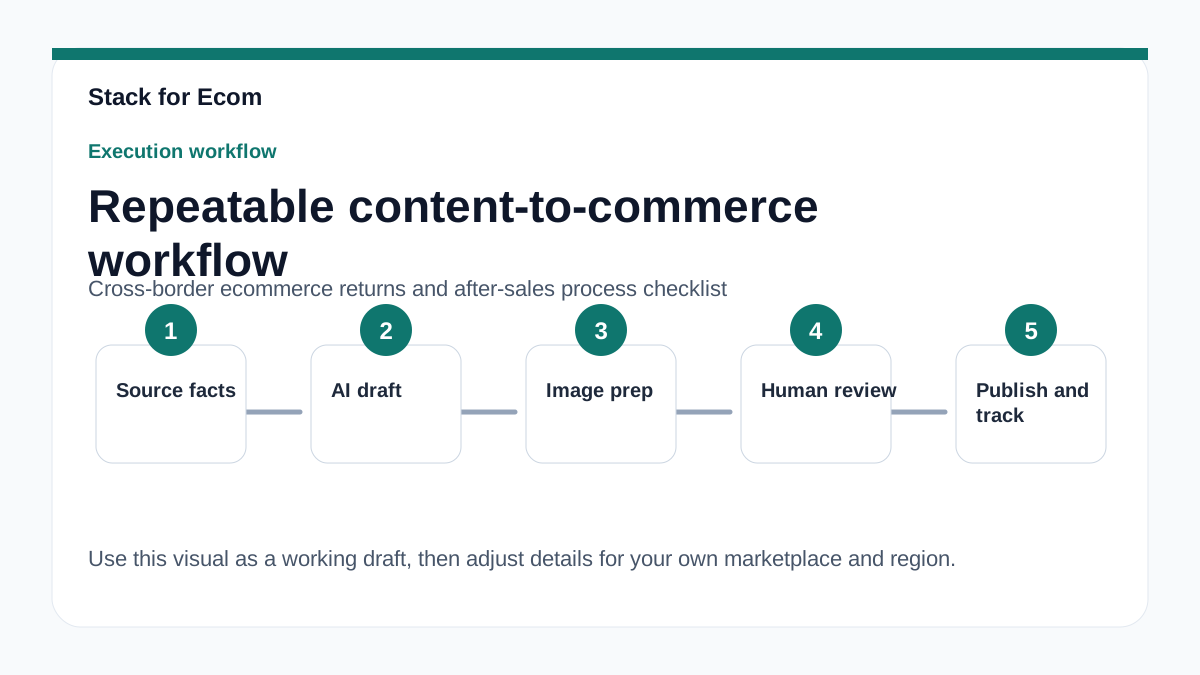
This article is designed as a practical guide for cross-border sellers and export teams. It breaks down the return process into a repeatable SOP, highlights critical customs rules, and shows how to use available tools—like the ITA’s Global Business Navigator Chatbot—for general process information. By following the checklist and avoiding common pitfalls, you can streamline your after-sales operations, reduce costs, and keep customers satisfied across borders.
Main Content
Understanding Customs Responsibilities in Returns
When a product is returned to the United States from a foreign buyer, it is technically being imported back into the U.S. According to U.S. Customs and Border Protection (CBP), “when goods move from any foreign country to the United States, they are being imported and must comply with specific rules and regulations.” This means your business—or the buyer—becomes the importer of record for the return shipment. The buyer is typically responsible for ensuring goods comply with state and federal import regulations, including health codes and quota restrictions. However, as the seller, you must coordinate with the buyer to avoid violations.
For example, if you sell electronics to a customer in Germany and they return a defective unit, the shipment entering the U.S. must have accurate documentation. CBP requires a precise, specific cargo description in plain language, detailed enough to identify size, shape, and characteristics (per 19 CFR §§ 4.7a, 122.48a, etc.). Superfluous information like personally identifiable information (PII) or packaging type should not be included in the commodity description field. Misrepresenting the value or description is illegal and can lead to legal action, fines, or seizure of goods.
De Minimis and Duty Considerations for Returned Goods
De minimis rules allow low-value shipments to enter the U.S. with minimal paperwork. According to CBP, total de minimis Bills of Lading reached 1.36 billion in fiscal year 2024, with a total declared value of $64.6 billion. For returned goods valued under $2,500 shipped via international postal service and not subject to quota or restrictions, a CBP official typically prepares the paperwork and assesses duty for release. However, if the original export was duty-free or you are claiming a duty refund, you must have proof of export and proper documentation.
For example, if a customer in Canada returns a $200 garment that was originally exported under a free trade agreement, you may need to file a duty drawback claim. The returned shipment must be declared accurately, with the original purchase price in U.S. dollars, quantity, weight, and country of origin. Failure to do so could result in detention or destruction of goods. As a best practice, maintain a digital log of all export transactions, including invoices and customs declarations, to streamline return processing.
Documentation Requirements for Return Shipments
Accurate documentation is the backbone of a smooth return. The seller must provide accurate information on the Customs declaration, including a detailed English description, quantity, purchase price in U.S. dollars, weight, and country of origin. Foreign shipments without a U.S. Customs declaration form and invoice may be subject to seizure, forfeiture, or return to sender. For returns, you typically need a commercial invoice or a pro forma invoice indicating “Returned Goods” and referencing the original export entry number if available.
A common example: a U.S. furniture exporter ships a defective table to a customer in Japan. When the customer returns it, the seller must ensure the customs declaration states “Table, wooden, defective return” with a value of $0 or the original value, depending on the reason for return. If the value is misstated as $0 when the original value was $500, CBP may flag the shipment for undervaluation. Always consult CBP guidelines or use a customs broker for high-value returns.
Leveraging the Global Business Navigator Chatbot for Process Guidance
The Global Business Navigator Chatbot, a beta tool from the International Trade Administration (ITA), can provide general information on the exporting process for U.S. exporters. It is trained on ITA’s export-related content and uses Microsoft’s Azure AI services. While it cannot provide product- or market-specific advice, it can help you understand basic steps for returns, such as required documentation or duty drawback eligibility. However, as a beta product, the Chatbot may produce inaccurate or incomplete information, and its responses should not be used as legal or professional advice.
For instance, you could ask the Chatbot: “What documents are needed for a returned export shipment to the U.S.?” It might list a commercial invoice and customs declaration. But you must double-check its responses using provided references or by visiting the Export Solutions web pages on Trade.gov. The Chatbot does not collect user information, so you can ask general questions without risking PII exposure. Remember, inaccurate advice from the Chatbot would not be a defense to violating any export rules or regulations.
Step-by-step checklist
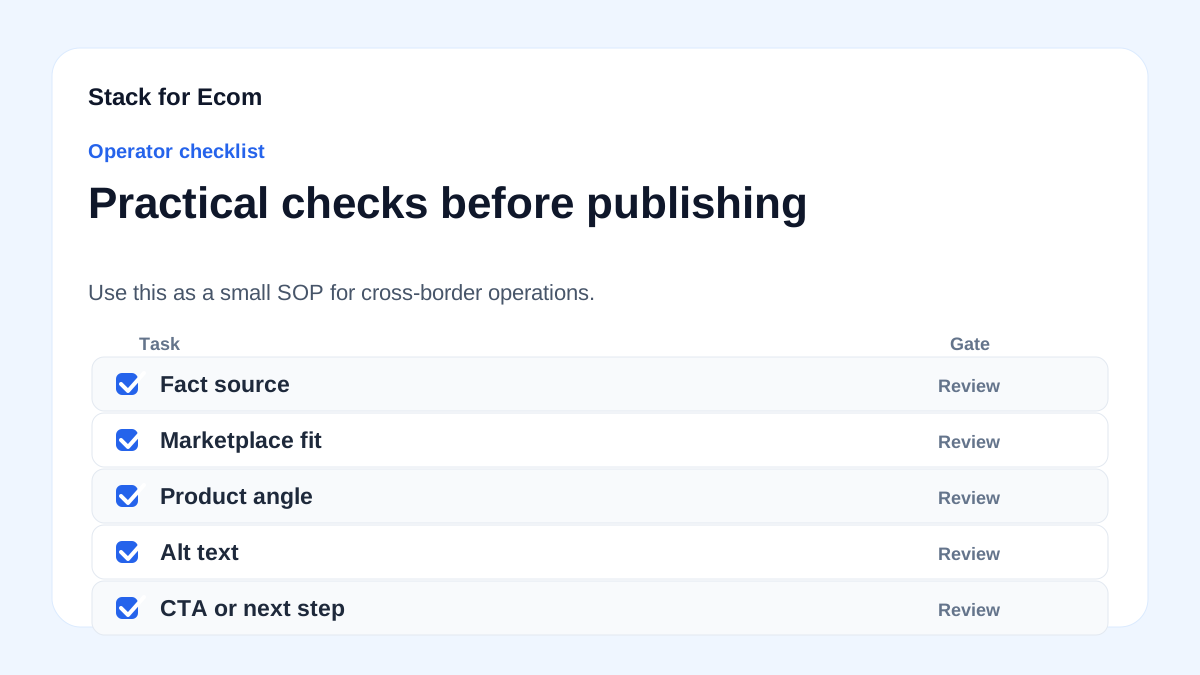
- Verify import legality before return: Confirm with the buyer that the returned goods can be legally imported into the U.S., especially if they are subject to health codes or quota restrictions.
- Obtain original export documentation: Retrieve the original commercial invoice, packing list, and customs declaration for the export to reference in the return shipment.
- Prepare a return customs declaration: Create a commercial invoice or pro forma invoice with a detailed English description, quantity, purchase price in U.S. dollars, weight, and country of origin. Mark it as “Returned Goods.”
- Include the original export entry number: If available, reference the original entry number on the return documentation to facilitate duty drawback or re-importation.
- Check de minimis eligibility: If the return value is under $2,500 and shipped via international postal service, confirm it is not subject to quota or restrictions to simplify CBP processing.
- Advise the buyer on shipping terms: Clearly communicate who pays for return shipping and insurance, and provide a prepaid return label if possible.
- Double-check cargo description: Ensure the commodity description is precise and in plain language (per 19 CFR §§ 4.7a, etc.), avoiding PII or packaging details.
- Use ITA resources for general guidance: Consult the Global Business Navigator Chatbot or Export Solutions web pages for process questions, but verify all responses against official sources.
- Notify your customs broker: If you use a broker, inform them of the return in advance to ensure proper clearance.
- Track the return shipment: Monitor the return via carrier tracking and confirm CBP clearance before issuing a refund or replacement.
Potential pitfalls
- Misstating the value on customs declaration: Undervaluing a return to avoid duties is illegal and can lead to fines or seizure. Always declare the original purchase price or fair market value.
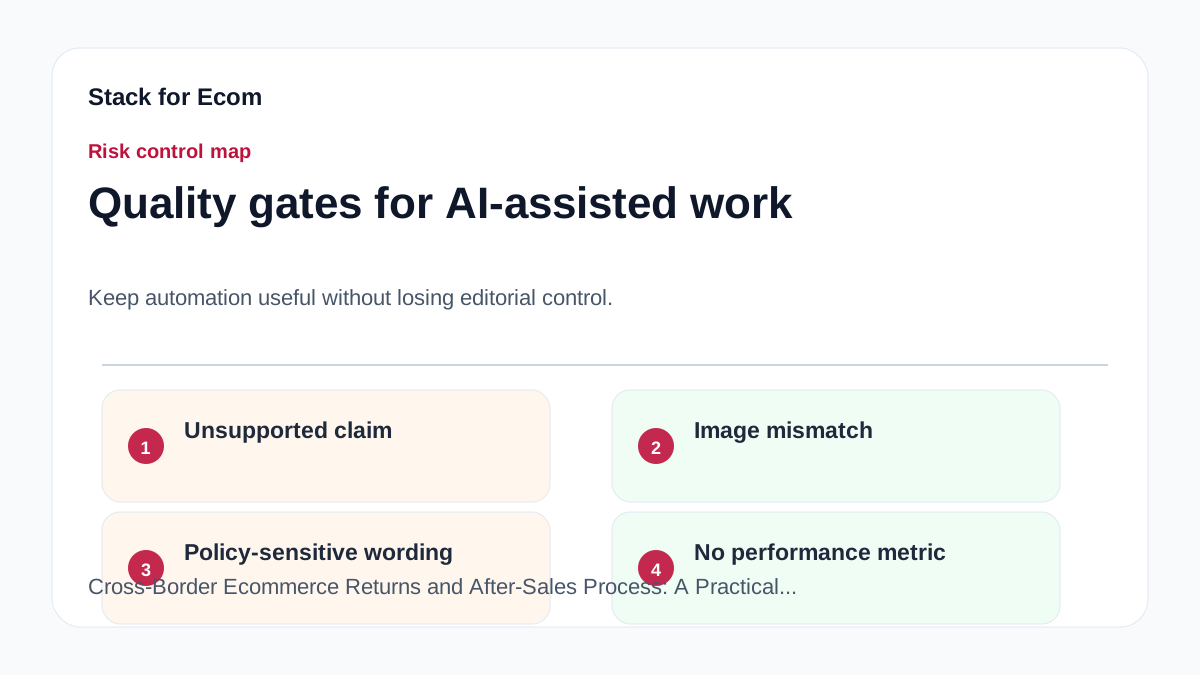
- Ignoring quota restrictions: Some products like textiles or agricultural goods have quota limits. Returning them without checking quota availability can result in detention.
- Failing to provide accurate cargo description: Using vague terms like “used goods” or “returned items” may cause CBP to hold the shipment. Be specific: “Cotton t-shirt, size M, defective.”
- Relying solely on AI chatbot advice: The Global Business Navigator Chatbot is a beta tool and may produce inaccurate information. Always cross-check with official CBP or ITA sources.
- Not verifying buyer’s import responsibilities: The buyer becomes the importer for the return. If they fail to comply, the goods may be destroyed, and you may lose the shipment.
- Overlooking duty drawback opportunities: If you paid duties on the original export, you may be eligible for a refund. File the claim within the required timeframe.
- Using PII in documentation: Superfluous information like buyer’s social security number or email should not appear in the commodity description field.
Suggested visuals
- Flowchart: “Cross-Border Return Process from Buyer Request to CBP Clearance” – illustrates steps from return authorization to duty refund.
- Table: “Required Fields for Return Customs Declaration” – lists description, value, weight, country of origin, and example entries.
- Screenshot: “Global Business Navigator Chatbot Interface” – shows how to ask a general return question and where to find reference links.
- Infographic: “De Minimis Thresholds for Return Shipments” – visualizes value limits and postal service rules.
- Checklist graphic: “10-Step Return SOP for Exporters” – a printable one-page checklist for operations teams.
- Comparison chart: “Common Mistakes vs. Best Practices in Return Documentation” – side-by-side examples of correct and incorrect customs declarations.
Who this helps / Who should avoid
This helps:
- U.S. exporters selling directly to consumers (DTC) in foreign markets.
- Small to mid-size ecommerce operations teams handling returns manually.
- Export managers who need a repeatable SOP for after-sales processes.
- Businesses using AI tools like the Global Business Navigator Chatbot for general guidance.
Who should avoid:
- Companies with complex supply chains involving multiple countries and bonded warehouses—these require a customs broker or legal counsel.
- Sellers of prohibited or restricted items (e.g., hazardous materials) where returns may be subject to additional regulations.
- Businesses looking for product- or market-specific return advice—this guide provides general principles only.
Conclusion
Cross-border returns don’t have to be a headache if you approach them with a structured process. By understanding customs responsibilities, maintaining accurate documentation, and using tools like the ITA’s Global Business Navigator Chatbot for general guidance, you can reduce errors and keep your after-sales operations efficient. Remember that the chatbot is a beta tool and its responses must be verified against official sources. Start implementing the checklist today to protect your margins, comply with regulations, and build trust with international customers.
References
- https://www.trade.gov/ecommerce
- https://www.cbp.gov/trade/basic-import-export/internet-purchases
- https://www.cbp.gov/trade/basic-import-export/e-commerce
- https://www.trade.gov/export-solutions
- https://ads.tiktok.com/help/article/get-started-tiktok-ads-manager
- https://ads.tiktok.com/help/article/about-catalogs