TL;DR
Cross-border returns are complex due to customs regulations, shipping costs, and buyer responsibilities. This article provides a step-by-step checklist to manage after-sales processes, avoid compliance pitfalls, and reduce operational friction. Key points: buyers are importers responsible for customs clearance; accurate CBP declarations are critical; de minimis shipments are rising but subject to scrutiny; and tools like the Global Business Navigator Chatbot can offer general guidance but must be verified.
Introduction
Cross-border ecommerce sellers face a unique challenge: returns and after-sales service are not just about customer satisfaction—they involve customs compliance, shipping logistics, and legal liability. When a buyer in the U.S. returns an item to a seller in another country, the goods must clear U.S. Customs and Border Protection (CBP) again, and the buyer (now the importer) must ensure all regulations are met. Non-compliance can lead to fines, seizure, or destruction of goods. This article is designed for ecommerce operators, export managers, and small teams who need a practical, repeatable checklist to handle returns and after-sales processes without getting tangled in red tape.
Whether you’re a U.S. exporter or a foreign seller shipping to the U.S., understanding the import process is essential. The Global Business Navigator Chatbot—a beta AI tool from the International Trade Administration (ITA)—can provide general exporting process information, but it is not a substitute for professional advice. Use this article as your operational guide, and always double-check specific requirements with official sources or a customs broker.
Main Content
1. Understanding the Buyer’s Role as Importer
When goods move from any foreign country to the United States, they are being imported and must clear U.S. Customs and Border Protection (CBP). The buyer becomes the importer and is responsible for ensuring goods comply with all state and federal import regulations. Non-compliance can result in fines, detention, or destruction of goods. For returns, this means the buyer must initiate the return shipment and handle customs documentation. Sellers should clearly communicate this responsibility in their return policies.
Before purchasing from a foreign source, buyers should verify if goods can be legally imported, whether for personal or commercial use, and understand shipping costs and delivery arrangements. Sellers can facilitate this by providing accurate product descriptions and HS codes. For example, if a U.S. buyer returns a defective electronic device to a Chinese seller, the buyer must ensure the device is not restricted (e.g., due to battery regulations) and must provide a commercial invoice for the return shipment.
2. CBP Declaration Requirements for Returns
Sellers must provide accurate information on CBP declarations, including a detailed English description, quantity, purchase price in U.S. dollars, weight, and country of origin. Misrepresentation is illegal and can lead to seizure or fines. For return shipments, the same rules apply. The declaration must clearly state that the goods are returns (e.g., "Return of defective merchandise – original shipment from [date]"). Foreign shipments without a CBP declaration form and invoice may be subject to seizure, forfeiture, or return to sender.
Additionally, 19 CFR §§ 4.7a, 122.48a, 123.91, 123.92, and 128.21 require a precise, plain-language cargo description detailed enough for CBP to identify size, shape, and characteristics. Superfluous information such as personally identifiable information (PII), packaging type, or carrier disclaimers must not be included in the commodity description field. For example, instead of writing "Used electronics – no PII," write "Defective smartphone – model XYZ – weight 0.5 kg – country of origin China – return from original purchase."
3. De Minimis Shipments and Returns
De minimis shipments (value under $800) enter the U.S. duty-free under certain conditions. CBP data shows total de minimis shipments rose from 636.7 million in FY2020 to 1.36 billion in FY2024, then dropped to 942.5 million in FY2025. Total de minimis declared value fluctuated from $67 billion in FY2020 to $64.6 billion in FY2024, and fell to $48.1 billion in FY2025. Air was the dominant mode for de minimis BOLs, with 1.1 billion in FY2024 and 794.8 million in FY2025.
For returns, if the original shipment was de minimis, the return shipment may also qualify if the value is under $800. However, CBP’s E-Commerce Strategy focuses on educating importers on customs compliance, streamlining enforcement processes, and improving data collection. Sellers should track de minimis thresholds and ensure return shipments do not exceed them unless proper duties are paid. Entry Type 86 BOLs grew from 122.1 million in FY2020 to 948 million in FY2024, then declined to 635.3 million in FY2025, indicating increased use of this streamlined entry for low-value shipments.
4. Shipping and Logistics for Returns
Goods can be shipped via international postal service, courier, or freight. For postal shipments under $2,500 in value and not subject to quota or restrictions, CBP typically prepares a mail entry and releases the item after duty assessment. If a seller does not arrange postal or door-to-door delivery, the buyer must hire a customs broker or clear goods themselves at the port of entry. Storage charges can be expensive if goods are held up by CBP due to quota restrictions or other issues.
For returns, sellers should pre-arrange a return shipping label that includes all necessary customs documentation. Provide the buyer with a prepaid shipping label and a commercial invoice that clearly states the reason for return. For example, a U.S. buyer returning a garment to a Vietnamese seller should receive a label that includes the original order number, HS code, and a statement like "Return of defective clothing – original value $50 – no commercial value." This reduces the risk of seizure and speeds up clearance.
5. Using AI Tools for General Guidance
The Global Business Navigator Chatbot is a beta AI tool from the International Trade Administration (ITA) that provides general exporting process information and resources for U.S. exporters. It is trained on ITA's export-related content using Microsoft Azure AI services and aims to understand non-expert language, idiomatic expressions, and foreign languages. As a beta product, the Chatbot may produce inaccurate or incomplete responses and is trained to decline out-of-scope or inappropriate requests.
Users must double-check the Chatbot's responses using provided references or Export Solutions web pages and should not use its responses as legal or professional advice. The Chatbot does not collect user information or use chat history to learn; users should not enter personally identifiable information (PII), sensitive, or proprietary data. Conversations with the Chatbot may be reviewed to improve the tool and address harmful, illegal, or inappropriate questions. The Chatbot supports multiple languages but is trained in English; translations should be verified due to potential difficulty with acronyms, abbreviations, and nuances.
For returns-specific questions, the Chatbot can point you to general exporting resources, but it cannot provide responses specific to a company's product or a specific foreign market. Always consult a customs broker or legal professional for binding advice.
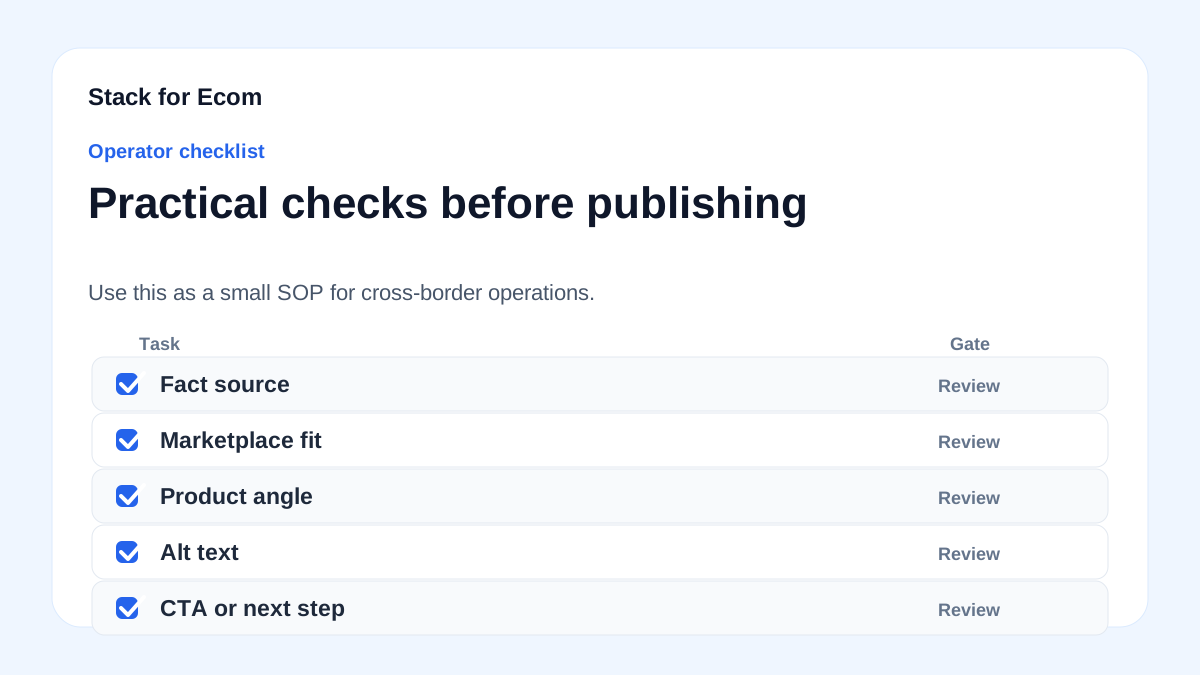
Step-by-step checklist
- Define return policy: Clearly state who is responsible for return shipping costs, customs clearance, and duties. Specify that the buyer becomes the importer and must comply with U.S. import regulations.
- Provide accurate CBP declarations: For every return shipment, include a detailed English description, quantity, purchase price in U.S. dollars, weight, and country of origin. Mark the shipment as "Return of defective merchandise – original shipment from [date]."
- Verify import eligibility: Before accepting a return, confirm that the goods can be legally imported into the U.S. (e.g., no restricted items like certain electronics or textiles).
- Issue a prepaid return label: Include a commercial invoice with the label. The invoice must state the reason for return and original order value. Use a courier that provides door-to-door service with customs brokerage.
- Track de minimis thresholds: If the return value is under $800, ensure the shipment qualifies for de minimis entry. If over, prepare for duty assessment and possible Entry Type 86 filing.
- Communicate with the buyer: Send a return instruction email that includes the label, invoice, and a reminder about customs compliance. Advise the buyer not to include PII in the shipment.
- Monitor shipment status: Use carrier tracking to see if the shipment is held by CBP. If held, work with the buyer to provide additional documentation.
- Inspect returned goods upon arrival: Verify condition and match against the original order. Update inventory and initiate refund or replacement according to policy.
- Document the return process: Keep records of all CBP declarations, invoices, and communications for at least five years for audit purposes.
- Review and optimize: Analyze return reasons and costs quarterly. Adjust product descriptions, packaging, or quality control to reduce future returns.
Potential pitfalls
- Incomplete CBP declarations: Missing or inaccurate descriptions can lead to seizure or fines. Prevention: Use a template for return invoices that includes all required fields.
- Buyer unaware of importer responsibilities: Buyers may assume the seller handles everything. Prevention: Include a clear statement in your return policy and confirmation email.
- De minimis threshold exceeded: A return shipment valued over $800 may be subject to duties and more complex entry. Prevention: Split high-value returns into multiple shipments if possible, or pre-pay duties.
- Storage charges: If CBP holds a return shipment due to missing documentation, storage fees can accumulate. Prevention: Ensure all paperwork is complete before shipping.
- Restricted or prohibited goods: Certain items (e.g., lithium batteries, food, cosmetics) require special handling. Prevention: Check CBP’s restricted goods list before accepting returns.
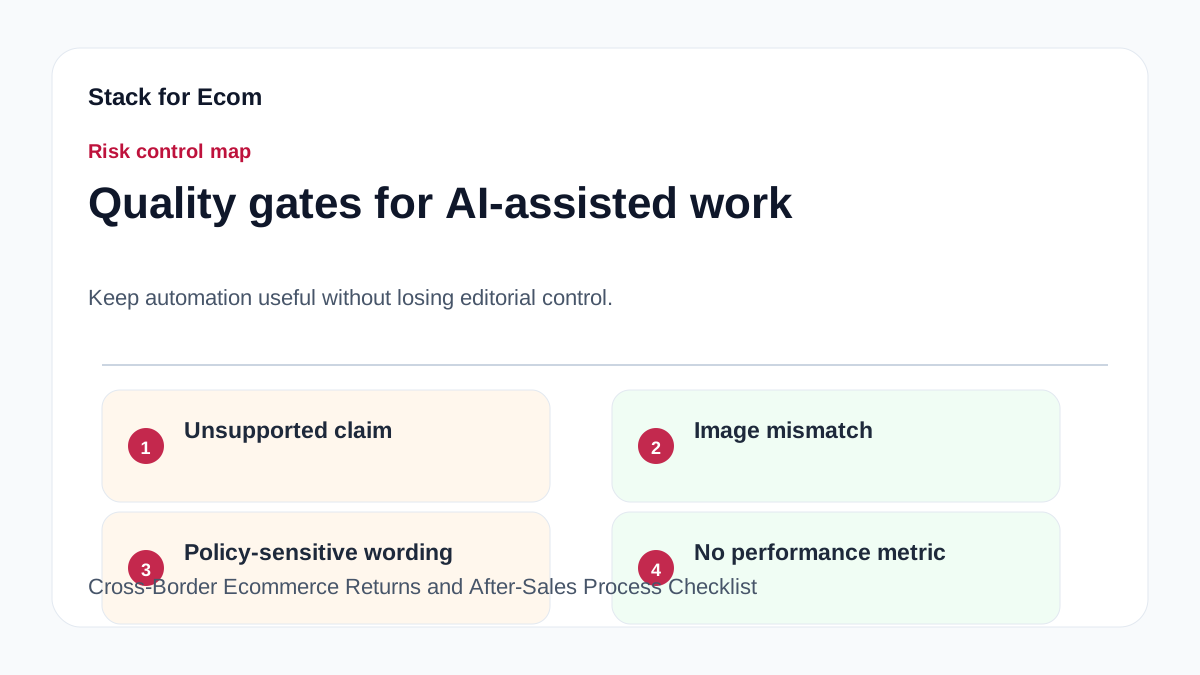
- Using AI tools as legal advice: The Global Business Navigator Chatbot is a beta tool and may produce inaccurate responses. Prevention: Always verify Chatbot outputs with official sources or a customs broker.
- Language barriers in translations: The Chatbot supports multiple languages but may struggle with acronyms. Prevention: Use English for all customs documentation and verify translations.
Suggested visuals
- Flowchart: "Return Process from Buyer to Seller" showing steps: buyer initiates return → seller provides label → shipment clears CBP → seller inspects → refund/replacement.
- Table: "Required CBP Declaration Fields for Returns" with columns: Field (e.g., Description, Value, Country of Origin) and Example (e.g., "Defective smartphone – model XYZ – $200 – China").
- Infographic: "De Minimis Shipments by Mode (FY2024 vs FY2025)" using bar charts for air, truck, vessel, and rail volumes.
- Screenshot: Example of a correctly filled commercial invoice for a return shipment, highlighting the "Return of defective merchandise" note.
- Checklist graphic: Visual version of the step-by-step checklist above, with icons for each step (e.g., document icon for CBP declarations).
- Diagram: "Buyer vs Seller Responsibilities in Cross-Border Returns" showing who handles shipping, customs, duties, and inspection.
Who this helps / Who should avoid
Helps:
- U.S. exporters selling to foreign buyers who may need to accept returns.
- Foreign ecommerce sellers shipping to the U.S. who want to streamline after-sales processes.
- Small operations teams without dedicated customs compliance staff.
- Ecommerce managers looking to reduce return-related costs and risks.
Should avoid:
- Sellers who only ship domestically (no cross-border returns).
- Companies with dedicated legal and customs teams that already have SOPs.
- Sellers of prohibited goods (e.g., certain chemicals, weapons) that cannot be returned to the U.S. legally.
Conclusion
Cross-border returns are a high-risk area of ecommerce operations, but with a clear checklist and understanding of customs regulations, sellers can minimize disruptions and costs. Remember that the buyer is the importer, and accurate CBP declarations are non-negotiable. Use tools like the Global Business Navigator Chatbot for general guidance, but always verify with official sources or a customs broker. By following the step-by-step checklist and avoiding common pitfalls, you can build a returns process that protects your business and satisfies your customers.
References
- https://www.trade.gov/ecommerce
- https://www.cbp.gov/trade/basic-import-export/internet-purchases
- https://www.cbp.gov/trade/basic-import-export/e-commerce
- https://www.trade.gov/export-solutions
- https://ads.tiktok.com/help/article/get-started-tiktok-ads-manager
- https://ads.tiktok.com/help/article/about-catalogs