TL;DR
- EU customs valuation is governed by the Union Customs Code (UCC), which sets the primary legal framework for import and export operations in the EU.
- For low-value shipments, accurate declaration of value is critical; errors can lead to fines, delays, or seizure of goods.
- The buyer is typically the importer of record and responsible for compliance, even for small purchases.
- Shipping methods (postal, courier, freight) affect clearance procedures; choose the right method for your shipment size and value.
- Always provide a full and accurate description of the merchandise, including value in euros (or local currency), to avoid penalties.
- The European Commission provides official guidance, but national customs administrations implement and enforce rules—check member state specifics.
- For U.S.-related shipments, CBP enforces strict rules on cargo descriptions and de minimis entries; similar diligence applies to EU imports.
Introduction
Cross-border ecommerce sellers face a recurring problem: how to correctly declare the customs value of low-value shipments entering the European Union. Misdeclaration—whether accidental or deliberate—can result in fines, delayed deliveries, and even destruction of goods. For small operations, a single error can wipe out profit margins and damage customer trust. This guide explains the core principles of EU customs valuation, practical steps to ensure compliance, and common pitfalls to avoid.
The business impact is significant. EU customs authorities use declared value to assess duties and taxes. Under-declaring to reduce costs is illegal and risky; over-declaring makes your products less competitive. Moreover, the EU’s regulatory framework is complex, with the Union Customs Code (UCC) as the backbone. Sellers who understand the rules can streamline operations, reduce clearance delays, and build reliable shipping processes.
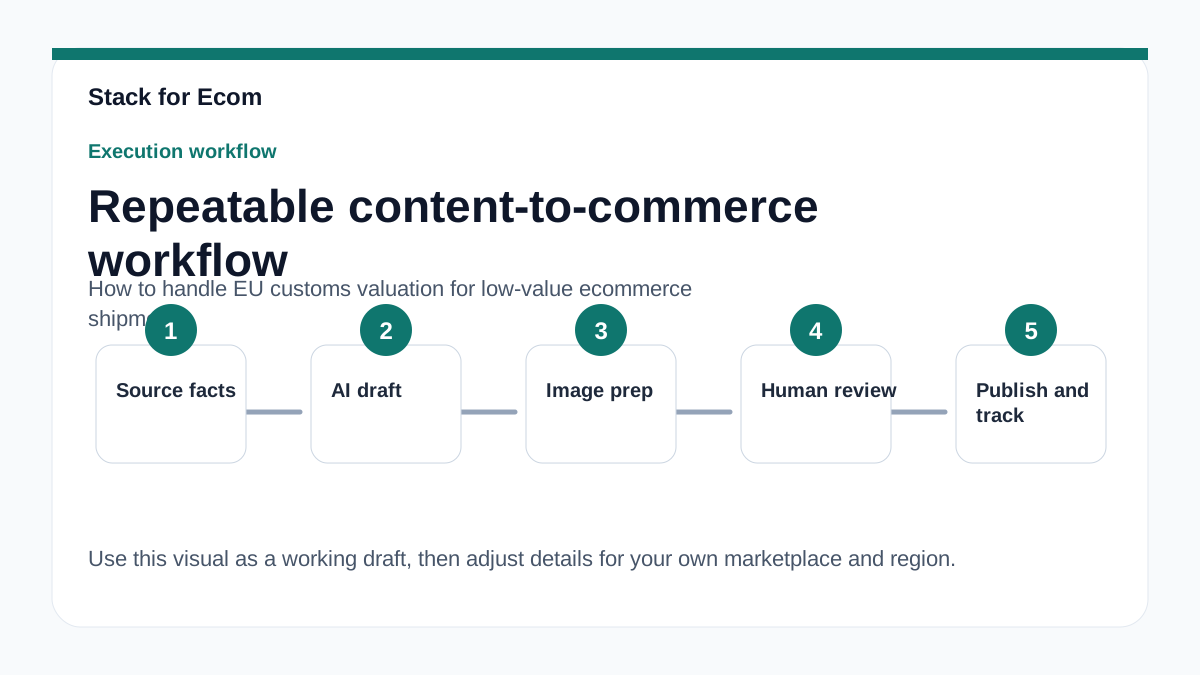
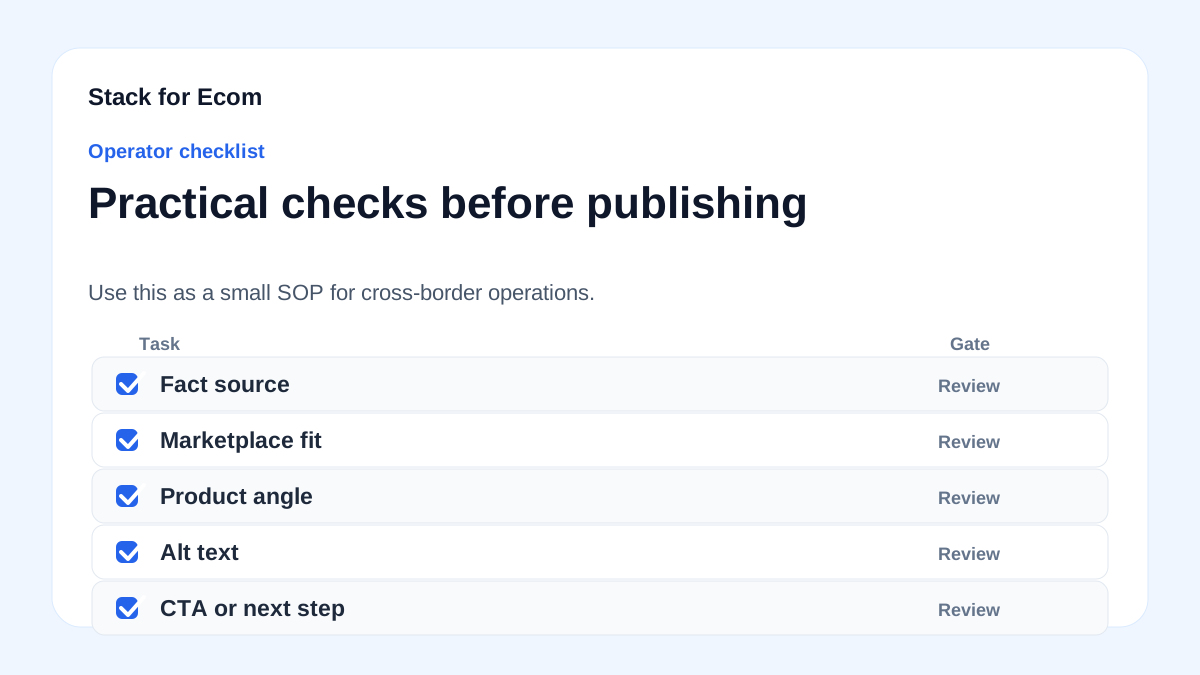
This article is a practical resource for ecommerce sellers, exporters, and small operations teams. It covers essential valuation concepts, step-by-step procedures, and real-world examples. Use the checklist as a repeatable SOP for every shipment. While the focus is on EU rules, we also reference U.S. Customs and Border Protection (CBP) practices where relevant, as many sellers handle transatlantic trade. Always verify details with official sources before shipping.
Main Content
Understanding EU Customs Valuation Basics
The EU customs valuation rules are set out in the Union Customs Code (UCC), which is the primary legal framework for imports and exports in the EU. According to the European Commission’s Taxation and Customs Union portal, the UCC governs all customs procedures, including valuation, origin, and controls. For low-value shipments, the declared value is the transaction value—the price actually paid or payable for the goods when sold for export to the EU customs territory.
For ecommerce sellers, this means the invoice value you provide must reflect the true commercial reality. For example, if you sell a product for €20, that is the transaction value. However, if you offer free shipping, the shipping cost may need to be included in the customs value unless clearly excluded. The European Commission’s guidance emphasizes that customs valuation is not optional; it is a legal requirement under the UCC.
Practical implication: Always keep clear records of the transaction value, including any discounts, royalties, or commissions. If you sell through marketplaces, ensure the declared value matches the order amount. Inconsistencies can trigger audits or inspections by national customs authorities, which enforce UCC rules at the member state level.
Shipping Methods and Their Impact on Valuation
The choice of shipping method—international postal service, courier, or freight carrier—affects how customs handles your shipment. For low-value goods, postal services often use a simplified declaration process. However, the European Commission notes that individual EU member states implement and enforce customs rules, so procedures vary. For instance, a postal shipment under €150 may enter duty-free, but you still need a correct declaration.
Courier services like DHL or FedEx typically require a commercial invoice and may handle customs clearance on your behalf. This can simplify processes but adds costs. Freight carriers are used for larger volumes, where valuation becomes more complex. In all cases, the declared value must be accurate. CBP’s guidance on internet purchases—while U.S.-focused—highlights a universal principle: failure to arrange proper delivery may require hiring a customs broker or clearing goods at the port of entry.
Example: A small seller ships 50 units of a €10 product to Germany via postal service. Each package is declared at €10, which is correct. However, if the seller marks them as “gifts” to avoid duties, that is illegal. Customs can open and inspect packages, and if the declared value is misleading, the buyer (importer) faces fines. Always match the declared value to the actual sale price.
The Role of Accurate Documentation
Accurate documentation is non-negotiable. For EU shipments, you need a commercial invoice or a proforma invoice, plus a customs declaration form. The European Commission’s portal lists electronic customs services and databases used for submitting declarations, such as the EU’s Customs Decision System. While the U.S. CBP requires a specific declaration form for postal shipments, the EU uses the Single Administrative Document (SAD) for formal declarations, though low-value shipments may use simplified procedures.
Key elements to include: full description of the merchandise, quantity, value in euros, country of origin, and seller and buyer details. CBP’s rules for cargo descriptions are a useful benchmark: descriptions must be precise and in plain language, detailed enough to identify the item’s size, shape, and characteristics. The European Commission’s guidance on customs procedures echoes this need for clarity, especially for low-value shipments where customs may rely solely on documentation.
A common mistake is using vague terms like “accessories” or “parts.” Instead, specify “plastic phone cases” or “steel bolts.” This reduces the risk of misinterpretation and speeds up clearance. Remember, providing misleading information is illegal. CBP warns that inaccurate information can lead to legal action, fines, or seizure—the same applies in the EU under UCC rules.
Compliance and Enforcement in the EU
The EU Customs Union operates under the UCC, and enforcement is handled by national customs administrations. The European Commission provides overarching policy, but member states implement rules. For sellers, this means you must check the specific requirements of the destination country. For example, Germany may have stricter documentation rules than Luxembourg for low-value shipments.
CBP’s E-Commerce Strategy, while U.S.-focused, illustrates global enforcement trends. CBP emphasizes streamlining processes, leveraging partnerships, and improving data collection. The EU similarly uses electronic systems to track imports. The rise in low-value shipments—CBP reported 942.5 million de minimis shipments in FY2025—shows the scale of ecommerce trade. EU authorities are equally vigilant, using data analytics to identify undervaluation.
Action item: Register for electronic customs services in the EU if you ship frequently. This allows you to submit declarations digitally and track status. Also, consider Authorised Economic Operator (AEO) status if you are a larger exporter; it offers faster clearance and reduced inspections. However, AEO is not necessary for small sellers—just ensure compliance with basic valuation rules.
Step-by-step checklist
- Verify product legality: Before shipping, check if the product is allowed in the EU. Some items (e.g., certain chemicals) require special permits. Use the European Commission’s portal for guidance.
- Determine the transaction value: Use the actual sale price as the customs value. Include shipping costs if they are part of the sale price.
- Choose the right shipping method: For low-value items, use postal or courier services with simplified clearance. For larger volumes, consider freight and a customs broker.
- Prepare accurate documentation: Create a commercial invoice with a full description, quantity, value in euros, and country of origin. Avoid vague terms.
- Attach necessary forms: For postal shipments, ensure a customs declaration form is attached to the outside of the package. For courier, provide the invoice electronically.
- Declare the value truthfully: Never under-declare to save duties. This is illegal and risks fines or seizure.
- Check destination country rules: Visit the national customs website of the EU member state to confirm specific requirements for low-value shipments.
- Use electronic systems where possible: Submit declarations via EU electronic customs services to reduce errors and speed up processing.
- Keep records: Retain invoices, shipping documents, and payment records for at least three years, as customs may audit.
- Monitor regulatory updates: EU customs rules can change. Subscribe to updates from the European Commission or your national customs authority.
Potential pitfalls
- Under-declaring value: Some sellers mark goods as “gifts” or lower the value to avoid duties. This is illegal and can lead to fines, seizure, or legal action. Prevention: Always declare the true transaction value.
- Incomplete descriptions: Using vague terms like “merchandise” or “spare parts” can cause delays or misclassification. Prevention: Use specific, plain-language descriptions that identify the item’s characteristics.
- Ignoring destination-specific rules: EU member states may have different thresholds for low-value shipments. Prevention: Check the national customs website before shipping.
- Failing to include shipping costs: If shipping is included in the sale price, it may need to be part of the customs value. Prevention: Review your pricing structure and include shipping costs if required.
- Using incorrect currency: Declaring value in a non-EU currency can cause errors. Prevention: Convert to euros using the exchange rate at the time of shipment and note it on the invoice.
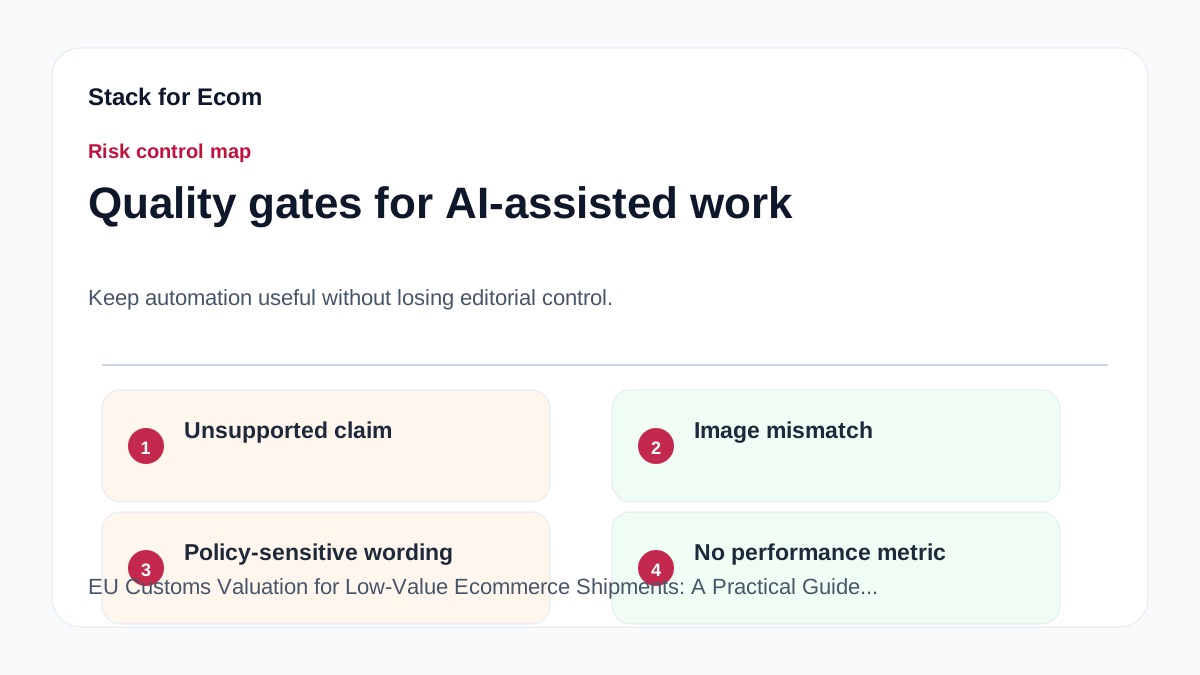
- Relying on unofficial advice: AI chatbots or informal sources may provide inaccurate information. Prevention: Use official sources like the European Commission’s portal or consult a customs broker.
Suggested visuals
- Flowchart: “EU Customs Clearance for Low-Value Shipments” showing steps from order to delivery, including declaration and inspection points.
- Table: “Common Customs Values for Ecommerce Products” with examples of correct vs. incorrect declarations.
- Screenshot: “European Commission Customs Procedures Portal” highlighting where to find valuation guidance.
- Infographic: “De Minimis Thresholds in EU vs. U.S.” comparing duty-free limits and documentation requirements.
- Checklist Graphic: “10-Step Compliance Checklist” as a downloadable reference for operations teams.
- Diagram: “Shipping Method Comparison” showing postal, courier, and freight options and their clearance processes.
Who this helps / Who should avoid
This guide is for ecommerce sellers exporting to the EU, including small business owners, marketplace sellers, and operations teams. It is also useful for logistics coordinators who handle international shipments and need to ensure compliance. If you are a new exporter, this provides a foundation for understanding customs valuation.
Who should avoid: If you are shipping only within your own country or to non-EU markets, this guide is not relevant. Also, if you handle high-value goods (over €150) with complex valuation issues, you should consult a customs broker or legal expert, as this guide focuses on low-value shipments.
Conclusion
Handling EU customs valuation for low-value ecommerce shipments requires attention to detail and a commitment to accuracy. The Union Customs Code provides the legal framework, but practical implementation depends on your shipping method, documentation, and destination country. By following the checklist and avoiding common pitfalls, you can reduce delays, avoid fines, and build a reliable cross-border operation.
Remember, the buyer is the importer of record and bears responsibility for compliance. As a seller, your role is to provide accurate information and choose the right shipping method. Use official resources like the European Commission’s portal to stay updated. With the right processes, low-value shipments can be a smooth, profitable part of your ecommerce business.
References
- https://www.cbp.gov/trade/basic-import-export/internet-purchases
- https://www.cbp.gov/trade/basic-import-export/e-commerce
- https://taxation-customs.ec.europa.eu/customs-4/customs-procedures-import-and-export_en
- https://www.trade.gov/ecommerce