TL;DR
- The EU Deforestation Regulation (EUDR) requires sellers of commodities like wood, cattle, cocoa, coffee, palm oil, rubber, and soy to prove their products are deforestation-free and legally sourced.
- Compliance involves geolocation data, due diligence statements, and risk assessment. Customs procedures under the Union Customs Code (UCC) are the enforcement gateway.
- This guide provides a practical checklist, pitfalls to avoid, and how to align your operations with EU customs requirements.
- Official sources: EU Taxation and Customs Union, U.S. CBP, and ITA. Note: The EUDR-specific rules are not fully covered in the provided sources; verify details with official EU publications.
Introduction
Cross-border ecommerce sellers shipping into the EU face a new compliance layer: the EU Deforestation Regulation (EUDR). While the regulation targets deforestation-linked supply chains, customs authorities are the enforcement point. Your goods must not only clear customs but also prove they are deforestation-free. This article translates the EUDR into actionable steps for sellers, using official customs and trade sources to ground the guidance.
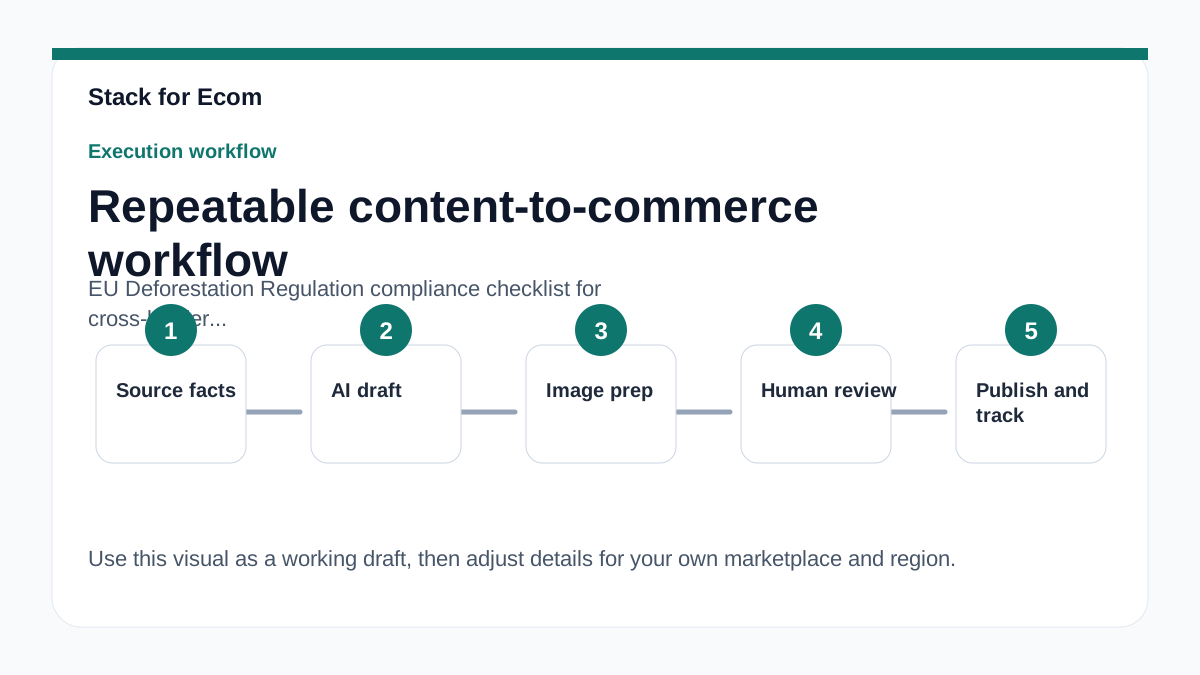
The business impact is significant: non-compliance can result in customs detention, fines, and loss of market access. With the EUDR phasing in, sellers need to adapt quickly. This guide helps you build a compliance workflow, from due diligence to customs declarations, and avoid costly mistakes.
Use this article as a practical SOP. It covers the EU customs framework, how to prepare documentation, and how to leverage tools like the U.S. ITA's Global Business Navigator for general export guidance. Remember, the EUDR is still evolving; always check official EU sources for the latest requirements.
Main Content
Understanding the EUDR and Its Customs Enforcement
The EUDR requires operators placing covered commodities on the EU market to conduct due diligence, collect geolocation data, and submit a Due Diligence Statement (DDS). Customs authorities will verify DDS references during import procedures. The Union Customs Code (UCC) is the core legal framework governing EU customs procedures (source: EU Taxation and Customs Union). Under the UCC, all goods entering the EU are subject to customs controls, which now include EUDR checks.
For ecommerce sellers, this means your customs declarations must include the DDS reference number. If you sell via marketplaces, you may be the operator or the trader; ensure you know your role. The EU customs pages also cover prohibitions and restrictions, which now encompass environmental requirements like EUDR.
Practical example: A wooden furniture seller from Vietnam must provide geolocation of the harvest plots and a DDS. If the DDS is missing, customs can hold the shipment. The EU customs electronic systems (e.g., AES) will be updated to flag missing DDS references.
Due Diligence: Your First Line of Defense
Due diligence is the core of EUDR. You must collect information about the products, the land where they were produced, and verify compliance with local laws. This includes:
- Product description and quantity.
- Country of production and geolocation of all plots.
- Evidence of legal harvesting or production.
- Risk assessment and mitigation measures.
Your due diligence system must be documented and updated. For ecommerce, this means working with suppliers to obtain geolocation data. Tools like satellite monitoring can help, but you need a process. The ITA's Global Business Navigator (beta) can provide general export process info, but it cannot give product-specific or foreign-market-specific advice (source: ITA). So, rely on your own due diligence.
Customs Declarations and Documentation
When importing into the EU, you must submit an electronic customs declaration. The UCC mandates electronic systems for import/export declarations (source: EU Taxation and Customs Union). Your declaration must include the DDS reference. Additionally, customs security measures apply to all goods entering the EU (source: EU Taxation and Customs Union).
For ecommerce, ensure your commercial invoice and packing list match the customs declaration. Inaccurate descriptions can lead to delays. The U.S. CBP requires precise descriptions for imports into the U.S., but for EU, similar principles apply under UCC. Always provide clear, plain-language descriptions.
Example: A coffee seller must list the species, weight, and DDS reference. If the customs officer cannot verify the DDS, the shipment is at risk.
Leveraging Customs Facilitation: AEO Status
The Authorised Economic Operator (AEO) status can simplify customs procedures for compliant traders (source: EU Taxation and Customs Union). AEO-certified companies enjoy fewer physical and documentary checks. For ecommerce sellers, obtaining AEO status is a long-term investment but can reduce EUDR-related friction.
To qualify, you must have a good compliance record, financial solvency, and security standards. While AEO is not a shortcut for EUDR, it demonstrates your commitment to compliance, which can expedite customs processes. Consider applying if you have a high volume of EU shipments.
The Role of Digital Tools and AI in Compliance
Digital tools can streamline EUDR compliance. The EU is building an information system for DDS submissions. Sellers should prepare to use these systems. Additionally, AI chatbots like the ITA's Global Business Navigator can provide general export information, but they are not a substitute for legal advice (source: ITA).
When using AI tools, be cautious: the ITA chatbot is trained in English and translations may need verification (source: ITA). Also, never input sensitive business data into AI tools (source: ITA). For EUDR, use specialized compliance software that can manage geolocation data and DDS generation.
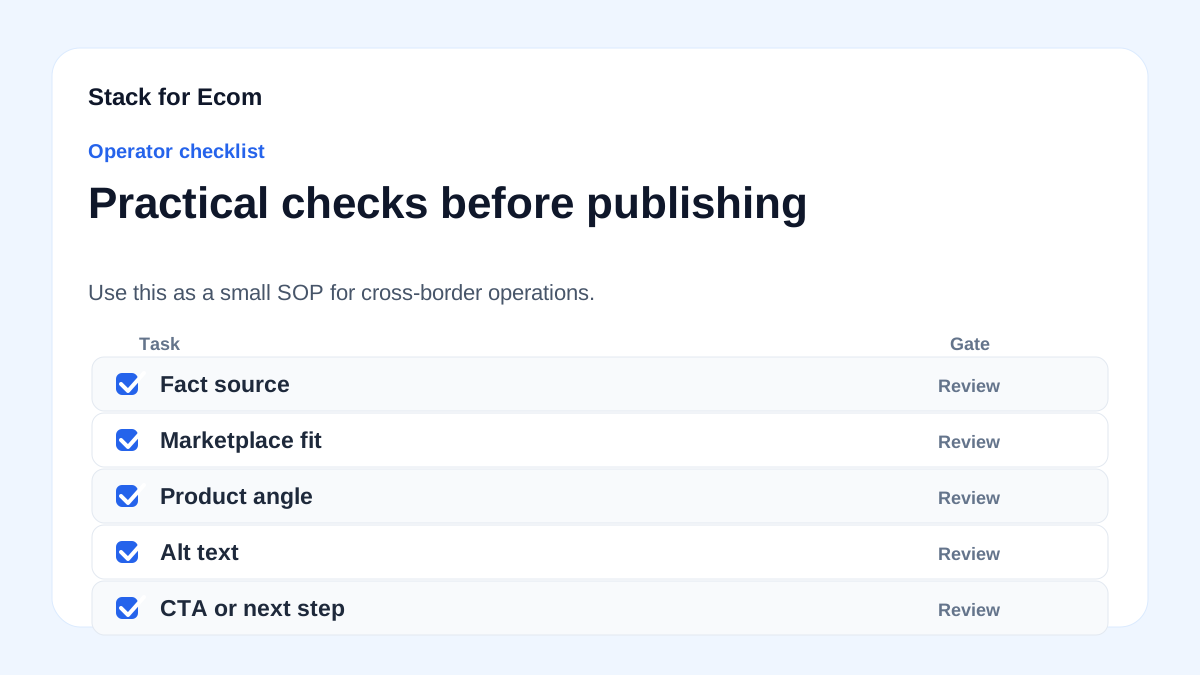
Step-by-step checklist
- Identify your role: Determine if you are an operator (placing goods on EU market) or a trader (selling to consumers). This defines your obligations.
- Map your supply chain: List all suppliers and the origin of each commodity covered by EUDR.
- Collect geolocation data: Obtain GPS coordinates for all plots of land where commodities were produced.
- Verify legality: Ensure producers comply with local laws on land use, labor, and environmental protection.
- Conduct risk assessment: Evaluate the risk of deforestation or non-compliance in your supply chain.
- Implement mitigation measures: If risks are identified, take steps like supplier audits or switching to certified sources.
- Generate Due Diligence Statements: Prepare DDS for each product batch, including the reference number.
- Prepare customs documentation: Ensure your commercial invoice, packing list, and customs declaration include the DDS reference and accurate product descriptions.
- Use electronic customs systems: Familiarize yourself with the EU's electronic customs systems for submitting declarations.
- Monitor regulatory updates: EUDR requirements are evolving; subscribe to official EU updates and adjust your processes.
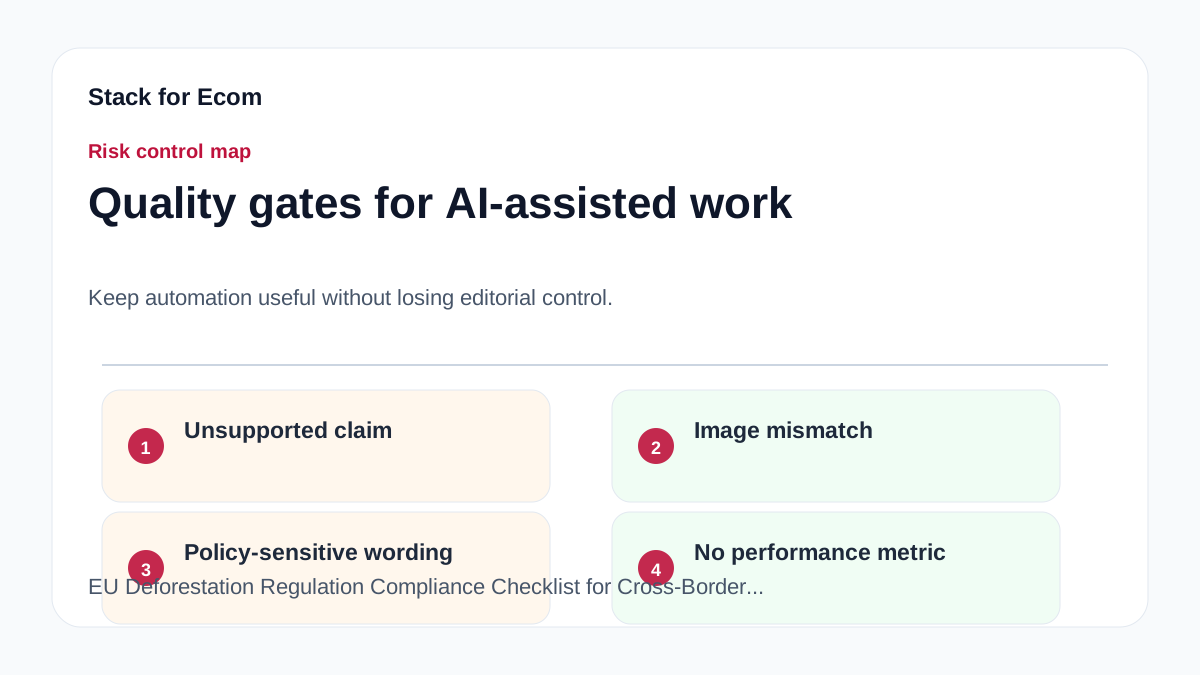
Potential pitfalls
- Incomplete geolocation data: Missing coordinates for any plot can invalidate your DDS. Prevention: Use satellite mapping and require suppliers to provide data in a standardized format.
- Assuming marketplaces handle compliance: If you sell via Amazon or eBay, you are still the operator. Prevention: Confirm your obligations with the marketplace and maintain your own DDS.
- Relying on AI chatbots for legal advice: Chatbots like ITA's Global Business Navigator cannot give product-specific advice. Prevention: Use them for general guidance and consult a customs broker or legal expert.
- Inaccurate customs declarations: Under UCC, precise descriptions are mandatory. Vague terms like 'miscellaneous' cause delays. Prevention: Use HS codes and detailed descriptions.
- Ignoring AEO opportunities: Not applying for AEO means more inspections. Prevention: Consider AEO certification if you have high shipment volumes.
- Overlooking non-EU import rules: If you also sell to the U.S., remember CBP rules apply. Prevention: Maintain separate compliance workflows for each market.
Suggested visuals
- Flowchart: EUDR compliance process from supplier to customs clearance.
- Table: Covered commodities and their typical HS codes.
- Screenshot: Example of a Due Diligence Statement reference in the EU customs declaration.
- Map: Deforestation risk zones by country/commodity.
- Timeline: EUDR implementation milestones and deadlines.
- Checklist infographic: Step-by-step SOP for sellers.
Who this helps / Who should avoid
Helps:
- Ecommerce sellers exporting wood, furniture, coffee, cocoa, leather, rubber, palm oil, or soy to the EU.
- Small and medium-sized enterprises that need a practical compliance roadmap.
- Compliance managers and logistics teams in cross-border trade.
Who should avoid:
- Sellers of non-covered products (e.g., electronics) – EUDR does not apply, but customs rules still matter.
- Businesses that already have robust EUDR compliance in place – this is a primer, not a deep dive.
- Those seeking legal advice – consult a qualified professional.
Conclusion
EUDR compliance is not optional; it is a condition for market access. By following the checklist and leveraging EU customs frameworks like the UCC and AEO, you can minimize disruptions. Start with due diligence, then align your customs declarations. Use official sources and digital tools wisely. The regulation is evolving, so stay informed. Your proactive approach will protect your business and the planet.
References
- European Commission, Taxation and Customs Union – Customs procedures for import and export: https://taxation-customs.ec.europa.eu/customs-4/customs-procedures-import-and-export_en
- International Trade Administration – Ecommerce resources: https://www.trade.gov/ecommerce
- U.S. Customs and Border Protection – Internet purchases: https://www.cbp.gov/trade/basic-import-export/internet-purchases
- U.S. Customs and Border Protection – E-commerce: https://www.cbp.gov/trade/basic-import-export/e-commerce
- TikTok Ads Help Center (note: page unavailable, no relevant content): https://ads.tiktok.com/help/article/get-started-tiktok-ads-manager