TL;DR
- The EU Digital Services Act (DSA) imposes new obligations on online marketplaces and sellers, but the provided sources do not detail specific seller requirements. Details may vary; check references.
- Use this guide as a structured checklist to prepare for compliance, focusing on product compliance, customs, and platform tools.
- Key actions: verify product compliance per country, understand customs procedures, leverage Amazon's compliance tools, and avoid entering PII into AI chatbots.
- Always double-check regulatory information with official EU and national authorities; this article is not legal advice.
Introduction
If you sell on marketplaces like Amazon into the EU, you've likely heard about the Digital Services Act (DSA). The DSA is a broad EU regulation that affects how online platforms handle illegal content, transparency, and seller traceability. For marketplace sellers, the practical impact often shows up as new verification steps, compliance checks, and requirements to provide accurate business and product information. However, the sources provided here do not specifically address the DSA or marketplace seller obligations under it. Details may vary; check references. This article helps you build a repeatable compliance routine using the information we do have: official EU customs procedures, Amazon Global Selling requirements, and U.S. export resources.
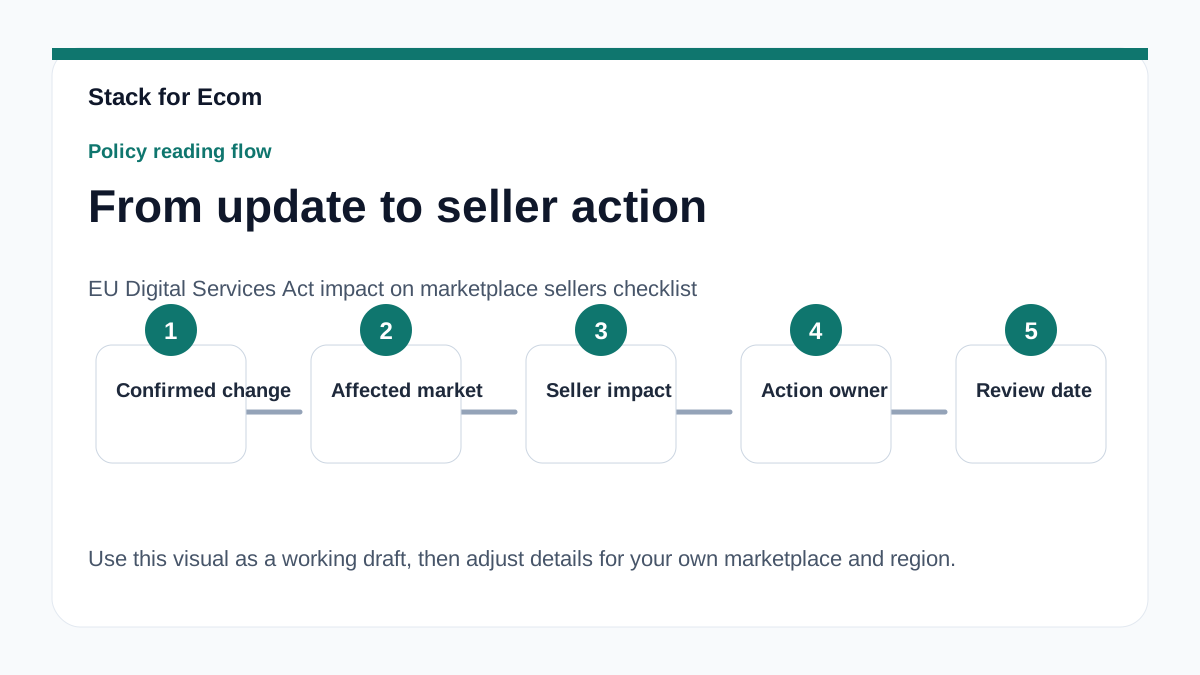
The business impact is real: non-compliance can lead to listing suspensions, fines, or customs delays. Even if DSA specifics are unclear from these sources, the underlying need to demonstrate product safety, accurate declarations, and responsible data handling remains. Sellers who treat compliance as a one-time checkbox risk disruptions. Instead, treat it as an ongoing process integrated into your listing, logistics, and advertising workflows.
Use this article as a practical guide. We'll walk through what the available sources tell us about selling into the EU, then provide a step-by-step checklist you can adapt. We'll also flag pitfalls and suggest visuals to help your team operationalize compliance. Remember: this is not legal advice, and you should always verify requirements with official sources.
Main Content
Understanding the EU Customs Framework for Marketplace Sellers
When you sell goods into the EU, you're subject to the EU Customs Union framework. The European Commission's Directorate-General for Taxation and Customs Union provides official information on customs procedures for importing and exporting goods. This includes the Union Customs Code, customs controls, and Authorised Economic Operator (AEO) status. For marketplace sellers, this means your shipments must comply with EU customs rules, and you may need an EORI number, correct tariff classification, and accurate declarations.
Concrete example: A U.S. seller shipping apparel to Germany must ensure the commercial invoice includes a detailed description, HS codes, country of origin, and value. If the goods are held at customs due to missing information, the buyer may cancel, and you incur return shipping costs. The EU customs page links to related topics like AEO status, which can expedite clearance if you qualify. However, the source page does not address the DSA or marketplace seller obligations under that regulation. Details may vary; check references.
Actionable tip: Bookmark the EU customs procedures page and review it quarterly. Train your logistics team to prepare declarations that match EU requirements. If you use FBA, Amazon may act as importer for some shipments, but you remain responsible for product compliance and accurate data. Always confirm who is the importer of record for each shipment.
Amazon Global Selling: Compliance and Account Setup
Amazon Global Selling allows US-based sellers to sell internationally and non-US sellers to sell to US customers on Amazon.com. Sellers can create a North America and Brazil unified selling account, plus regional or country-specific accounts for Europe, Asia-Pacific, and Middle East and North Africa. For each country you plan to sell in, you must complete requirements for taxes, regulations, compliance, safety, and listing. Amazon provides Manage Your Compliance and Compliance Reference tools to help sellers navigate product requirements.
Concrete example: A seller expanding to France must use Manage Your Compliance to upload test reports for electrical goods. If the report is missing, the listing may be blocked. Amazon also charges a monthly fee of either USD 39.99 or the sum of selling plan fees for each region and country with active listings, whichever is lower. Referral fees vary by product category and are charged as a percentage of the total price or a minimum amount, whichever is greater. Optional services like Fulfillment by Amazon (FBA) and Amazon Ads may add costs beyond selling fees.
For non-US businesses, you may not be required to form a US company to sell in the US, but it may be advantageous depending on business specifics and sales strategy. When selling into the EU, ensure your seller profile and product listings reflect accurate business information, as marketplaces increasingly verify seller identity. Details may vary; check references.
Advertising and Compliance: Using Amazon Ads Responsibly
Amazon Ads offers Sponsored Products, Sponsored Brands, Display ads, Brand Stores, and Streaming TV. Sponsored Products are self-service, cost-per-click ads for individual product listings that appear in shopping results and on product detail pages across desktop and mobile. For sellers entering the EU, advertising can drive visibility, but it must comply with local advertising and consumer protection rules.
Amazon recommends a minimum daily budget of $10 for the United States and Canada, £10 for the United Kingdom, and 10 € for Germany, France, Italy, Spain, Belgium, Ireland, and the Netherlands. For manual keyword targeting campaigns, Amazon recommends targeting at least 30 keywords and starting with broad match before focusing on top performers with phrase or exact match. Amazon provides six advertising reports for Sponsored Products: search term, targeting, advertising product, placement, performance over time, and purchased product reports.
Concrete example: A seller launching in Italy should set a daily budget of at least 10 €, target 30+ keywords broadly, and monitor search term reports to avoid bidding on irrelevant terms that could trigger compliance issues. Amazon Ads is available in marketplaces across North America (CA, MX, US), South America (BR), Europe (DE, FR, IE, IT, NL, PL, SE, UK), Middle East (EG, KSA, UAE), Asia Pacific (AU, IN, JP, SG), and Africa (ZA). Note: South Africa is launching Amazon advertising to domestic sellers and vendors only. To register, select your country, choose what you will advertise, and select your account type such as Seller Central, Vendor Central, Author Central, or Kindle Direct Publishing.
Importing into the US: A Parallel Compliance Checklist
While this article focuses on the EU, many marketplace sellers also import into the US. When goods move from any foreign country to the United States, they are being imported and are subject to specific rules and regulations. The importer, which is the buyer when purchasing from foreign sources, is responsible for assuring that goods comply with state and federal import regulations. Importing goods that are unsafe, fail health code requirements, or violate quota restrictions could result in fines, penalties, detention, or destruction by CBP.
Merchandise imported into the United States, whether used or new, must clear CBP and may be subject to duty payment and applicable import regulations. A U.S. Customs and Border Protection Declaration should include a full and accurate description of the merchandise and be securely attached to the outside of the shipment. The declaration should include the seller's name and address, description of items in English, quantity of each item type, purchase price in U.S. dollars, weight, and country of origin. Foreign shipments not accompanied by a U.S. Customs and Border Protection declaration form and an invoice may be subject to seizure, forfeiture, or return to sender.
For merchandise shipped through international postal service valued at less than $2,500 and not subject to quota or restriction, a CBP official will usually prepare import paperwork, assess duty, and release it for delivery. Concrete example: A UK seller shipping handmade goods to the US must attach a CBP declaration with English descriptions, quantities, prices in USD, weight, and country of origin. Missing this can lead to seizure. Use this as a model for EU shipments: accurate declarations prevent delays.
Using AI Tools and Government Resources Wisely
The Global Business Navigator is an AI chatbot from the International Trade Administration (ITA), currently in beta testing, designed to provide general information on the exporting process and resources for U.S. exporters. It was developed using Microsoft's Azure AI services and is trained on ITA's export-related content. As a beta product, the chatbot's responses may occasionally produce inaccurate or incomplete information, and its knowledge is limited to public information on the Export Solutions web pages of Trade.gov.
The chatbot cannot provide responses specific to a company's product or a specific foreign market, but its reference pages guide users to other relevant government resources and market research. Users should always double-check the chatbot's responses using the provided references or by visiting the Export Solutions web pages on Trade.gov, and should not use its responses as legal or professional advice. The chatbot does not collect user information and does not use chat history to learn new information; all feedback is anonymous. Users are advised not to enter personally identifiable information (PII), sensitive, or proprietary information into the chatbot.
The chatbot supports a wide range of languages, but because it is trained in English and responses are translated, users should verify translations as it may have difficulty with acronyms, abbreviations, and nuances in other languages. Concrete example: A seller asking about EU DSA requirements might get a general answer about exporting, not specific DSA obligations. Always cross-check with official EU sources. For software/tool angle: Consider using a compliance management tool to centralize document collection, but ensure it does not store PII unnecessarily. Details may vary; check references.
Step-by-step checklist
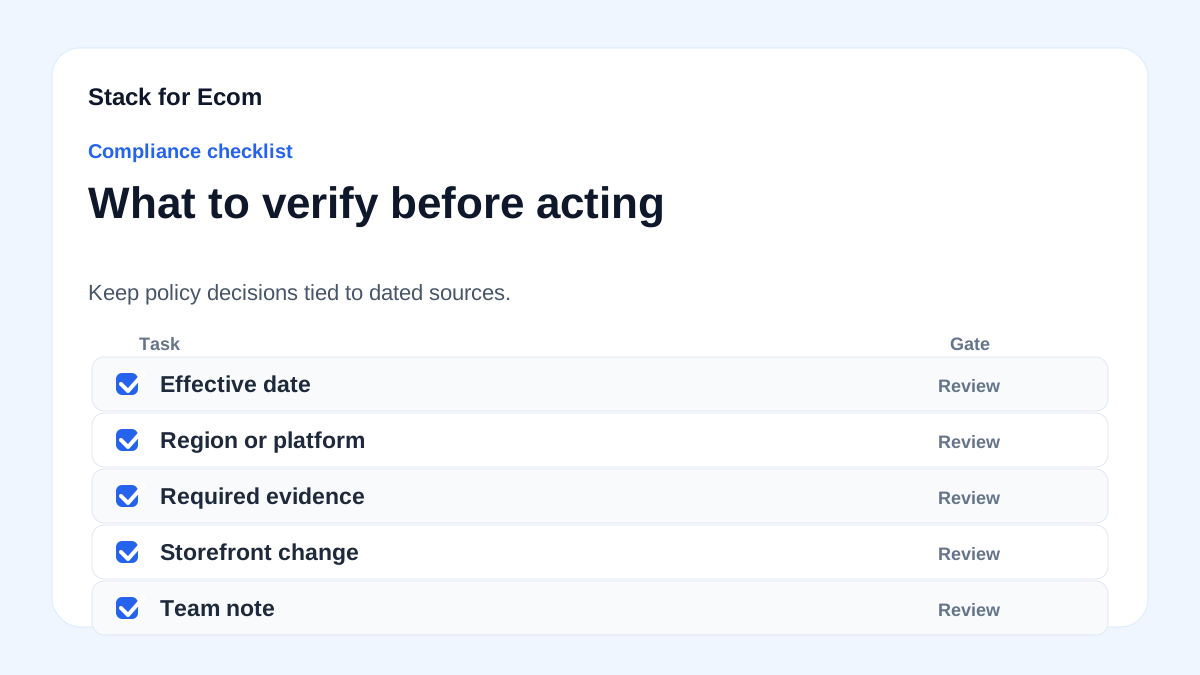
- [ ] Identify all EU countries where you have active listings and confirm the importer of record for each shipment.
- [ ] Register for an EORI number if you are importing into the EU; verify with EU customs authorities.
- [ ] Review the EU Customs procedures page for import/export requirements, including Union Customs Code and AEO status.
- [ ] Use Amazon's Manage Your Compliance and Compliance Reference tools to upload required product test reports and certificates.
- [ ] Verify that your product listings include accurate business name, address, and contact details as required by marketplace policies.
- [ ] Prepare accurate commercial invoices and customs declarations with HS codes, country of origin, and value in EUR.
- [ ] Set up Amazon Ads with recommended minimum daily budgets per marketplace (e.g., 10 € for DE, FR, IT, ES, BE, IE, NL).
- [ ] Monitor advertising reports (search term, targeting, etc.) to ensure ads comply with local regulations and do not promote restricted products.
- [ ] Train staff not to enter PII or proprietary information into AI chatbots like Global Business Navigator.
- [ ] Double-check any regulatory information from AI tools or third parties against official EU and national authority websites.
- [ ] Schedule quarterly compliance reviews to catch regulatory changes and update listings accordingly.
- [ ] Document your compliance processes and keep records for at least the period required by EU law (check references).
Potential pitfalls
- Assuming the DSA doesn't apply to you: Even if sources don't detail seller obligations, marketplaces may impose new requirements. Prevention: Monitor official EU DSA guidance and platform announcements.
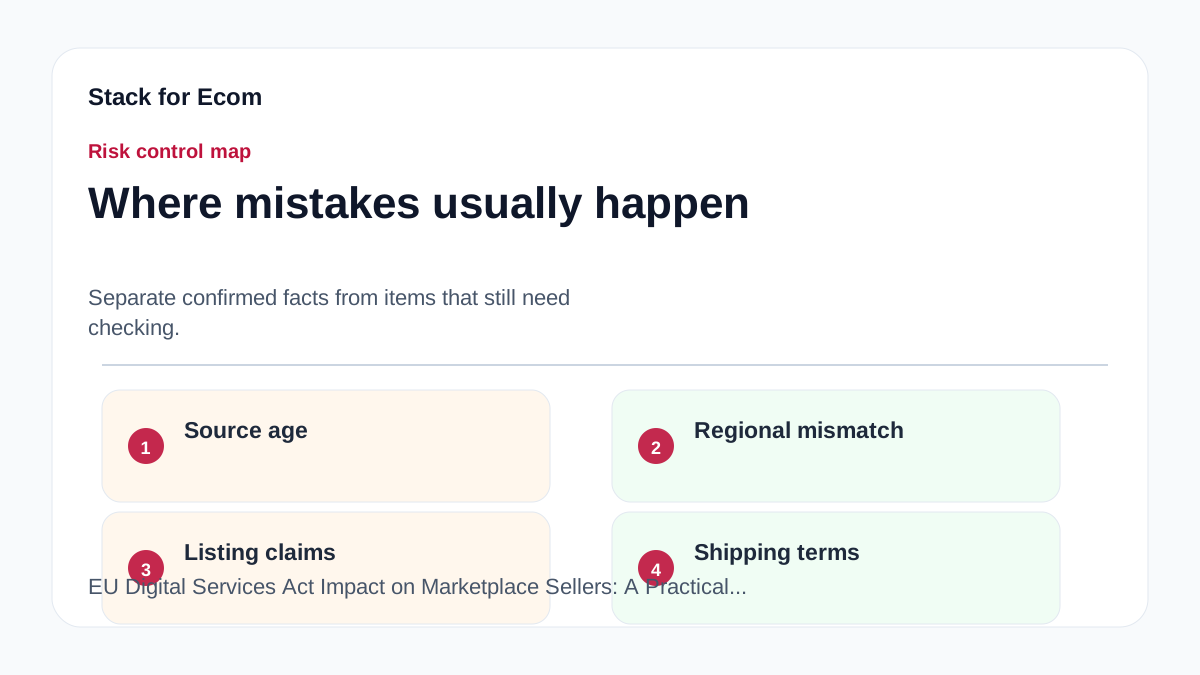
- Using AI chatbot responses as legal advice: The Global Business Navigator is beta and may be inaccurate. Prevention: Always verify with official sources and consult legal counsel.
- Entering PII into chatbots: The ITA chatbot does not collect user info, but you should never enter PII. Prevention: Use anonymized queries and avoid sharing sensitive data.
- Incomplete customs declarations: Missing details can lead to seizure or delays. Prevention: Use a checklist for every shipment, including English descriptions, quantities, prices, weight, and country of origin.
- Ignoring product compliance per country: Amazon requires taxes, regulations, compliance, safety, and listing requirements per country. Prevention: Use Manage Your Compliance and verify with local authorities.
- Underbudgeting ads: Amazon recommends minimum daily budgets; too low may limit reach. Prevention: Start with recommended budgets and adjust based on performance.
- Overlooking translation nuances: AI translations may mishandle acronyms. Prevention: Have native speakers review critical compliance documents.
Suggested visuals
- Flowchart: EU customs import process for marketplace sellers, from order to delivery, highlighting declaration checkpoints.
- Screenshot: Amazon Seller Central Manage Your Compliance dashboard with example product compliance status.
- Table: Minimum daily ad budgets by marketplace (US, CA, UK, DE, FR, IT, ES, BE, IE, NL) with recommended keyword counts.
- Infographic: DSA compliance checklist for sellers, showing steps like EORI registration, product testing, and listing accuracy.
- Screenshot: Global Business Navigator chatbot interface with a sample query and disclaimers about beta accuracy.
- Diagram: Importer of record responsibilities for EU vs. US shipments, comparing CBP declaration requirements.
Who this helps / Who should avoid
Who this helps:
- Marketplace sellers (especially Amazon) expanding into the EU who need a practical compliance checklist.
- Operations managers responsible for customs documentation and product compliance.
- Small export teams using AI tools and government resources for market entry.
- Sellers advertising on Amazon in EU marketplaces who need to align ad spend with compliance.
Who should avoid:
- Sellers looking for definitive legal advice on the EU DSA; this article does not provide that.
- Businesses seeking specific DSA seller obligations; the sources do not cover them. Details may vary; check references.
- Anyone unwilling to verify information with official authorities; relying solely on this article is not recommended.
Conclusion
The EU Digital Services Act is a complex regulation, and the sources provided do not specify marketplace seller obligations under it. However, the broader compliance landscape—customs, product safety, advertising, and data handling—remains critical for sellers. Use the checklist in this article to build a repeatable SOP, leverage Amazon's compliance tools, and always double-check regulatory information with official EU and national authorities. Treat AI tools like the Global Business Navigator as starting points, not final answers. By integrating compliance into your daily operations, you reduce risk and build trust with customers and platforms. Remember: this is not legal advice. Details may vary; check references.
References
- https://www.trade.gov/ecommerce
- https://taxation-customs.ec.europa.eu/customs-4/customs-procedures-import-and-export_en
- https://sell.amazon.com/global-selling
- https://advertising.amazon.com/library/guides/getting-started-with-sponsored-ads
- https://www.cbp.gov/trade/basic-import-export/internet-purchases