TL;DR
- The EU General Product Safety Regulation (GPSR) applies to all products sold in the EU, including those sold via marketplaces.
- Sellers must ensure products are safe, have proper documentation, and meet labeling and traceability requirements.
- Compliance involves understanding EU customs procedures, using available tools, and preparing for market-specific rules.
- Key steps include appointing an EU responsible person, maintaining technical documentation, and ensuring proper labeling.
- Non-compliance can lead to product seizures, fines, and removal from marketplaces.
Introduction
Selling on EU marketplaces offers immense opportunity, but it comes with a heavy compliance burden. The EU General Product Safety Regulation (GPSR) is a key piece of legislation that affects every product sold in the EU, regardless of whether you are a manufacturer, importer, or marketplace seller. For many sellers, especially those outside the EU, understanding and meeting GPSR requirements can be daunting, leading to delays, fines, or even product bans. This article provides a practical, step-by-step checklist to help you navigate GPSR compliance, drawing on official EU customs resources and marketplace guidance.
The business impact of non-compliance is severe: products can be detained at customs, destroyed, or result in legal penalties. Moreover, marketplaces like Amazon enforce their own compliance requirements, and failure to meet them can lead to listing removal or account suspension. By following the checklist below, you can mitigate these risks, streamline your cross-border operations, and build trust with EU customers.
This guide is designed for sellers, exporters, and small operations teams. It breaks down the GPSR into actionable steps, clarifies where to find official information, and highlights common pitfalls. Use it as a reference when preparing your products for the EU market, and always verify specific requirements with the relevant authorities or a legal expert.
Main Content
Understanding GPSR and Its Scope
The EU General Product Safety Regulation (GPSR) (Regulation (EU) 2023/988) replaces the General Product Safety Directive and applies to all consumer products sold in the EU, whether new, used, or refurbished. It covers products sold online and through marketplaces, making it essential for cross-border sellers. The regulation aims to ensure that only safe products are placed on the market, and it sets out obligations for manufacturers, importers, distributors, and fulfillment service providers.
For marketplace sellers, the GPSR means you must ensure your products meet EU safety standards, have proper documentation, and are traceable. This includes having an EU-based responsible person who can be contacted by authorities, maintaining technical documentation, and ensuring products are labeled with the manufacturer's details and, if applicable, the importer's details. The European Commission's Taxation and Customs Union pages provide official information on EU customs procedures, which are relevant because products entering the EU must clear customs and meet all regulatory requirements (source: https://taxation-customs.ec.europa.eu/customs-4/customs-procedures-import-and-export_en).
Key Compliance Areas for Sellers
1. Appoint an EU Responsible Person – Under GPSR, you must have an entity established in the EU that is responsible for product safety. This can be the manufacturer, an importer, or an authorized representative. This person must be identified on the product or its packaging, and their contact details must be available to consumers and authorities.
2. Technical Documentation – You must have technical documentation that demonstrates your product's compliance with applicable safety requirements. This includes design specifications, test reports, and risk assessments. While GPSR does not require a specific format, it must be available upon request by market surveillance authorities.
3. Product Labeling and Traceability – Products must bear the manufacturer's name and address, and if the manufacturer is outside the EU, the importer's details. Additionally, products must have a type, batch, or serial number for traceability. Labels must be clear, legible, and in a language easily understood by consumers in the member state where the product is sold.
4. Safety Testing and Risk Assessment – Even if a product is not covered by a specific EU directive, it must still be safe. Conduct a risk assessment and, if necessary, have the product tested by an accredited laboratory. Keep records of all testing and assessments.
Leveraging Official Resources and Tools
The European Commission provides comprehensive information on customs procedures, which are closely linked to product compliance. The EU Customs Union framework includes the Union Customs Code, which is the legal basis for customs controls and procedures (source: https://taxation-customs.ec.europa.eu/customs-4/customs-procedures-import-and-export_en). Familiarize yourself with these pages to understand rules of origin, customs controls, and prohibitions and restrictions that may affect your products.
Additionally, the U.S. International Trade Administration (ITA) has launched a beta AI chatbot called the Global Business Navigator, trained on public Export Solutions content from Trade.gov. While it is not product-specific, it can provide general exporting process information and resource guidance (source: https://www.trade.gov/ecommerce). Use it as a starting point, but always verify answers against official references, as the chatbot is in beta and may produce inaccurate responses.
Marketplace sellers can also benefit from tools provided by platforms like Amazon. Amazon's Manage Your Compliance and Compliance Reference tools help sellers navigate product compliance, safety, and listing requirements by store (source: https://sell.amazon.com/global-selling). These tools can help you identify which requirements apply to your products in each EU country you sell in.
Customs and Import Considerations
When shipping products to the EU, you must comply with customs procedures. The EU Customs Union has electronic customs systems and online services that facilitate the process (source: https://taxation-customs.ec.europa.eu/customs-4/customs-procedures-import-and-export_en). Ensure that your customs declarations are accurate and complete. For example, when importing into the U.S., the CBP declaration form must include a full and accurate description of the merchandise, seller's name and address, quantity, purchase price, weight, and country of origin (source: https://www.cbp.gov/trade/basic-import-export/internet-purchases). While this is for the U.S., similar principles apply in the EU, and inaccurate declarations can lead to delays, fines, or product seizure.
For EU imports, you may need to hire a customs broker if you are not familiar with the process. The buyer of goods from a foreign source becomes the importer and is responsible for ensuring compliance with all regulations (source: https://www.cbp.gov/trade/basic-import-export/internet-purchases). This principle is similar in the EU: as the importer, you are responsible for the product's safety and compliance.
Step-by-step checklist
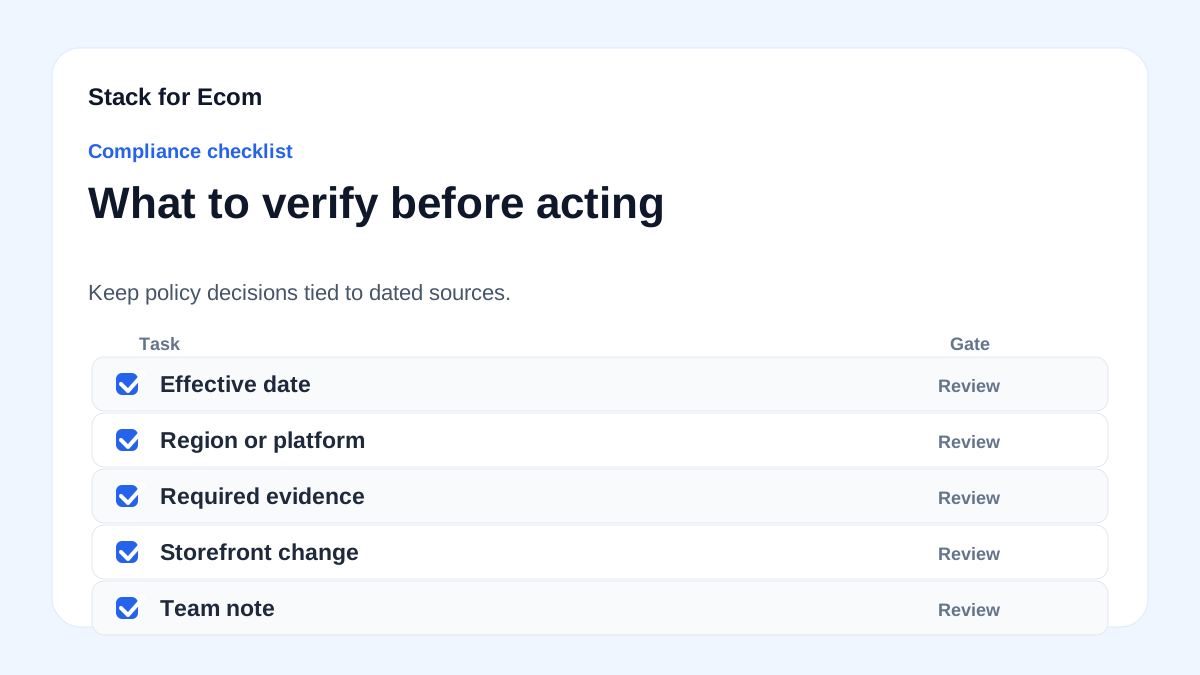
- [ ] Identify if your product falls under GPSR (all consumer products, except some specific categories like food, feed, and medical devices).
- [ ] Appoint an EU-based responsible person (manufacturer, importer, or authorized representative).
- [ ] Prepare technical documentation, including design specs, test reports, and risk assessments.
- [ ] Conduct a risk assessment and, if needed, have your product tested by an accredited laboratory.
- [ ] Ensure product labeling includes manufacturer/importer details, batch/serial number, and safety warnings in the local language.
- [ ] Register your product with the EU's Safety Gate (RAPEX) system if required (e.g., for products that pose a serious risk).
- [ ] Verify specific product requirements for each EU country you sell in (e.g., national language requirements, additional certifications).
- [ ] Set up a process for handling consumer complaints and product recalls.
- [ ] Use marketplace tools like Amazon's Manage Your Compliance to track requirements.
- [ ] Keep records of all compliance documentation for at least 10 years after the product is placed on the market.
- [ ] Review EU customs procedures and ensure your import documentation is accurate and complete.
- [ ] Consider using a customs broker if you are unfamiliar with EU import procedures.
Potential pitfalls
- Assuming GPSR does not apply to your product: Many sellers think that if they are not the manufacturer, they are not responsible. However, as an importer or marketplace seller, you have obligations. Prevention: Always assume GPSR applies unless you have verified an exemption.
- Not having an EU responsible person: Without this, your product can be deemed non-compliant and removed from sale. Prevention: Appoint an authorized representative or use a compliance service.
- Incomplete technical documentation: Authorities may request documentation at any time. Prevention: Keep a comprehensive file with all test reports and risk assessments.
- Ignoring country-specific requirements: Language requirements and national regulations can vary. Prevention: Check each marketplace's compliance reference tools and consult local experts.
- Inaccurate customs declarations: Incorrect descriptions or values can lead to fines and product seizure. Prevention: Use a customs broker and double-check all declarations.
- Relying solely on AI chatbots for compliance advice: The ITA's chatbot is beta and may give inaccurate information. Prevention: Always verify with official sources and legal counsel.
- Not updating compliance documentation after product changes: Any change in design or materials may require new testing. Prevention: Establish a change management process.
Suggested visuals
- A flowchart showing the GPSR compliance process from product design to market placement.
- A checklist infographic with icons for each step (responsible person, documentation, labeling, etc.).
- A comparison table of EU vs. U.S. import declaration requirements.
- A screenshot of Amazon's Manage Your Compliance dashboard to illustrate marketplace tools.
- A diagram showing the supply chain roles (manufacturer, importer, distributor) and their GPSR obligations.
- A timeline graphic showing key compliance milestones and deadlines.
Who this helps / Who should avoid
Who this helps:
- Cross-border ecommerce sellers who are new to the EU market and need a clear compliance roadmap.
- Small and medium-sized exporters who lack in-house regulatory expertise.
- Marketplace sellers who want to avoid costly mistakes and ensure smooth customs clearance.
Who should avoid:
- Sellers of products that are explicitly exempt from GPSR (e.g., food, feed, medicinal products) – they should follow sector-specific regulations.
- Businesses that sell only in their domestic EU country and are already fully compliant – they may not need this general checklist.
- Those who are looking for legal advice; this article is informational and not a substitute for professional counsel.
Conclusion
Navigating EU GPSR compliance is a critical step for any marketplace seller targeting the EU. By understanding the regulation, leveraging official resources, and following a structured checklist, you can minimize risks and build a successful cross-border business. Remember that compliance is an ongoing process—stay informed about regulatory updates and maintain thorough documentation. Use the references provided to verify details and consult with experts when needed. With careful preparation, you can confidently sell in the EU and meet consumer expectations for safety.
References
- https://taxation-customs.ec.europa.eu/customs-4/customs-procedures-import-and-export_en
- https://www.trade.gov/ecommerce
- https://sell.amazon.com/global-selling
- https://advertising.amazon.com/library/guides/getting-started-with-sponsored-ads
- https://www.cbp.gov/trade/basic-import-export/internet-purchases