TL;DR
- Use a structured ad copy template to save time and stay compliant across regions.
- Always check import rules (e.g., U.S. CBP) before shipping to avoid seizures and fines.
- Keep your product feed clean and accurate—Google Merchant Center and Facebook require consistent data.
- Update your product data at least every 30 days to maintain ad eligibility.
- Be aware of AI-generated content labeling rules in the EU, India, and New York.
- Use the template below to draft ads that resonate locally while meeting platform policies.
Introduction
Launching a product across borders is exciting, but it comes with a unique set of challenges. You’re not just writing ad copy—you’re navigating import regulations, platform policies, and data quality standards. A single misstep, like an inaccurate product description or an unapproved claim, can lead to ad disapprovals, customs delays, or even legal fines. For cross-border ecommerce sellers, the stakes are high: your ad copy is often the first touchpoint, and it must be both persuasive and compliant.
This article gives you a practical Facebook ad copy template tailored for cross-border product launches. It’s built from real-world requirements—like Google Merchant Center’s product data rules, U.S. Customs and Border Protection (CBP) import guidelines, and platform-specific ad policies. You’ll learn how to structure your copy, what to avoid, and how to align your ads with your product feed and shipping reality. Use this as a checklist before every launch to reduce risk and improve performance.
We’ll walk through the template, break down each section with examples, and highlight pitfalls that have tripped up other sellers. You’ll also see how to tie your ad copy to your product data—because a mismatch between your ad and your landing page can hurt your conversion rate and your account health. Let’s get your next launch off the ground safely.
Main Content
1. The Core Template: Structure That Sells and Complies
A solid Facebook ad copy template for cross-border launches has five key blocks: hook, value proposition, proof, call-to-action (CTA), and compliance note. Here’s a fill-in-the-blank structure you can adapt:
- Hook (first 1-2 lines): Grab attention with a benefit or a bold statement. Example: “Tired of flimsy travel gear? Meet the suitcase that folds to 10% of its size.”
- Value proposition (2-3 lines): Highlight the product’s unique selling points, using specific attributes like size, color, or material. Example: “Made from aerospace-grade aluminum, weighs only 2.2 lbs, and fits in overhead bins.”
- Proof (1-2 lines): Include social proof or certifications. Example: “Rated 4.8/5 by 2,000+ travelers. CE certified.”
- CTA (clear action): Use a strong, action-oriented CTA like “Shop Now” or “Get Yours Today.”
- Compliance note (optional but smart): For regulated products, add a short disclaimer. Example: “Complies with EU safety standards.”
This structure keeps your copy focused and easy to localize. For each market, swap the hook and proof to match local preferences, but keep the core value proposition consistent with your product data.
2. Aligning Your Ad Copy with Product Data (Merchant Center & Facebook)
Your Facebook ad copy must match the product data you submit to platforms like Google Merchant Center or Facebook’s catalog. If your ad says “stainless steel water bottle” but your product feed says “plastic,” you risk disapprovals and customer trust issues. Google’s product data rules are strict: titles must be accurate, max 150 characters, and match the landing page title. The same principle applies to Facebook—your ad copy should mirror the product title and description you use in your catalog.
For example, if you sell a laptop, your ad copy should include distinguishing features like “with 16GB RAM” or “with 512GB SSD” to avoid confusion. Google also requires product titles to avoid promotional text like “SALE” or “FREE SHIPPING”—Facebook has similar policies. Keep your ad copy clean and descriptive, not hype-heavy. This not only complies with platform rules but also improves ad relevance and click-through rates.
Another key point: update your product data at least every 30 days. If you change a product’s price or availability, update both your ad copy and your feed. A mismatch between your ad and your landing page can lead to a poor user experience and higher bounce rates, which hurts your ad performance over time.
3. Navigating Import Regulations: What Your Ad Copy Can Promise
When you sell cross-border, you’re not just responsible for the ad—you’re responsible for the entire import process. According to U.S. CBP, the buyer of goods from foreign sources becomes the importer and must ensure compliance with state and federal regulations. If your product is prohibited or requires a permit, it can be seized. So, your ad copy should never promise something that your product can’t legally deliver.
For instance, if you’re selling dairy products from a country with import restrictions, your ad copy can’t claim “ships to the U.S.” without verifying that it’s allowed. Similarly, if your product is subject to quota restrictions (like linen), your ad copy should avoid promising fast delivery, because customs delays can be costly. Always research the destination country’s import rules before you write your ad copy. If you’re unsure, state “Available in select countries” to avoid legal issues.
Your ad copy can also help set expectations. For example, you might include a line like “Import duties may apply” to prepare international customers. This transparency reduces the risk of chargebacks and negative reviews, which can hurt your ad account’s reputation.
4. The Role of AI-Generated Content and Labeling
More sellers are using AI tools to generate ad copy and images. But did you know that some regions require you to disclose AI-generated content? According to Google’s guidelines, AI regulations in the European Union, India, and New York require labels or disclosures for ads with AI-generated or edited assets. Google’s AI label setting will roll out gradually in July across its platforms, including Merchant Center. Facebook may follow similar trends, so it’s wise to stay ahead.
If you use AI to write your ad copy, ensure you review it for accuracy and compliance. For example, if you use an AI image generator to create a product mockup, add a disclosure like “AI-generated image” in markets where required. This isn’t just about compliance—it’s about transparency with your customers. In the EU, failing to disclose AI-generated content could lead to fines.
In your ad copy template, add a placeholder for AI disclosures. Something like: “This image was created with AI for illustration purposes.” This small addition can save you from legal headaches later.
5. Case Study: Launching a Foldable Travel Bag to the U.S.
Let’s apply the template to a real scenario. You’re launching a foldable travel bag to the U.S. market. Your product data includes: title “Foldable Travel Duffel Bag – 40L, Black,” condition “new,” and GTIN (if you have one). Your ad copy might look like this:
- Hook: “Packing for a weekend trip? This bag folds into a pouch.”
- Value prop: “40L capacity, weighs only 1.5 lbs, and folds to the size of a book. Perfect for carry-on.”
- Proof: “Trusted by 5,000+ travelers. Free returns within 30 days.”
- CTA: “Shop Now”
- Compliance note: “Ships from our U.S. warehouse. Import duties may apply.”
Now, check compliance: your bag is not a restricted item, so no special permits are needed. Your ad copy matches your product title and description. You’ve included a note about import duties, which is honest and reduces surprises. This ad is likely to perform well because it’s clear, specific, and trustworthy.
If you were selling to the EU, you might need to adjust the hook to emphasize sustainability (if your bag is eco-friendly) and add an AI disclosure if you used AI-generated images. The template adapts easily.
Step-by-step checklist
- Research import rules for your target country (e.g., U.S. CBP regulations) to ensure your product is legal to import and ship.
- Check product data in your catalog: ensure title, description, and attributes (like color, size) are accurate and match your ad copy.
- Write your ad copy using the template: hook, value proposition, proof, CTA, and compliance note.
- Localize your copy for each market: adjust language, currency, and cultural references.
- Add AI disclosures if you use AI-generated assets, especially for EU, India, and New York audiences.
- Verify your product feed is up-to-date (at least every 30 days) and meets platform requirements.
- Set up your ad account properly: link your product catalog to your ad account (if using dynamic ads).
- Test different hooks and CTAs to see what resonates with your audience.
- Monitor ad performance and adjust copy based on click-through and conversion rates.
- Review compliance periodically: update your copy if regulations change or if you receive feedback from customs or platforms.
Potential pitfalls
- Ignoring import restrictions: Selling a product that’s prohibited in the destination country can lead to seizure and fines. Prevention: Always check CBP or local customs websites before launching.
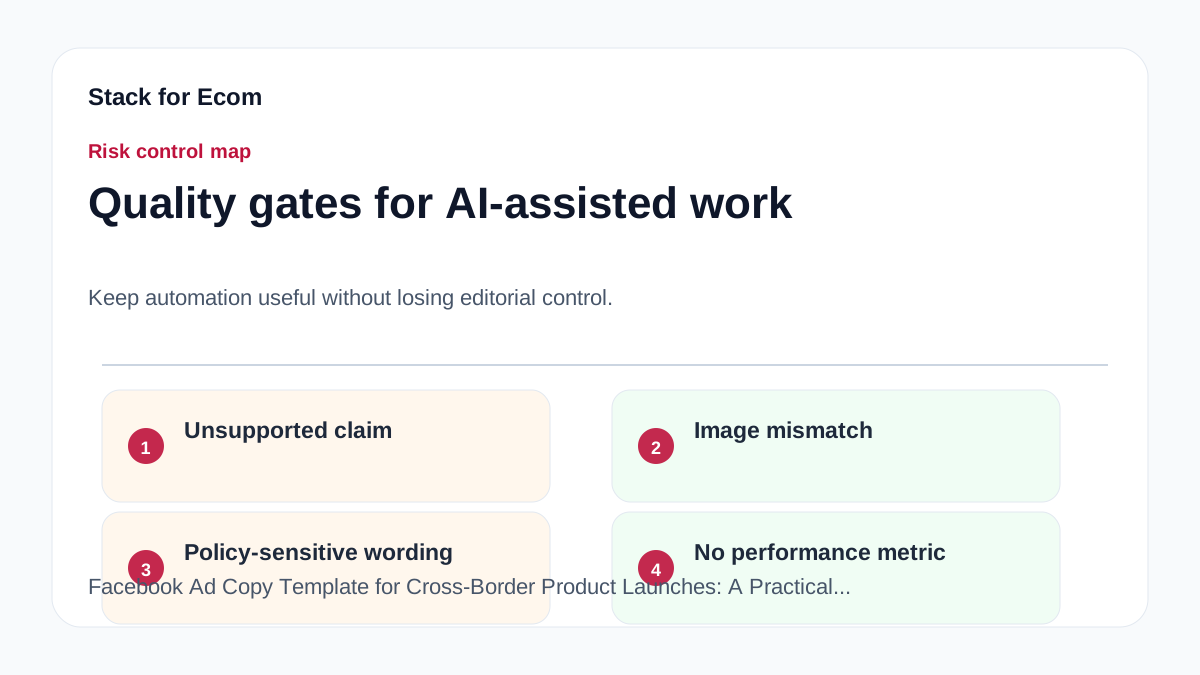
- Mismatched ad copy and landing page: If your ad says “free shipping” but your landing page doesn’t offer it, you’ll get high bounce rates and negative feedback. Prevention: Keep your ad copy and landing page consistent.
- Using promotional language in titles: Google and Facebook may disapprove ads with “SALE” or “FREE” in product titles. Prevention: Use descriptive, non-promotional language in your ad copy and product titles.
- Forgetting to update product data: If you change a product’s price or availability but don’t update your feed, your ads may show outdated info. Prevention: Set a monthly reminder to review and update your product data.
- Not disclosing AI-generated content: In some regions, this is a legal requirement. Prevention: Add a disclosure line to your ad copy if you use AI assets.
- Overpromising delivery times: Customs delays can happen, and promising fast shipping can backfire. Prevention: Use realistic delivery estimates and mention possible customs delays.
- Ignoring data quality standards: Inaccurate product data can lead to disapprovals or limited eligibility. Prevention: Follow the product data specification and use tools to validate your feed.
Suggested visuals
- A side-by-side comparison table of the ad copy template sections (hook, value prop, proof, CTA, compliance) with examples for different product types.
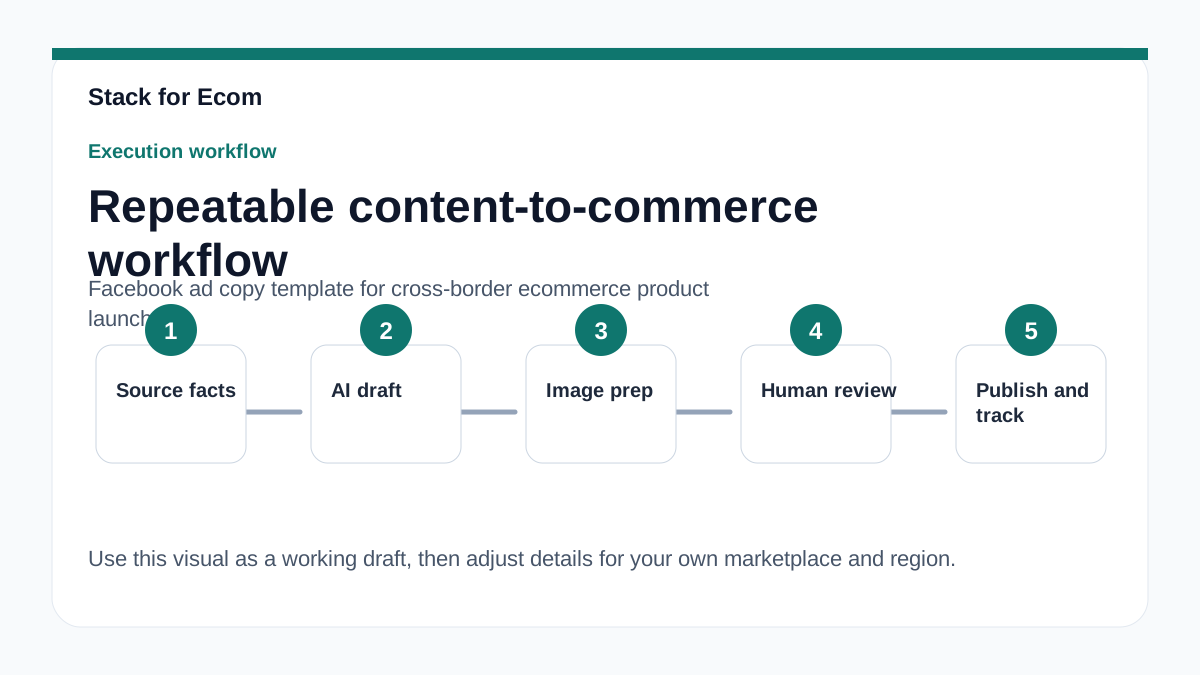
- A flowchart showing the steps from product research to ad launch, including import compliance checks.
- A screenshot of a well-structured Facebook ad that follows the template, with annotations highlighting each section.
- A chart illustrating de minimis shipment trends (e.g., growth from 2020 to 2024 and decline in 2025) to emphasize the importance of accurate customs declarations.
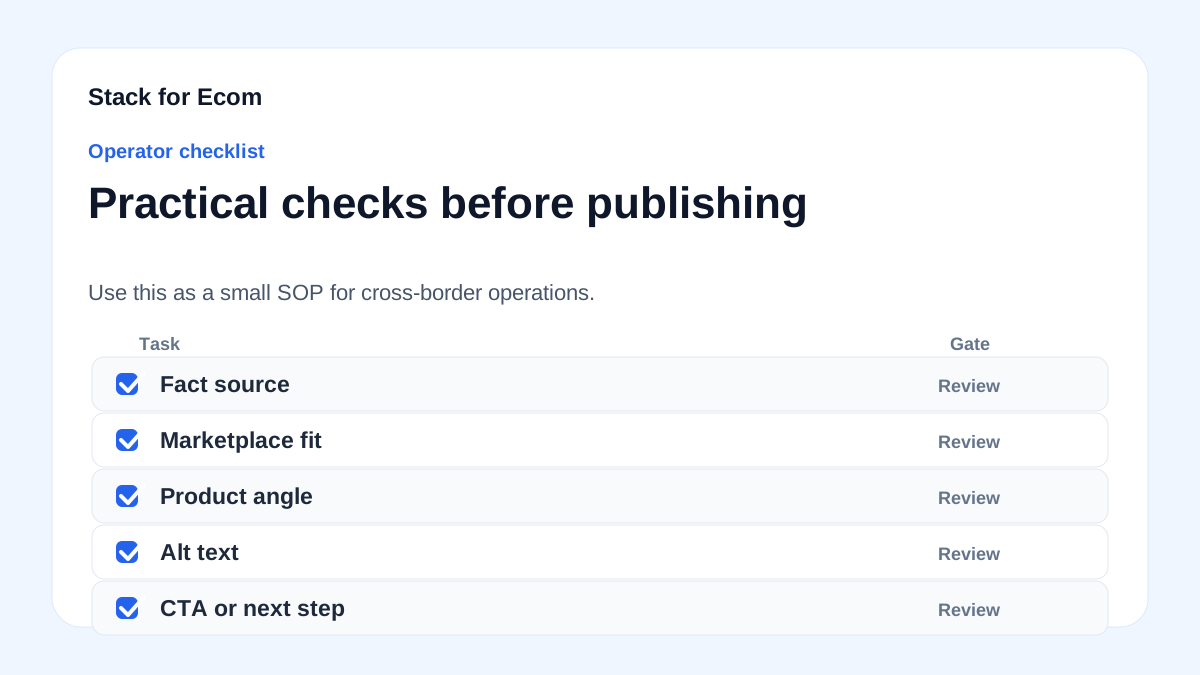
- A checklist infographic summarizing the step-by-step checklist for quick reference.
- A sample product data table showing required attributes (ID, title, description) and how they map to ad copy elements.
Who this helps / Who should avoid
Who this helps:
- Cross-border ecommerce sellers launching products on Facebook and other platforms.
- Small operations teams that need a repeatable process for ad creation.
- Exporters who want to avoid customs issues and ad disapprovals.
- Marketers who use AI tools and need to stay compliant with new labeling rules.
Who should avoid:
- Sellers who only operate domestically and don’t deal with import regulations.
- Businesses that don’t use product feeds or catalogs (e.g., pure service providers).
- Teams that prefer a fully manual, non-templated approach and have unlimited time for ad creation.
Conclusion
Launching a product cross-border doesn’t have to be a nightmare. With a solid Facebook ad copy template, you can create ads that are both persuasive and compliant. Remember to align your ad copy with your product data, understand the import rules of your target markets, and stay transparent about things like AI-generated content and shipping expectations. Use the checklist and pitfalls to guide your process, and you’ll reduce risks while improving your ad performance.
Now, take this template and adapt it to your next product launch. Test different hooks, localize for each market, and keep your data clean. Your customers—and your bottom line—will thank you.
References
- https://ads.tiktok.com/help/article/about-catalogs
- https://support.google.com/google-ads/answer/6275312
- https://www.cbp.gov/trade/basic-import-export/internet-purchases
- https://www.cbp.gov/trade/basic-import-export/e-commerce
- https://support.google.com/merchants/answer/7052112