TL;DR
- Use clear, professional email templates for supplier and buyer follow-up to reduce misunderstandings and speed up deals.
- Always verify import/export rules with official sources like CBP and ITA; AI tools can help but are not definitive.
- Include precise product descriptions, Incoterms, and customs declarations in every email to avoid delays or fines.
- Templates below cover initial inquiry, quote follow-up, shipping updates, customs issues, and payment reminders.
- Check references for current regulations; details may vary by product, country, and shipment value.
Introduction
In cross-border trade, email is the backbone of communication between suppliers and buyers. A poorly worded follow-up can stall a shipment, create customs delays, or even cost you a client. Many small exporters and ecommerce sellers struggle with drafting professional replies that cover all necessary details—from pricing to compliance. This article provides ready-to-use email templates for common supplier and buyer follow-up scenarios, so you can respond quickly and confidently.
The business impact is significant: a clear email that includes accurate product descriptions, shipping terms, and customs documentation can prevent costly errors. For example, U.S. Customs and Border Protection (CBP) requires a precise cargo description under 19 CFR § 4.7a, and missing details can lead to fines or seizure. Using structured templates helps you stay compliant and professional, whether you are a supplier confirming an order or a buyer checking on a shipment.
Use this article as a practical guide. Each template is designed to be copied, adapted, and sent. We also highlight common pitfalls and how to avoid them, plus a step-by-step checklist you can turn into a standard operating procedure (SOP) for your team.
Main Content
1. Initial Inquiry and Quote Follow-Up
When a buyer sends an inquiry, your reply sets the tone. A good template should acknowledge the request, confirm product details, and ask clarifying questions if needed. For example, if the buyer asks for a quote on 500 units of a widget, you might reply: "Thank you for your interest. To provide an accurate quote, could you confirm the target price, delivery location, and any certifications required?" This avoids back-and-forth and shows you are thorough.
For follow-up after sending a quote, a polite nudge can move the deal forward. Use a template like: "I hope my quote from [date] was helpful. Do you have any questions about pricing or lead time? I can adjust the offer if your volume changes." This keeps the conversation open without being pushy.
Remember that buyers may be importing into the U.S., so they need to know if the product is legal to import. As per CBP, the buyer becomes the importer and is responsible for compliance. Your email should mention that you can provide necessary documentation (e.g., certificate of origin) but that final import responsibility lies with the buyer.
2. Shipping and Customs Communication
Shipping is a common source of confusion. When you, as a supplier, send a shipping update, include the carrier, tracking number, and estimated arrival. For example: "Your order has shipped via DHL, tracking number 1234567890. Estimated delivery is June 15. Please note that customs clearance is the buyer's responsibility." This sets expectations and reduces support tickets.
If you are the buyer and need to follow up on a shipment, your email should ask for the necessary documents: the CBP declaration form, commercial invoice, and bill of lading. A template could be: "Could you please send the commercial invoice and the CBP declaration form? Our customs broker needs them to clear the shipment." This is critical because foreign shipments without these documents may be seized or returned to sender.
Also, be aware of de minimis thresholds. For shipments under $2,500 via international postal service, a mail entry may be used. But for higher values or restricted goods, more paperwork is needed. Your email should clarify who is handling customs—buyer, seller, or a broker—to avoid delays.
3. Handling Customs Issues and Delays
When customs holds a shipment, both parties need to act fast. As a supplier, you might receive an email from the buyer about a delay. Your reply should be empathetic and solution-oriented: "I understand the delay is frustrating. Our records show the goods are correctly described on the invoice. Please share the customs notice, and we can provide additional documentation if needed."
As a buyer, you may need to email the supplier about a customs issue: "Customs is requesting a more detailed product description. Could you revise the invoice to include the material composition and dimensions?" This is a common request because CBP requires a precise description that identifies the commodity's size, shape, and characteristics.
Avoid entering into disputes about who is at fault. Instead, focus on resolving the issue. Use templates that acknowledge the problem, propose a next step, and set a timeline. For example: "We will send the revised documents within 24 hours. Please confirm if anything else is needed."
4. Payment Reminders and Order Confirmations
Payment follow-ups are sensitive. A firm but polite template works best: "This is a reminder that payment for invoice #12345 is due on [date]. If payment has already been sent, please disregard this message. Otherwise, let us know if you have any questions." This is straightforward and professional.
For order confirmations, include all key details: product, quantity, price, Incoterms, delivery date, and payment terms. Example: "We confirm your order for 1,000 units at $2.50 each, FOB Shanghai, delivery by August 1. Payment terms are 30% deposit, 70% before shipment. Please review and confirm." This prevents misunderstandings later.
When using AI tools like the Global Business Navigator to draft emails, remember that they are beta and may produce inaccurate responses. Always verify legal and regulatory details with official sources. For instance, ITA's chatbot cannot provide company-specific advice, so use it for general guidance only.
5. Leveraging AI Tools Responsibly
AI chatbots, such as the Global Business Navigator from ITA, can help you draft email templates and understand export processes. They are trained on ITA's Export Solutions content and can answer general questions. However, they are beta products and may give incomplete answers. You should never rely on them for legal advice or specific market requirements.
For example, you might ask the chatbot: "What documents do I need to export to Mexico?" It can point you to relevant resources, but you must verify with official sources. Also, do not input sensitive information like customer names or bank details, as the chatbot does not collect data but you should still avoid sharing proprietary info.
Use AI to speed up your drafting, but always have a human review for accuracy, especially regarding customs regulations. The CBP website is the authoritative source for import rules, and ITA for export assistance. Combine AI efficiency with human expertise for best results.
Step-by-step checklist
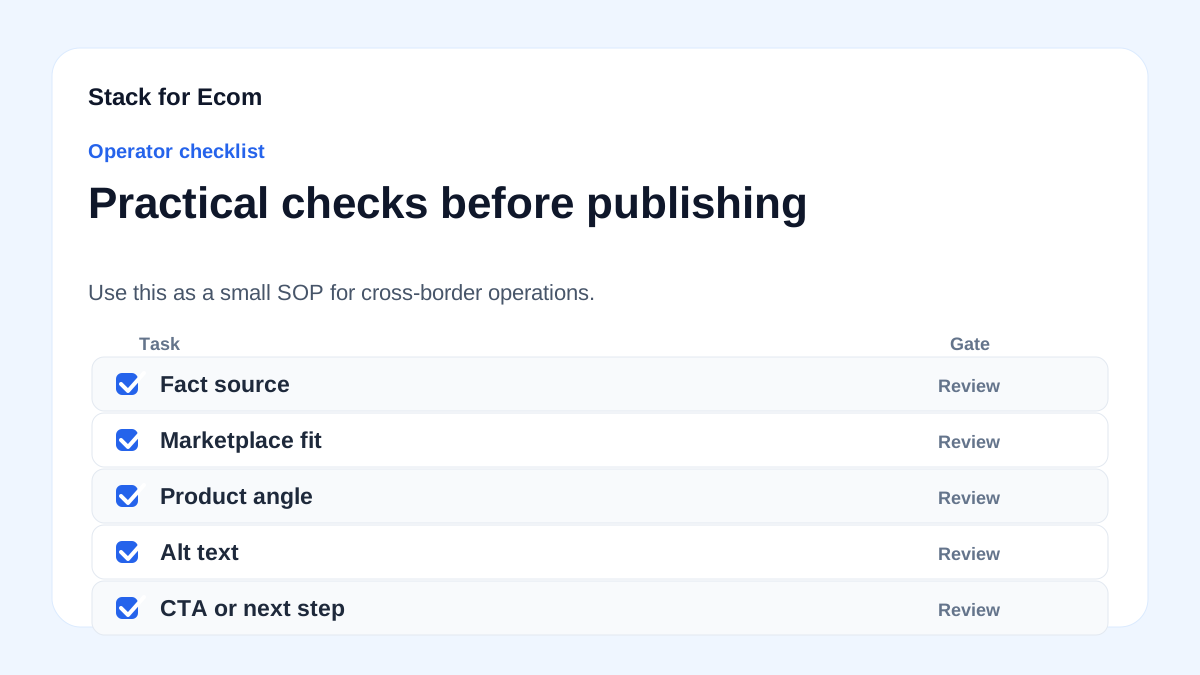
- [ ] Confirm the recipient's name, company, and role before drafting your reply.
- [ ] Acknowledge the original message and restate the key point (e.g., order number, quote date).
- [ ] Include all required details: product description, quantity, price, Incoterms, and delivery date.
- [ ] Verify if the product is subject to any import restrictions or quotas (check CBP and ITA resources).
- [ ] Attach or request necessary documents: commercial invoice, packing list, CBP declaration form, bill of lading.
- [ ] Specify who is responsible for customs clearance and shipping costs.
- [ ] Set a clear next step and deadline (e.g., "Please confirm by Friday").
- [ ] Proofread for clarity and professionalism; avoid jargon or ambiguous terms.
- [ ] Use a professional email signature with your contact details.
- [ ] Save a copy of the email and any attachments for your records.
Potential pitfalls
- Vague product descriptions: CBP requires a precise cargo description. Avoid generic terms like "parts" or "goods." Instead, describe the product's material, function, and dimensions. Prevention: Use a template that prompts for detailed descriptions.
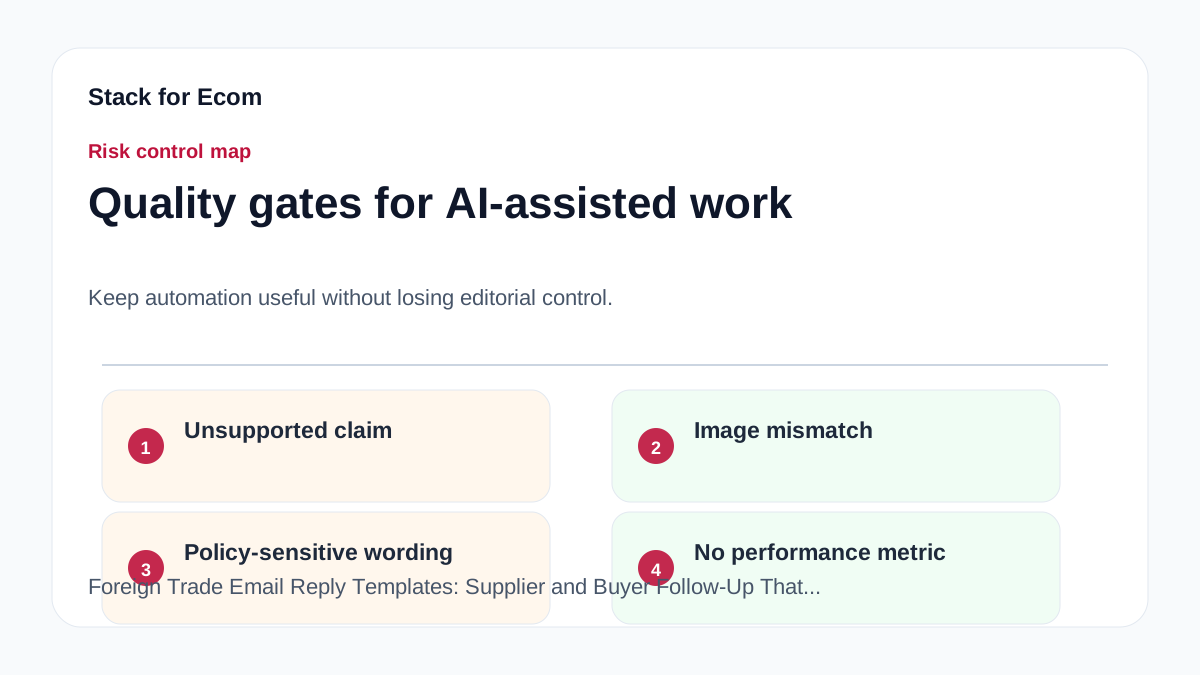
- Ignoring import regulations: Buyers may not realize they are the importer and responsible for compliance. Prevention: Include a note in your email reminding them to check CBP rules.
- Assuming AI is always correct: The Global Business Navigator is beta and may give inaccurate answers. Prevention: Cross-check all AI-generated content with official sources before sending.
- Forgetting to verify translations: If you use AI to translate emails, translations may have errors with acronyms and nuances. Prevention: Have a native speaker review translated emails.
- Sharing sensitive information: Avoid entering personal or proprietary data into AI tools. Prevention: Keep AI interactions generic and never include bank details or customer PII.
- Not confirming shipping terms: Misunderstandings about who pays for shipping or handles customs can cause delays. Prevention: State Incoterms clearly in every email.
Suggested visuals
- A flowchart showing the email follow-up process from inquiry to order confirmation.
- A table comparing different Incoterms (FOB, CIF, EXW) and their implications for buyer and seller.
- A screenshot of a well-structured email template with annotations highlighting key sections.
- A chart illustrating de minimis volumes and values over fiscal years 2020-2025 to show ecommerce growth.
- A checklist infographic for customs documentation requirements.
- A diagram showing the roles of buyer, seller, and customs broker in a typical import transaction.
Who this helps / Who should avoid
This article is ideal for small and medium-sized exporters, ecommerce sellers, and trade operations teams who handle email communication with suppliers or buyers. It is also useful for new importers who need to understand the documentation and compliance aspects of buying from foreign sources.
If you are a large enterprise with a dedicated legal and compliance team, you may already have sophisticated processes in place. However, the templates can still serve as a quick reference. Avoid using these templates for highly regulated products (e.g., pharmaceuticals, firearms) without consulting legal counsel, as additional requirements apply.
Conclusion
Effective email communication is a critical skill in foreign trade. Using structured templates can save time, reduce errors, and build trust with your partners. Remember to always verify regulatory details with official sources like CBP and ITA, and use AI tools like the Global Business Navigator as a supplement, not a replacement for professional judgment.
Start implementing these templates today. Customize them to your products and markets, and turn the checklist into a standard operating procedure for your team. With clear, professional emails, you can navigate the complexities of international trade with confidence.
References
- https://www.trade.gov/export-solutions
- https://www.trade.gov/ecommerce
- https://www.cbp.gov/trade/basic-import-export/internet-purchases
- https://www.cbp.gov/trade/basic-import-export/e-commerce