TL;DR
Comparing freight forwarder quotes is critical for ecommerce sellers to control costs and avoid customs delays. This article provides a repeatable template, a step-by-step checklist, and common pitfalls. Key facts: U.S. importers are responsible for compliance (CBP), de minimis shipments hit 1.36 billion BOLs in FY2024, and air transport dominates. Use the template to evaluate quotes on services, fees, and documentation.
Introduction
Every ecommerce seller who imports goods into the U.S. faces a common operational problem: how to choose the right freight forwarder without overpaying or risking customs issues. With over 1.36 billion de minimis Bills of Lading processed in fiscal year 2024 alone, the volume of small shipments is staggering. Yet many sellers rely on a single quote or a vague email, missing hidden fees or compliance gaps. The business impact is direct: unexpected charges can wipe out margins, and non-compliance can lead to fines or seizure of goods.
This article gives you a structured template to compare freight forwarder quotes side by side. You will learn what line items to demand, how to verify compliance with U.S. Customs and Border Protection (CBP) regulations, and what red flags to watch for. Whether you ship via air, ocean, or truck, the template works for both B2B and direct-to-consumer ecommerce. Use it as a standard operating procedure (SOP) for every new carrier relationship.
Main Content
Why a Standardized Quote Template Is Essential
Ecommerce shipments are unique because they often fall under de minimis thresholds ($800 per day per person for personal use, but commercial shipments have different rules). However, even small shipments require precise cargo descriptions under 19 CFR §§ 4.7a, 122.48a, 123.91, 123.92, and 128.21. A freight forwarder’s quote must include not just the freight cost but also documentation fees, customs brokerage, and any surcharges. Without a template, sellers miss items like “hazardous goods handling” or “residential delivery fees.”
For example, an ecommerce seller importing phone cases from China via air freight might get a quote of $4.50 per kg. But the final invoice could include a $25 documentation fee, a $15 customs clearance fee, and a $10 residential delivery surcharge. These add up. A template forces the forwarder to itemize everything upfront.
Key Components of the Quote Comparison Template
Your template should have these sections:
- Shipment details: Origin, destination, weight, dimensions, commodity description (must be precise per CBP rules), and Incoterms.
- Freight charges: Rate per kg or per CBM, currency, and validity period.
- Accessorial fees: Documentation, customs clearance, fuel surcharge, security fee, insurance, and warehousing.
- Transit time: Estimated days from pickup to delivery, with mode (air, ocean, truck, rail).
- Compliance services: Whether the forwarder handles CBP entry type 86 for de minimis shipments, and if they provide a customs bond.
- Payment terms: Net 30, prepaid, or COD.
For instance, if you ship via truck (174.2 million de minimis BOLs in FY2024), ensure the quote includes a line for “liftgate service” if the destination lacks a loading dock.
How to Use the Template in Practice
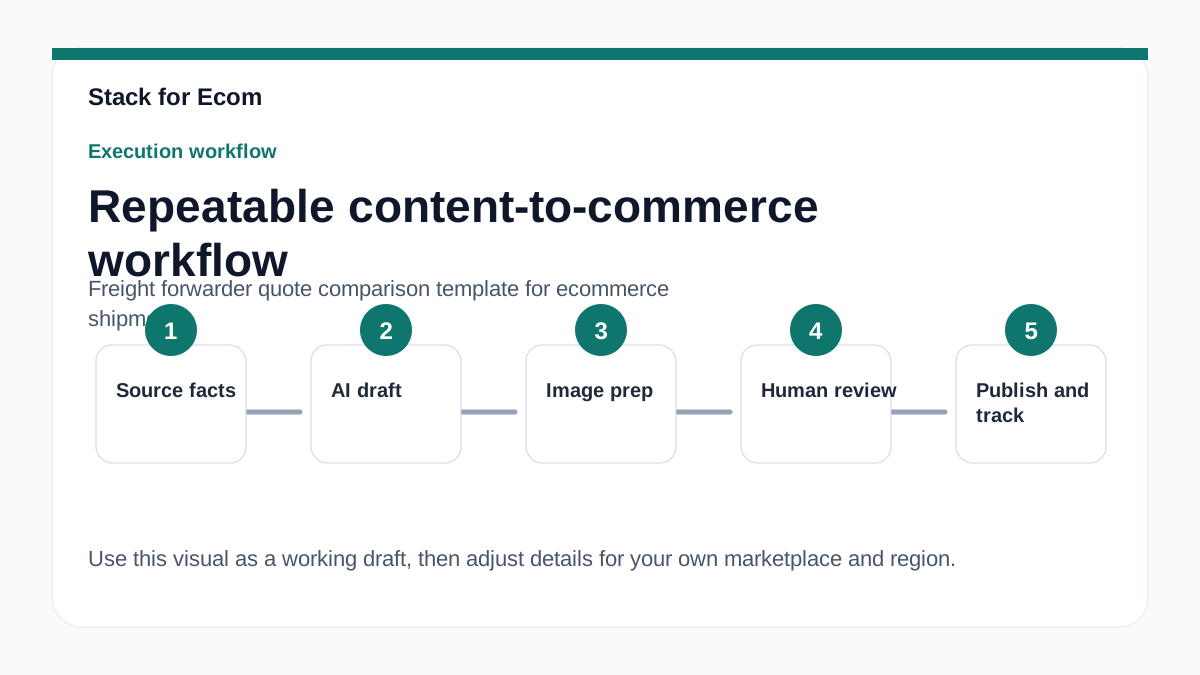
Step 1: Request quotes from at least three forwarders using the same template. Provide identical shipment details (e.g., 100 kg, 0.5 CBM, from Shenzhen to Los Angeles, Incoterms FOB). Step 2: Compare total landed cost, not just freight rate. A forwarder with a lower rate may have higher accessorial fees. Step 3: Verify that the forwarder’s system can transmit the required commodity description without superfluous PII or packaging info, as per CBP regulations. Step 4: Ask for a sample customs entry to confirm they understand your product category.
Example: An ecommerce seller of dietary supplements must ensure the forwarder knows FDA requirements. The quote should include a line for “FDA filing fee.” If missing, the seller risks detention at the border.
Compliance Risks and the Importer’s Responsibility
Under CBP rules, the buyer becomes the importer and is responsible for ensuring goods comply with all state and federal regulations. Non-compliance can result in fines, detention, or destruction. Even if the freight forwarder offers “door-to-door” service, the seller must verify that the forwarder is a licensed customs broker or partners with one. If not, the seller must hire a separate broker or clear goods themselves.
The Global Business Navigator Chatbot (beta) from ITA can provide general export information, but it cannot give product-specific or market-specific advice. Always double-check responses against official sources like CBP’s import guidelines. Never rely solely on a chatbot for compliance decisions.
Step-by-step checklist
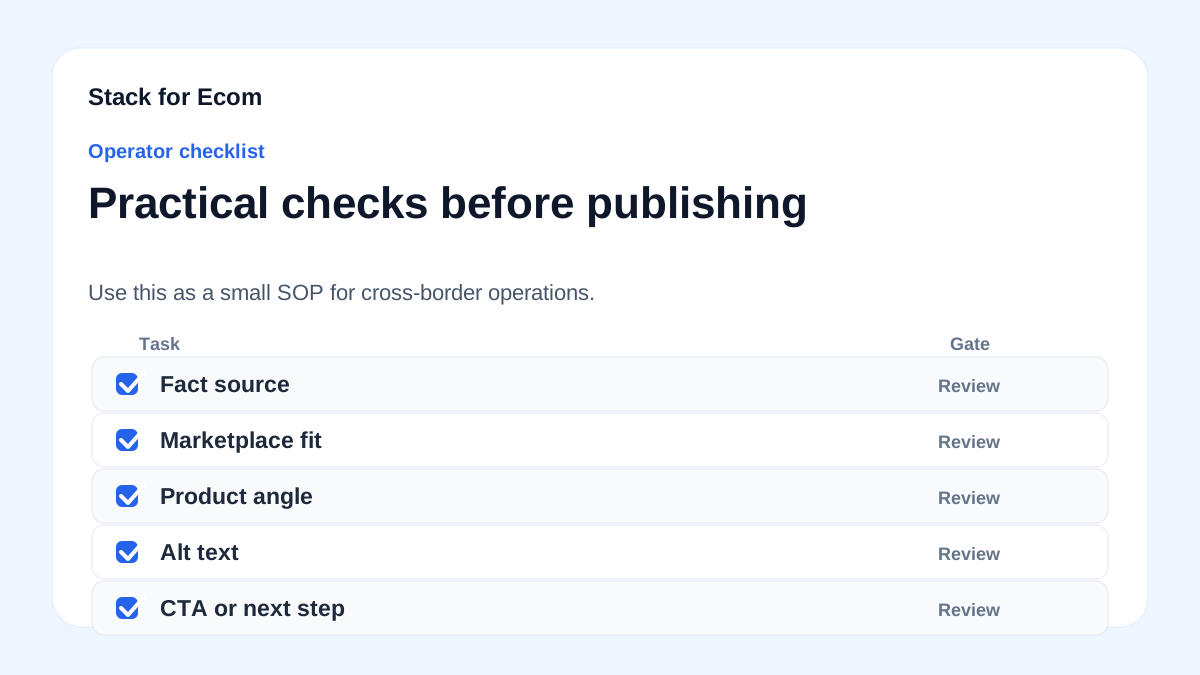
- Define your shipment parameters: origin, destination, weight, dimensions, commodity (with precise CBP-compliant description), and Incoterms.
- Create a blank quote comparison template with columns for each forwarder and rows for all fee categories.
- Send the same RFP to at least three freight forwarders, attaching your template as a required format.
- Request a breakdown of all accessorial fees: documentation, customs clearance, fuel surcharge, insurance, warehousing, and any surcharges for residential delivery or liftgate.
- Ask for the forwarder’s estimated transit time in days, including pickup, transit, and delivery.
- Confirm the forwarder’s ability to handle CBP entry type 86 for de minimis shipments if your goods qualify.
- Verify that the forwarder provides a customs bond or can arrange one; if not, budget for a separate bond.
- Review the commodity description field in the quote to ensure it contains only precise cargo details (no PII, packaging type, or carrier disclaimers).
- Ask for a sample of the customs entry documents they will file, and cross-check against CBP requirements.
- Compare total landed cost (freight + all fees) and transit time, then select the forwarder that offers the best value, not just the lowest rate.
Potential pitfalls
- Hidden fees: Many forwarders quote a low freight rate but add documentation fees ($25–$50) and customs clearance fees ($50–$100) later. Prevention: Require all fees in the initial quote and compare total cost.
- Inaccurate commodity description: Using vague terms like “electronics” instead of “plastic phone cases” can trigger CBP delays or seizure. Prevention: Use precise, plain-language descriptions that match CBP regulations.
- Assuming de minimis applies to commercial shipments: De minimis ($800) is for personal imports. Commercial shipments may require formal entry even if under $800. Prevention: Consult a customs broker for your specific product.
- Ignoring compliance responsibilities: The buyer is the importer and liable for fines if goods are non-compliant. Prevention: Include a compliance checklist in your SOP and verify forwarder’s broker license.
- Relying on AI tools for legal advice: The ITA chatbot is beta and may produce inaccurate responses. Prevention: Always verify with official sources like CBP or a licensed professional.
- Not checking for language nuances: If the forwarder’s quote is in a foreign language, verify translations, especially for acronyms and abbreviations. Prevention: Request quotes in English or have a bilingual colleague review.
Suggested visuals
- Template table: A side-by-side comparison table with columns for three forwarders and rows for freight rate, documentation fee, customs clearance, fuel surcharge, insurance, transit time, and total landed cost.
- Flowchart: A decision tree showing steps from receiving a quote to selecting a forwarder, including compliance checks.
- Screenshot of a sample CBP-compliant commodity description: Example: “100 kg of plastic phone cases, dimensions 40x30x20 cm, no hazardous materials.”
- Bar chart: De minimis BOLs by mode (air, truck, vessel, rail) for FY2024, sourced from CBP data, to show air dominance.
- Timeline graphic: A visual of the import process from quote request to delivery, highlighting where compliance checks occur.
- Infographic: “Red flags in freight quotes” with icons for hidden fees, vague descriptions, and lack of broker license.
Who this helps / Who should avoid
Helps:
- U.S.-based ecommerce sellers importing goods for resale (e.g., dropshippers, Amazon FBA sellers, Shopify store owners).
- Small export operations teams that handle logistics manually and need a repeatable SOP.
- New importers who are unfamiliar with CBP regulations and want to avoid costly mistakes.
Should avoid:
- Large enterprises with dedicated logistics departments that already have negotiated carrier contracts.
- Sellers shipping only domestically within the U.S. (no import/export involved).
- Businesses that rely solely on third-party logistics (3PL) providers that handle all freight selection.
Conclusion
Comparing freight forwarder quotes with a standardized template is not just about saving money—it is about protecting your business from compliance risks. With de minimis shipments exceeding 1.36 billion BOLs in FY2024, the stakes are high. Use the template and checklist in this article to build a repeatable process that ensures every quote is transparent, compliant, and comparable. Remember: as the importer, you are ultimately responsible. Double-check all details, especially commodity descriptions, and never rely on a single source of information. Start today by creating your template and requesting quotes from at least three forwarders.
References
- https://www.trade.gov/ecommerce
- https://www.cbp.gov/trade/basic-import-export/internet-purchases
- https://www.cbp.gov/trade/basic-import-export/e-commerce
- https://ads.tiktok.com/help/article/get-started-tiktok-ads-manager