TL;DR
- Small ecommerce shipments face multiple risks: damage, loss, customs delays, and compliance fines. Freight insurance is not mandatory, but carrier liability is limited and often insufficient.
- Three main options: carrier liability (included but capped), third-party insurance (flexible, often cheaper), and platform/fulfillment insurance (convenient but may have gaps).
- Costs typically range from 0.5% to 2% of declared value; coverage limits vary by carrier and mode (air, truck, vessel, rail).
- Always declare accurate values and descriptions—misdeclaration can void insurance and lead to customs penalties.
- Use a checklist to evaluate coverage before shipping; consider insurance for high-value or fragile items.
Introduction
Small ecommerce shipments are the lifeblood of cross-border trade. In fiscal year 2025 alone, U.S. Customs and Border Protection (CBP) processed over 942 million de minimis shipments (those valued under $800) via air, truck, vessel, and rail. Each shipment carries risk: parcels can be lost, damaged, delayed, or even seized by customs. For a small seller, one lost shipment can wipe out the profit on several orders. Yet many operators skip freight insurance, assuming carrier liability will cover them—only to discover that liability limits are far below the actual value of their goods.
The business impact is real. If a shipment is damaged or lost, you may have to refund the customer, lose the inventory, and absorb the cost of reshipping. Worse, if customs detains your goods due to inaccurate paperwork, storage charges can pile up, and you might face fines. Freight insurance is a tool to mitigate these financial shocks, but not all policies are equal. This article compares the three main options—carrier liability, third-party insurance, and platform/fulfillment coverage—so you can choose the right level of protection for your small ecommerce shipments.
Use this guide to evaluate your current shipping practices. We’ll break down coverage, costs, and exclusions, then provide a step-by-step checklist to implement a robust insurance strategy. By the end, you’ll know exactly what to ask your carrier or insurer and how to avoid common pitfalls that can void your coverage.
Main Content
Option 1: Carrier Liability (Included but Limited)
When you ship via a major carrier like UPS, FedEx, or DHL, a basic liability is included in the freight charges. This is not insurance—it’s a legal liability cap. For example, UPS’s standard liability is usually $100 per package for ground shipments, while FedEx Express covers up to $100 per package unless you declare a higher value. For air freight, the liability may be based on the weight of the shipment (e.g., $20 per kilogram), which is often far less than the actual product value. This means if your shipment is worth $500 and it’s lost, you may only recover $100.
Carrier liability also has strict exclusions. It typically does not cover damage due to improper packaging, perishable goods, or items that are inherently fragile. If you ship a ceramic vase and it arrives shattered, the carrier may argue that packaging was insufficient, leaving you with no compensation. Additionally, the process for filing a claim is time-consuming: you must provide proof of value, photos of damage, and often wait 30-90 days for resolution.
For small ecommerce sellers, relying solely on carrier liability is risky. A $100 cap might cover a low-cost item, but for anything above that, you’re exposed. Consider this: if you ship 100 orders a month with an average value of $150, you’re risking $5,000 in potential losses every month. That’s a significant financial hole if a batch goes missing. The solution is to either purchase additional declared-value coverage from the carrier (which is essentially insurance) or opt for a third-party policy.
Option 2: Third-Party Freight Insurance (Flexible and Cost-Effective)
Third-party insurers specialize in cargo insurance and offer more comprehensive coverage than carrier liability. These policies are typically sold per shipment or per policy period, and they cover a wider range of risks, including theft, damage, and sometimes even customs rejection. For small ecommerce shipments, you can buy a single-shipment policy for as little as $10-$20, depending on the declared value and destination. The cost is usually a percentage of the insured value—often 0.5% to 2%—which is a small price for peace of mind.
One major advantage is that third-party insurance is independent of the carrier. If the carrier denies a claim, you can still recover from the insurer. This is particularly useful when dealing with carriers that have low liability limits. For example, if you ship a high-value electronics component via a postal service that only covers $50, a third-party policy can cover the full $2,000 value. Additionally, many third-party insurers offer faster claims processing and online portals to file claims, which saves time for busy sellers.
However, third-party insurance has its own nuances. You must declare the accurate value of your goods; under-declaring to save on premiums will only result in lower payout. Also, some policies exclude certain types of goods, like liquids, powders, or hazardous materials. Before purchasing, read the policy exclusions carefully. For instance, if you sell cosmetics that contain alcohol, you may need a special policy or additional premium. Always check whether the coverage includes "all risks" or only "named perils"—the latter is cheaper but less comprehensive.
Option 3: Platform or Fulfillment Insurance (Convenient but with Gaps)
If you sell through ecommerce platforms like Amazon, eBay, or Shopify, they may offer their own shipping insurance. For example, Amazon’s A-to-Z Guarantee covers buyers for certain issues, but it’s not insurance for sellers—it’s a buyer protection program. Similarly, eBay’s Money Back Guarantee protects buyers, not sellers. These programs do not reimburse you for lost or damaged inventory; they force you to refund the buyer, and you still lose the product. Therefore, platform protection is not a substitute for freight insurance.
Some platforms, like Shopify, integrate with third-party insurance providers, allowing you to purchase coverage at checkout. This is convenient because you can add insurance in a few clicks without leaving the platform. However, the coverage may be limited to specific carriers or regions, and the cost might be higher than buying directly from an insurer. For example, a $10 insurance fee on a $200 shipment is 5% of the value, which is steep compared to the 1% you might get from a dedicated insurer. Additionally, platform insurance often has a maximum coverage limit (e.g., $5,000 per shipment), which is fine for most small ecommerce but could be insufficient for high-value items.
Another consideration is that platform insurance may not cover shipments that are not tracked or that use non-integrated carriers. If you ship via a local postal service that isn’t integrated with the platform, you might not be able to buy insurance at all. In such cases, you’ll need to purchase a separate policy. For small sellers, platform insurance is a good starting point, but it’s worth comparing costs and coverage with third-party options to ensure you’re not overpaying.
How to Choose the Right Option for Your Shipment
The decision depends on three factors: shipment value, risk tolerance, and destination. For shipments under $100, carrier liability may be sufficient—you can absorb the loss if it happens. For shipments between $100 and $500, consider adding declared-value coverage from the carrier, which is usually cheaper than third-party insurance. For shipments over $500, or for fragile/high-value items, third-party insurance is the most reliable choice. If you ship to destinations with high theft rates or strict customs (like certain countries), insurance is a must.
Also, consider the mode of transport. Air freight is faster but has higher risk of loss or damage due to handling. Truck and vessel shipments are slower but may have lower risk, yet they can face longer customs delays. For example, a shipment sent by vessel might sit in a port for weeks, increasing the risk of theft or damage. In FY2025, 141.6 million de minimis shipments came by truck and 5.9 million by vessel—these modes are common for larger ecommerce orders. Insurance premiums for these modes may vary, so get quotes based on your specific shipping method.
Finally, don’t forget about customs compliance. If your goods are seized due to inaccurate documentation, insurance typically does not cover the loss—that’s a compliance risk, not a transit risk. As noted by CBP, importers are responsible for ensuring compliance, and misleading information can lead to fines and legal action. Therefore, invest in proper documentation and use tools like the Global Business Navigator to verify export requirements, but remember that it’s not a substitute for professional advice.
Step-by-step checklist
- Assess shipment value: Determine the actual value of each shipment, including product cost, shipping, and potential profit.
- Check carrier liability limits: Review your carrier’s standard liability for the mode you use (air, truck, vessel).
- Decide if additional coverage is needed: For shipments over $100, consider buying declared-value or third-party insurance.
- Get quotes from multiple insurers: Compare premiums and coverage limits from at least two third-party insurers.
- Read policy exclusions: Ensure your product type (fragile, liquid, etc.) is covered; if not, ask for a rider.
- Declare accurate values: Never under-declare to save money—this can void coverage and lead to customs penalties.
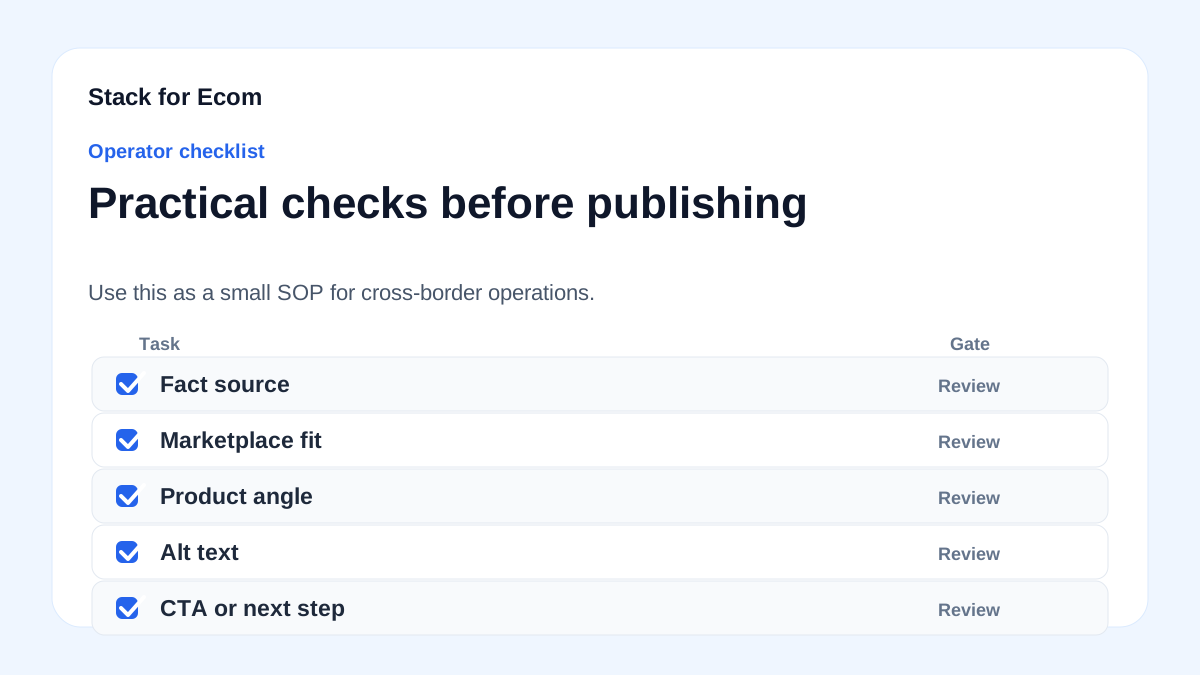
- Document packaging: Take photos of your packaging and contents before sealing; this helps with claims.
- Track your shipment: Use tracking to monitor progress and detect issues early.
- File claims promptly: If a shipment is lost or damaged, file a claim within the carrier’s or insurer’s time limit (usually 30 days).
- Review insurance regularly: As your product mix or shipping volumes change, adjust your coverage accordingly.
Potential pitfalls
- Relying on carrier liability: Many sellers assume they’re covered, but the $100 limit is often insufficient. Prevention: Always check the liability limit and purchase additional coverage for high-value items.
- Misdeclaring value: To save on premiums, some sellers declare a lower value, but if the shipment is lost, the payout is lower. Worse, customs may penalize you for misdeclaration. Prevention: Always declare the true value and ensure the declared value matches the invoice.
- Ignoring customs compliance: Insurance does not cover seizures due to inaccurate descriptions or missing permits. Prevention: Use CBP’s guidelines to ensure your cargo description is precise and complete.
- Not reading the fine print: Some policies exclude "acts of God" or "inherent vice" (e.g., perishable goods). Prevention: Ask the insurer to explain exclusions before buying.
- Forgetting to file claims on time: Most insurers have a 30-day claim window. Prevention: Set a reminder to file claims as soon as you notice an issue.
- Using platform protection as insurance: Amazon’s A-to-Z Guarantee does not reimburse you for lost inventory. Prevention: Understand the difference and purchase separate freight insurance if needed.
Suggested visuals
- Comparison table: A table comparing carrier liability, third-party insurance, and platform insurance across coverage limits, cost, and exclusions.
- Flowchart: A decision tree showing how to choose insurance based on shipment value and risk.
- Chart of de minimis volumes: A bar chart showing the growth of de minimis shipments from FY2020 to FY2025, highlighting the scale of small shipments.
- Infographic on customs compliance: A visual showing the required elements of a CBP declaration form (description, value, country of origin) to emphasize accuracy.
- Screenshot of a claims process: A mock-up of a third-party insurer’s claim portal to illustrate ease of filing.
- Map of high-risk destinations: A world map highlighting regions with higher theft or customs issues, helping sellers decide where to insure.
Who this helps / Who should avoid
Helps:
- Small ecommerce sellers shipping internationally, especially those with average order values above $100.
- Dropshippers who rely on third-party carriers and need to protect margins.
- Exporters shipping fragile or high-value items like electronics, jewelry, or art.
- Operations teams that want to standardize insurance decisions across multiple channels.
Should avoid:
- Sellers shipping low-value items (under $20) where insurance cost exceeds the potential loss.
- Businesses that already have a comprehensive cargo insurance policy covering all shipments.
- Those who are not willing to invest time in reading policy terms—insurance requires due diligence.
Conclusion
Freight insurance is a critical component of a small ecommerce operation’s risk management. Carrier liability is a starting point, but it’s rarely enough. Third-party insurance offers flexibility and better coverage, while platform insurance provides convenience but may have gaps. By evaluating your shipment values, understanding policy exclusions, and maintaining accurate documentation, you can protect your business from the financial shock of lost or damaged goods. Remember that insurance does not cover compliance failures—so always follow CBP regulations. Start by implementing the checklist above, and you’ll be better prepared for the uncertainties of cross-border shipping.