TL;DR
- Landed cost includes product price, shipping, insurance, duties, taxes, and broker fees.
- U.S. Customs and Border Protection (CBP) requires accurate declarations; misrepresentation can lead to fines or seizure.
- De minimis shipments under $800 (Section 321) have simplified entry, but compliance is still mandatory.
- Use the checklist below to systematically calculate and document landed costs for every cross-border order.
Introduction
Cross-border ecommerce sellers and exporters often face unexpected costs that erode margins and delay shipments. The operator problem is simple: a buyer sees a low product price, adds it to cart, but later receives a bill for duties, taxes, and broker fees they didn’t anticipate. This leads to cart abandonment, chargebacks, or even customs penalties if the declared value is incorrect. For small teams managing multiple channels, manually tracking these costs across different countries is a recipe for errors.
The business impact is significant. According to CBP data, total de minimis Bills of Lading (BOLs) rose from 636.7 million in FY2020 to 1.36 billion in FY2024, and air transport alone accounted for 1.1 billion BOLs in FY2024. This volume means customs is increasingly focused on compliance, not just revenue collection. A single misdeclared shipment can result in detention, destruction, or legal action. Building a landed cost checklist helps you avoid these risks, protect your margins, and keep customers happy.
This article provides a repeatable, step-by-step checklist to calculate landed costs for U.S.-bound orders. Use it as a standard operating procedure (SOP) for your team. We’ll cover what to include, how to verify compliance, and common pitfalls to avoid. The checklist is based on official CBP guidelines and can be adapted for other countries by adjusting tax and duty rules.
Main Content
What Is Landed Cost and Why It Matters
Landed cost is the total cost of getting a product from a foreign supplier to the buyer’s door. It includes the purchase price, shipping fees, insurance, customs duties, import taxes, and any broker or handling charges. For U.S. imports, the buyer is the importer of record and is responsible for ensuring goods comply with all state and federal regulations. This means you need to know exactly what you’re paying before the order ships.
CBP emphasizes that misrepresenting the value or nature of an item on the Customs declaration is illegal and can lead to legal action, fines, or seizure of goods. For example, if you declare a $500 electronic item as a $50 gift, you risk having the shipment seized. The de minimis threshold ($800 for most goods) allows simplified entry, but only if the declared value is accurate. In FY2024, CBP processed 948 million Entry Type 86 BOLs, which are used for de minimis shipments. That’s a lot of packages—and a lot of opportunities for mistakes.
Key Components of a Landed Cost Checklist
A comprehensive landed cost checklist must cover every cost element from origin to delivery. Start with the product cost (in U.S. dollars), then add international shipping and insurance. Next, calculate duties based on the Harmonized Tariff Schedule (HTS) code of the product. Don’t forget any applicable federal or state taxes, such as the Merchandise Processing Fee (MPF) or Harbor Maintenance Fee (HMF) for ocean shipments. Finally, include broker fees if you use a customs broker.
CBP requires that the seller provide accurate information on the CBP declaration form, including a detailed description in English, quantity, purchase price in U.S. dollars, weight, and country of origin. This information is critical for duty calculation. For example, a shipment of ceramic mugs from China might have a different duty rate than plastic mugs. Using the wrong HTS code can result in underpayment or overpayment of duties, both of which are problematic.
De Minimis and Entry Type 86 Considerations
For shipments valued under $800, the de minimis rule (Section 321) allows duty-free entry with minimal paperwork. CBP typically prepares the paperwork and assesses duty for release for international postal service shipments valued under $2,500 and not subject to quota or restrictions. However, this doesn’t mean you can ignore compliance. CBP’s E-Commerce Strategy focuses on educating importers, streamlining enforcement, and improving data collection. Even de minimis shipments must have accurate descriptions and values.
Entry Type 86 is a formal entry type for de minimis shipments, and its use has grown dramatically—from 122.1 million BOLs in FY2020 to 948 million in FY2024. This growth means CBP is paying closer attention to these entries. For example, if you ship 100 identical items under $800 each, each must have its own accurate declaration. Grouping them as one shipment could trigger a review. Always check if your product is subject to quota or restrictions (e.g., dairy products from certain countries require a permit).
Using Technology and Tools to Automate Landed Cost
Manual calculation is error-prone and time-consuming. Many ecommerce platforms and ERP systems offer landed cost calculators that integrate with shipping carriers and customs databases. These tools pull real-time duty rates, exchange rates, and shipping costs. For example, a tool like Zonos or Avalara can automate duty and tax calculations based on HTS codes and destination. Some platforms also offer a chatbot or API to provide quick estimates.
However, be cautious with automated tools. The Global Business Navigator Chatbot from the International Trade Administration (ITA) is a beta tool that provides general exporting process information, but it may produce inaccurate or incomplete information. Its knowledge is limited to public Export Solutions web pages on Trade.gov. You must double-check responses using provided references or official sources. Never rely solely on a chatbot for legal or professional advice. Always verify with CBP’s official resources or a licensed customs broker.
Step-by-step checklist
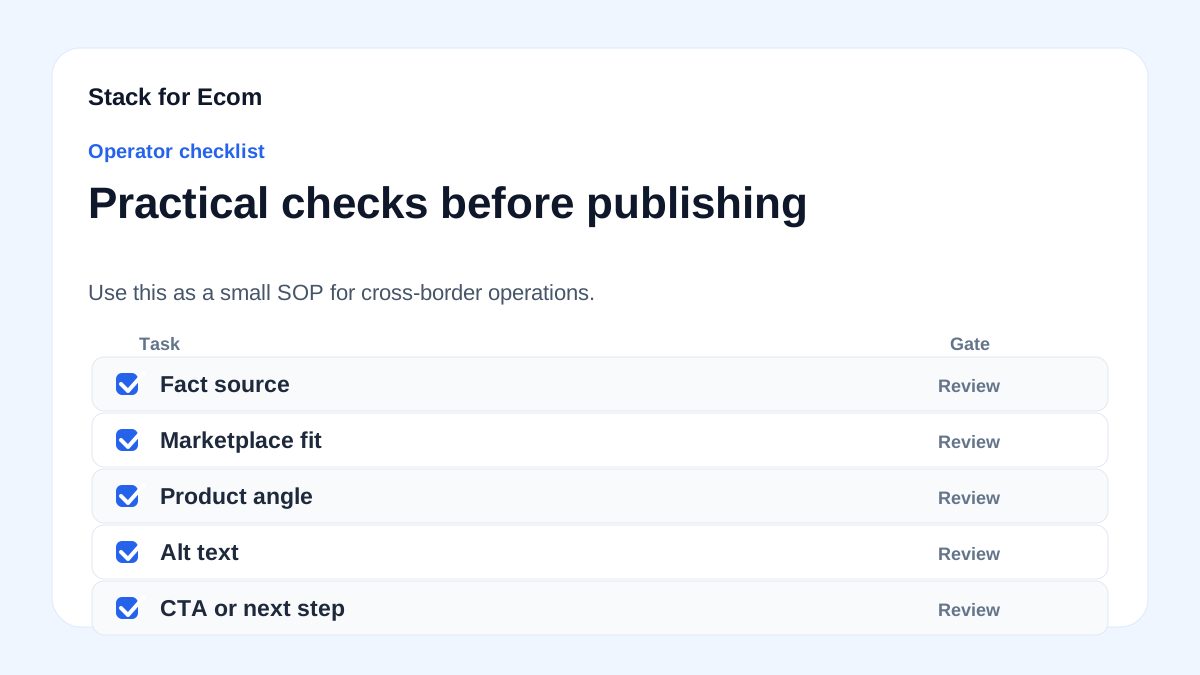
- Confirm product legality – Before purchasing, check if the goods can be legally imported into the U.S. Verify if they are subject to restrictions, quotas, or permits (e.g., dairy products from certain countries).
- Determine who is the importer – The buyer is the importer of record and responsible for compliance. Ensure the buyer understands their obligations.
- Obtain accurate product details – Get the product’s HTS code, country of origin, weight, quantity, and purchase price in U.S. dollars from the supplier.
- Calculate shipping and insurance – Include international freight, domestic delivery, and insurance costs. These are part of the dutiable value.
- Estimate duties and taxes – Use the HTS code to find the duty rate. Add any applicable federal taxes (e.g., MPF, HMF) and state taxes if applicable.
- Add broker and handling fees – If using a customs broker, include their fee. Also account for any warehouse or handling charges at the port of entry.
- Prepare the CBP declaration – Ensure the declaration form includes a detailed description in English, quantity, purchase price in U.S. dollars, weight, and country of origin. Avoid superfluous information like PII or packaging type.
- Review for de minimis eligibility – If the total landed cost is under $800, confirm the shipment qualifies for Section 321. If over $800, prepare for formal entry.
- Document everything – Keep records of the declaration, invoice, shipping documents, and payment receipts. CBP may request these later.
- Communicate the total landed cost to the buyer – Show the breakdown clearly so the buyer knows what to expect. This reduces disputes and chargebacks.
Potential pitfalls
- Misdeclaring value or description – CBP states that misrepresenting the value or nature of an item is illegal and can lead to legal action, fines, or seizure. Always declare the actual purchase price in U.S. dollars.
- Ignoring restricted products – Some goods, like dairy products from certain countries, require permits. Importing them without a permit can result in detention or destruction. Check CBP’s restricted list before shipping.
- Assuming de minimis applies to all low-value shipments – De minimis only applies if the shipment is not subject to quota or restrictions. For example, textiles or steel products may still require formal entry even if under $800.
- Using outdated or incorrect HTS codes – Duty rates change annually. Use the latest HTS code from the U.S. International Trade Commission (USITC) to avoid overpayment or underpayment.
- Relying solely on automated tools – Chatbots and calculators can provide estimates, but they may be inaccurate. Always double-check with official CBP resources or a licensed customs broker, especially for high-value or complex shipments.
- Not including all costs in the landed cost calculation – Forgetting broker fees, insurance, or domestic shipping can lead to unexpected charges for the buyer. Include every cost from origin to delivery.
Suggested visuals
- Flowchart: Landed cost calculation process – A step-by-step diagram showing the journey from product selection to final delivery, with cost inputs at each stage.
- Table: Example landed cost breakdown for a $200 electronic item – Columns for product cost, shipping, insurance, duty (e.g., 3.9%), MPF ($0.66 for de minimis), and total landed cost.
- Screenshot: CBP declaration form fields – Highlighting required fields: detailed description, quantity, purchase price in USD, weight, and country of origin.
- Chart: Growth of de minimis BOLs (FY2020–FY2024) – A bar chart showing the increase from 636.7 million to 1.36 billion, with air transport dominance.
- Infographic: Common restricted products – Visual list of items requiring permits (e.g., dairy, textiles, steel) with a note to check CBP’s website.
- Checklist template – A downloadable PDF with blank fields for product details, costs, and compliance checks.
Who this helps / Who should avoid
This helps:
- Small to mid-size ecommerce sellers importing goods from overseas to the U.S.
- Exporters and logistics coordinators who need a repeatable SOP for landed cost calculation.
- Operations teams managing multiple channels (e.g., Shopify, Amazon, eBay) and struggling with inconsistent cost tracking.
Who should avoid:
- Businesses that only sell domestically within the U.S. (no cross-border component).
- Large enterprises with dedicated customs compliance teams and automated systems—though they may still find the checklist useful for training new hires.
- Sellers who rely solely on a chatbot or calculator without verifying with official sources—this article emphasizes the need for double-checking.
Conclusion
Building a landed cost checklist is not just about calculating numbers—it’s about protecting your business from customs penalties, chargebacks, and customer dissatisfaction. By following the steps outlined here, you can ensure every cross-border order is compliant, accurately priced, and delivered without surprises. Remember that CBP is increasingly focused on compliance, especially with the surge in de minimis shipments. Use the checklist as your SOP, verify all details with official sources, and communicate the total cost to your buyers upfront. This proactive approach will save you time, money, and headaches.
References
- https://www.cbp.gov/trade/basic-import-export/internet-purchases
- https://www.cbp.gov/trade/basic-import-export/e-commerce
- https://www.trade.gov/ecommerce
- https://ads.tiktok.com/help/article/get-started-tiktok-ads-manager