TL;DR
- Policy news articles must be factual, sourced, and structured to avoid AdSense policy violations like misinformation or thin content.
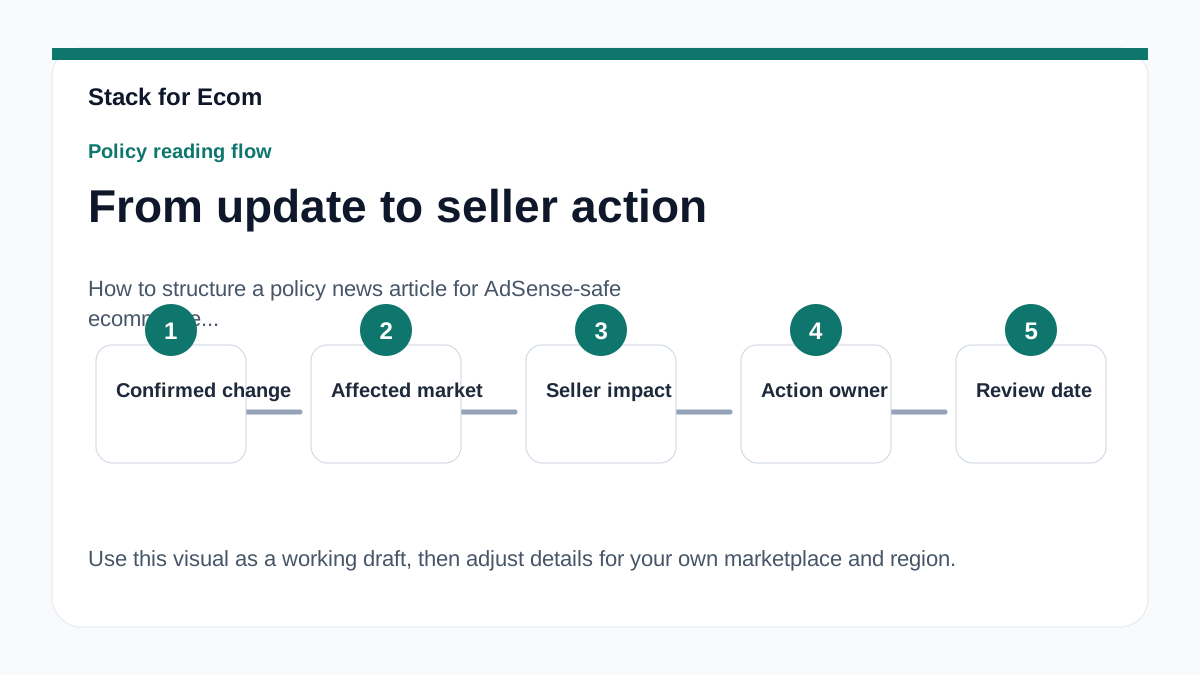
- Use a clear framework: headline, summary, background, updates, action items, and references.
- Always cite official sources (e.g., CBP, Google, ITA) and avoid speculation.
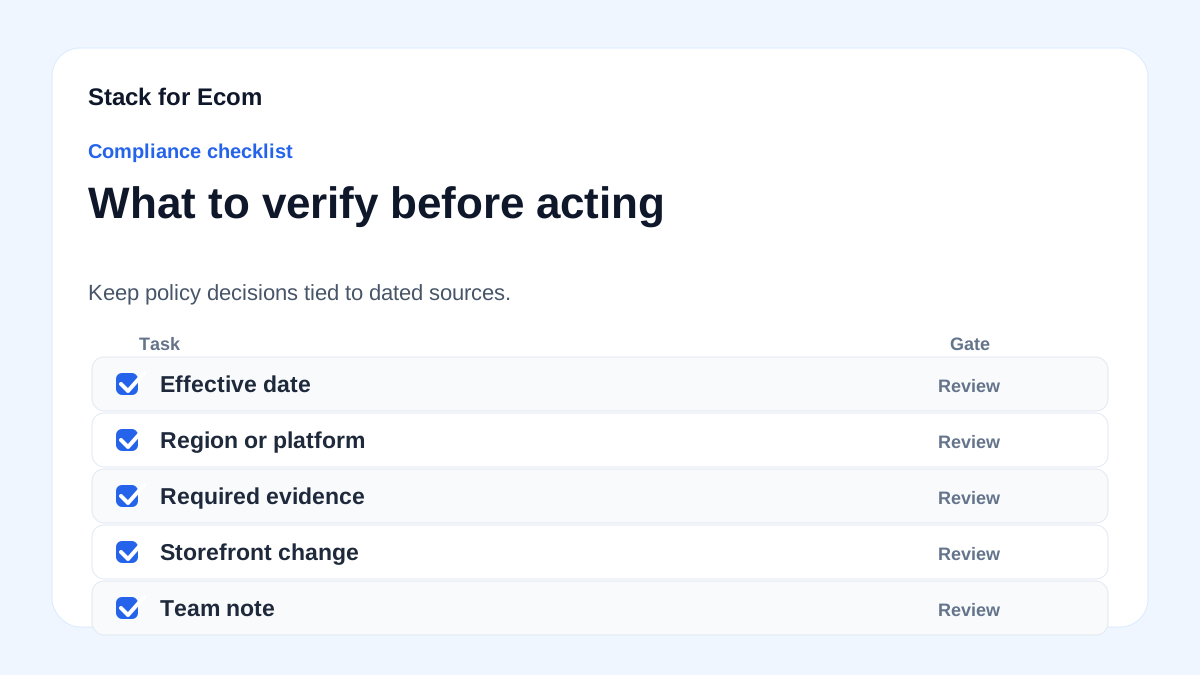
- Include dates, affected regions, and what is confirmed vs. what needs checking.
- Practical examples from import regulations and ecommerce platform changes help readers apply the news.
Introduction
Running an ecommerce operation means constantly tracking policy changes—from import duties to platform advertising rules. When you publish policy news articles, you must balance timeliness with accuracy. AdSense-safe content requires that you provide genuine value, not just rehash press releases. A poorly structured article can lead to policy violations, loss of ad revenue, and damage to your brand's credibility.
This article gives you a step-by-step framework for structuring policy news content that is both AdSense-compliant and useful to your audience. You'll learn how to present facts, cite sources, and offer actionable advice. Whether you're covering CBP import rules or Google Shopping updates, this structure keeps your content clear, trustworthy, and monetizable.
Use this guide as a template: adapt the sections to your specific topic, but keep the core principles—accuracy, transparency, and practical value. By the end, you'll have a repeatable process for producing policy news that informs without misleading.
Main Content
1. Start with a Clear, Factual Headline and Meta Description
Your headline should state the core news or update without hype. For example, "CBP Reports Drop in De Minimis Shipments for FY2025" is better than "Huge Changes in Import Rules!" The meta description should summarize the article in 150-160 characters, including the key takeaway and the source. This helps with click-through rates and sets expectations.
For AdSense safety, avoid clickbait or sensational language. Google's policies prohibit misleading content, so your headline and meta must align with the body. Also, ensure your article is substantive—at least 1,250 words—and not just a rehash of a press release. Add analysis, context, and actionable steps.
2. Provide a Summary Box with Key Facts
Right after the introduction, include a summary box or bulleted list with the most critical facts: what changed, when it takes effect, who is affected, and the official source. For example, if writing about CBP's de minimis statistics, you'd note the volume fell from 1.36 billion in FY2024 to 942.5 million in FY2025, and the value dropped to $48.1 billion. This gives readers immediate value and helps search engines understand the article's focus.
Including dates and numbers is essential for policy news. It also demonstrates that you've done your homework, which builds trust. Make sure every fact is attributed to a reliable source, like CBP's official pages.
3. Break Down the Policy or Update into Subsections
Use subsections to explain the background, the specific changes, and what they mean for ecommerce businesses. For instance, if covering CBP's import rules, you could have subsections like:
- Who Is the Importer? Explain that the buyer becomes the importer and is responsible for compliance. Use the fact that unsafe or non-compliant goods may be detained or destroyed.
- Documentation Requirements Detail the need for a CBP declaration form with accurate descriptions, as per the source. Mention that missing forms can lead to seizure.
- De Minimis Trends Discuss the rise and fall of de minimis shipments, using the provided statistics. Explain the impact on small parcel imports.
- Platform-Specific Updates If relevant, cover updates like Google Shopping's requirement to link Merchant Center and Google Ads, or the TikTok catalog page being unavailable.
Each subsection should have 2-3 paragraphs with concrete examples. For instance, when explaining documentation, describe a scenario where an ecommerce seller imports dairy products without a permit, leading to seizure and storage charges.
4. Include Action Items and What to Verify
End the main content with a clear list of steps your readers should take. For example, if you're writing about CBP rules, advise them to review their customs documentation, check quota restrictions, and consider using a customs broker. If covering Google Shopping, remind them to update product data every 30 days and ensure their Merchant Center feed is linked.
Also, note what is still uncertain. For instance, the TikTok Ads Help Center article about catalogs is no longer available, so any guidance on that topic is unverified. Similarly, the ITA's Global Business Navigator chatbot is in beta, so users should verify its responses. This transparency aligns with AdSense's requirement for honest, reliable content.
Step-by-step checklist
- [ ] Identify a policy news topic with official sources (e.g., CBP, Google, ITA).
- [ ] Write a factual headline and meta description that match the content.
- [ ] Include a summary box with key dates, numbers, and affected regions.
- [ ] Structure the body with at least four subsections, each with 2-3 paragraphs.
- [ ] Cite every fact with a direct link to the source URL.
- [ ] Add practical examples relevant to ecommerce sellers or exporters.
- [ ] Provide a list of action items for readers to implement.
- [ ] Clearly state what is confirmed vs. what still needs checking.
- [ ] Review the article for accuracy and remove any speculative statements.
- [ ] Ensure the article is at least 1,250 words to meet AdSense content standards.
Potential pitfalls
- Misinformation: Avoid interpreting data beyond what the source states. For example, don't claim de minimis volumes will continue falling; only report the given figures.
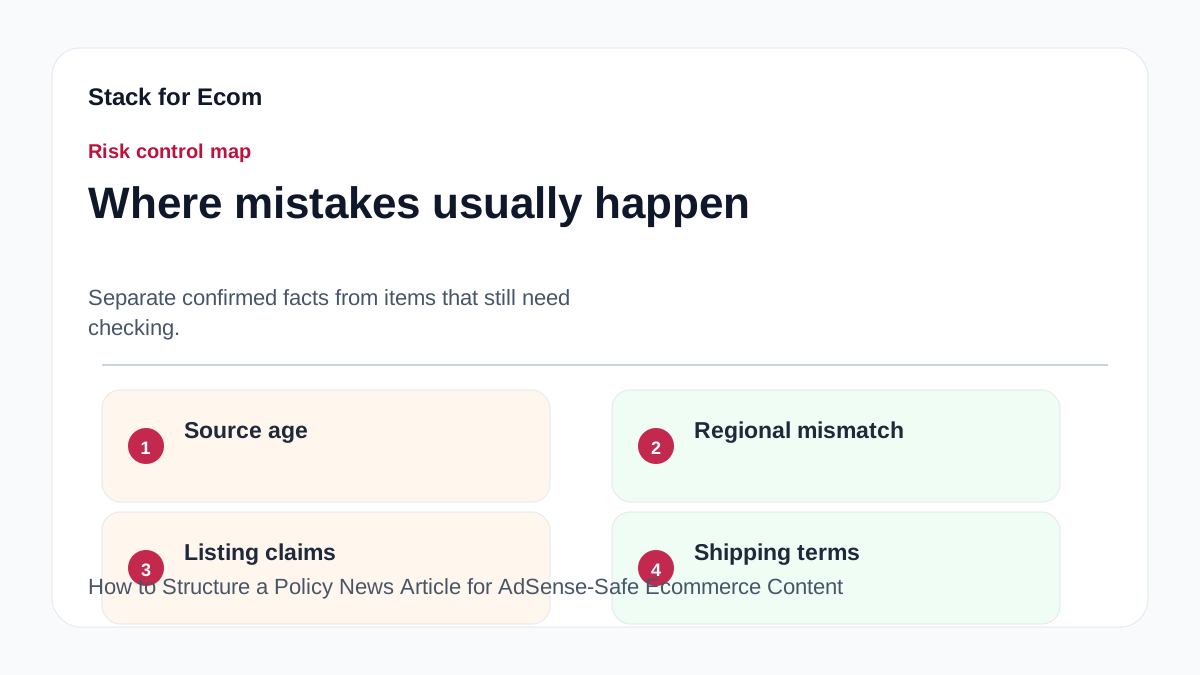
- Thin content: Don't just copy the source. Add analysis, context, and actionable advice. AdSense requires original, in-depth content.
- Missing dates: Policy news without dates can become outdated. Always include the effective date or publication date of the source.
- Ignoring regional differences: Some policies vary by region, like Google's CSS requirement in the EEA. Mention these nuances to avoid misleading readers.
- Unverified sources: If a source is unavailable (like the TikTok page), say so and advise readers to check official channels. Don't invent content.
Suggested visuals
- A timeline chart showing de minimis shipment volumes from FY2020 to FY2025.
- A flowchart illustrating the import process from purchase to CBP clearance.
- A screenshot of a correctly filled CBP declaration form, with annotations.
- A table comparing de minimis value and volume by fiscal year.
- A diagram showing how Google Merchant Center and Google Ads link for Shopping campaigns.
- A screenshot of the ITA's Global Business Navigator chatbot interface, with a note about beta limitations.
Who this helps / Who should avoid
This structure is ideal for ecommerce sellers, exporters, and content marketers who need to publish policy updates that are both informative and AdSense-safe. It helps you build authority and keep your audience informed without risking ad revenue.
Avoid this approach if you're writing opinion pieces or promotional content. AdSense policies favor factual, objective reporting. Also, if you don't have official sources, don't attempt policy news—speculation can lead to policy violations.
Conclusion
Structuring policy news for ecommerce doesn't have to be daunting. By following a clear framework—headline, summary, subsections, action items, and references—you create content that is valuable, accurate, and AdSense-compliant. Remember to always cite your sources, include dates, and flag what's uncertain. This not only protects your ad revenue but also builds trust with your readers.
Start applying this structure to your next policy update. Whether it's a change in import duties or a platform policy shift, your audience will appreciate the clarity and actionable insights.
References
- https://www.cbp.gov/trade/basic-import-export/internet-purchases
- https://www.cbp.gov/trade/basic-import-export/e-commerce
- https://ads.tiktok.com/help/article/about-catalogs
- https://support.google.com/google-ads/answer/6275312
- https://www.trade.gov/ecommerce