TL;DR
Before publishing any customs or tax policy content, cross-check your facts against official government sources such as CBP, the European Commission, and Trade.gov. Never rely on third-party summaries or AI-generated answers without verification. This article provides a practical workflow to ensure accuracy, avoid legal liability, and protect your audience from fines or seizures.
Introduction
Publishing inaccurate customs or tax information can have serious consequences for your readers. Importers who follow bad advice risk fines, detention, or destruction of goods. For example, U.S. Customs and Border Protection (CBP) can seize imported items that violate regulations, such as dairy products from certain countries without a permit (source: CBP). Similarly, the European Commission enforces strict rules on imports and exports under the Union Customs Code. As an editor, you need a reliable method to verify every claim before it goes live.
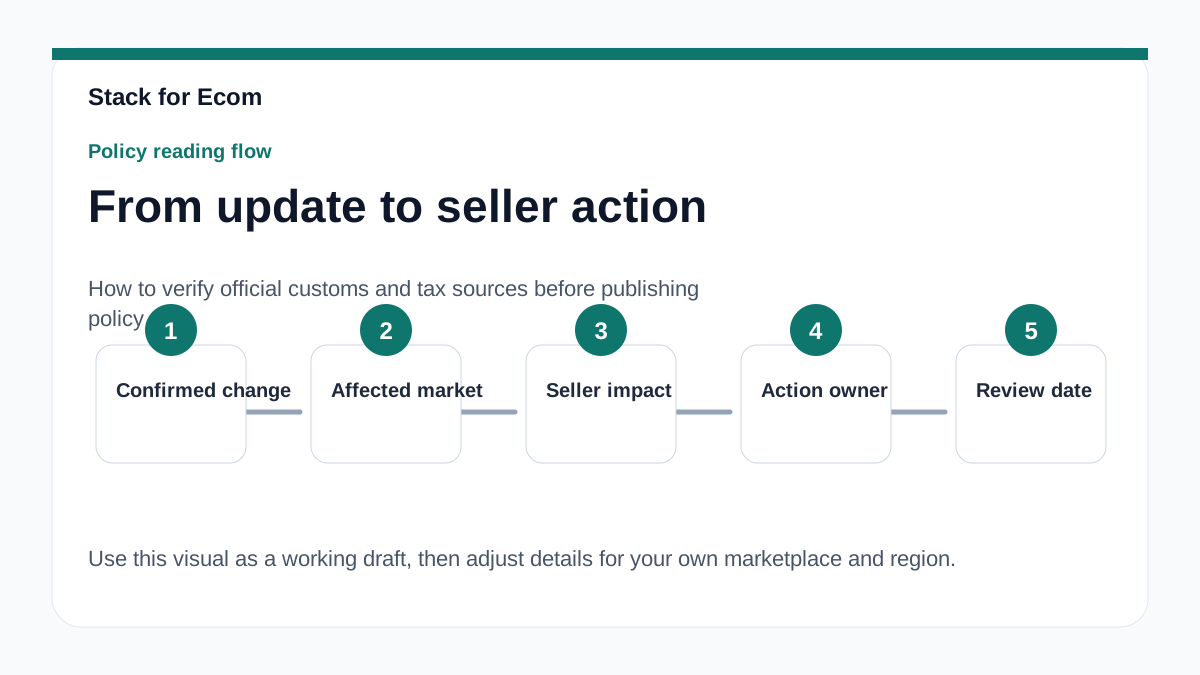
This article walks you through a repeatable editorial workflow for verifying official customs and tax sources. You will learn how to identify authoritative domains, cross-reference multiple sources, and avoid common pitfalls like misinterpreting de minimis thresholds or relying on AI chatbots. Use this guide as a standard operating procedure for any policy-related content you publish.
Main Content
1. Identify Authoritative Government Domains
The first step is to recognize which websites are official sources for customs and tax information. In the United States, the primary domain is cbp.gov (U.S. Customs and Border Protection). For European Union matters, the official source is ec.europa.eu under the Taxation and Customs Union directorate. Other reliable domains include trade.gov (International Trade Administration) and export.gov. Avoid using .com sites, blogs, or forums that may summarize or misinterpret regulations.
For example, when writing about de minimis thresholds, always check CBP’s e-commerce page (source: CBP E-Commerce). The data there is based on Bills of Lading (BOLs) and their declared value at time of import. A BOL is a carrier-issued document that provides evidence of goods receipt, contract of carriage, and delivery engagement. If you rely on a third-party article that misstates the threshold, your readers could face penalties.
2. Cross-Reference Multiple Official Sources
Never rely on a single source, even if it appears official. Cross-reference information across multiple government pages. For instance, CBP’s basic import-export page states that all merchandise imported into the U.S. must clear CBP and may be subject to duty and applicable import rules, regardless of whether purchased from a business or individual (source: CBP Internet Purchases). The same principle is echoed in the European Commission’s customs procedures page, which covers rules of origin, controls, and the Union Customs Code (source: EU Taxation and Customs).
If you find a discrepancy, dig deeper. For example, the de minimis data table from CBP shows total volumes from 636.7M BOLs in FY2020 to 1.36B in FY2024, and total values from $67B in FY2020 to $64.6B in FY2024 (source: CBP E-Commerce). If another source claims different numbers, trust the official CBP data.
3. Verify AI-Generated or Chatbot Responses with Caution
AI tools like the Global Business Navigator Chatbot from the International Trade Administration (ITA) can be helpful but require careful verification. The Chatbot is trained on ITA’s export-related content and its knowledge is limited to public information on the Export Solutions web pages of Trade.gov (source: Trade.gov). However, the ITA explicitly warns that users must double-check the Chatbot’s responses using provided references or by visiting Export Solutions web pages. Inaccurate advice from the Chatbot would not be a defense to violating any export rules or regulations.
If you use AI to draft policy content, always trace the claims back to the original government source. Do not assume the AI is correct, especially for nuanced topics like cargo descriptions under 19 CFR §§ 4.7a, 122.48a, 123.91, 123.92, and 128.21. These regulations require a precise cargo description that is clear, concise, in plain language, and detailed enough for U.S. Customs to identify the item’s size, shape, and characteristics, regardless of value (source: CBP E-Commerce).
4. Check for Updates and Expiration Dates
Customs and tax policies change frequently. Always check the publication or last-updated date on the official page. For example, CBP’s e-commerce page includes de minimis data for fiscal years 2020 through 2025. If you are writing in 2025, you can reference FY2024 data, but be aware that FY2025 numbers may not be final. Similarly, the European Commission updates its customs procedures page periodically; look for a “Last updated” tag.
When referencing Amazon’s advertising policies, note that Amazon’s Sponsored Products guidelines include specific budget recommendations (e.g., minimum $10 USD per day for the U.S.) and targeting strategies. These are not customs or tax policies, but if you are writing about cross-border advertising costs, you need the latest version. Always link directly to the official Amazon advertising guide (source: Amazon Advertising).
5. Understand Legal Liability for Misinformation
Publishing incorrect customs or tax information can expose your publication to legal risk. Importers are responsible for ensuring goods comply with all state and federal import regulations; non-compliance can result in fines, detention, or destruction of goods (source: CBP Internet Purchases). If your content leads an importer to violate regulations, you could be held partially liable. Additionally, sellers providing misleading or inaccurate information about item nature or value on shipping documents is illegal, and the importer may face legal action and fines (source: CBP Internet Purchases).
To mitigate risk, include disclaimers that your content is for informational purposes only and that readers should consult official sources or legal counsel. Never present your interpretation as definitive legal advice.
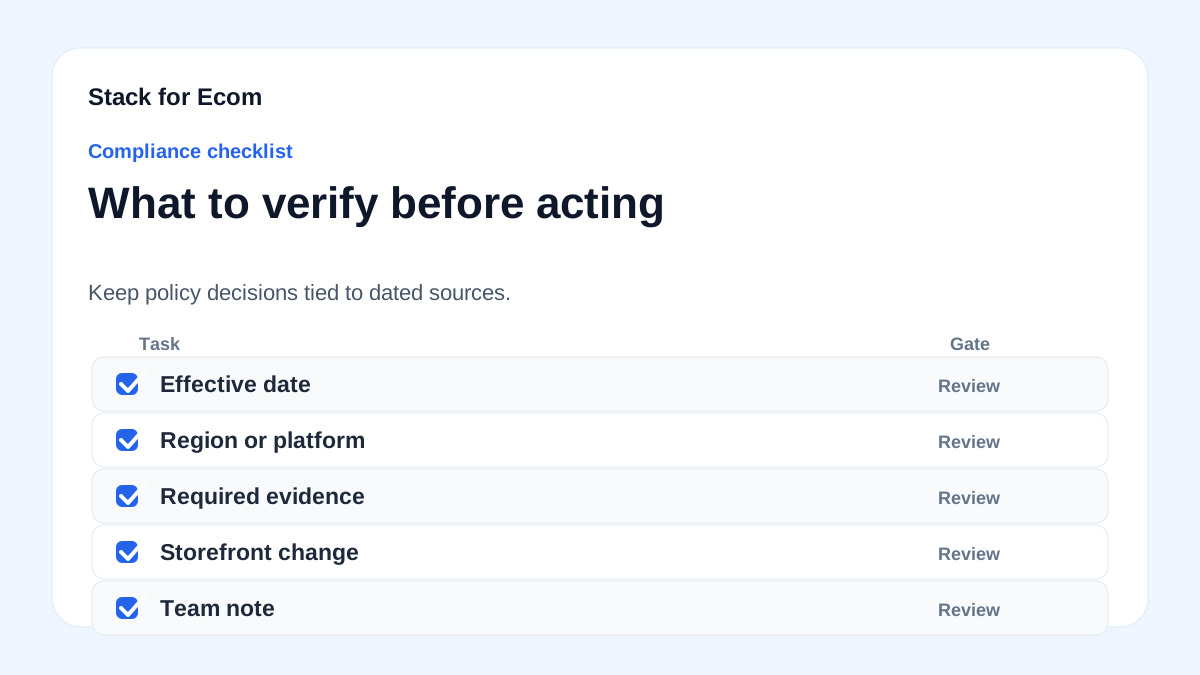
Step-by-step checklist
- Identify the specific customs or tax topic you are covering (e.g., de minimis thresholds, cargo descriptions, EU customs procedures).
- Locate the official government website for the relevant jurisdiction (e.g., cbp.gov for U.S., ec.europa.eu for EU, trade.gov for export assistance).
- Search the official site for the most relevant page using the site’s search function or a site: operator in Google.
- Verify the page’s publication or last-updated date; do not use content older than one year unless it is historical data.
- Read the official text carefully and note any specific regulations, codes, or thresholds mentioned (e.g., 19 CFR §§ 4.7a, 122.48a).
- Cross-reference the same information on at least one other official source (e.g., CBP’s e-commerce page vs. its basic import-export page).
- If using an AI tool or chatbot, double-check every claim by visiting the original source links provided.
- Check for any disclaimers or warnings on the official page, such as “This is not legal advice” or “Consult a customs broker.”
- Draft your content, citing the official source URL for each factual claim.
- Have a second editor review the draft against the official sources before publication.
- Add a disclaimer at the top or bottom of the article stating that readers should verify with official sources or a qualified professional.
- Schedule a review of the article every six months to ensure the sources are still current.
Potential pitfalls
- Relying on third-party summaries: Many blogs and news sites summarize customs policies but may omit critical details. Always go to the primary source. For example, a blog might say “de minimis threshold is $800” without mentioning that the rule applies only to shipments valued under $2,500 and not subject to quota or restrictions (source: CBP Internet Purchases).
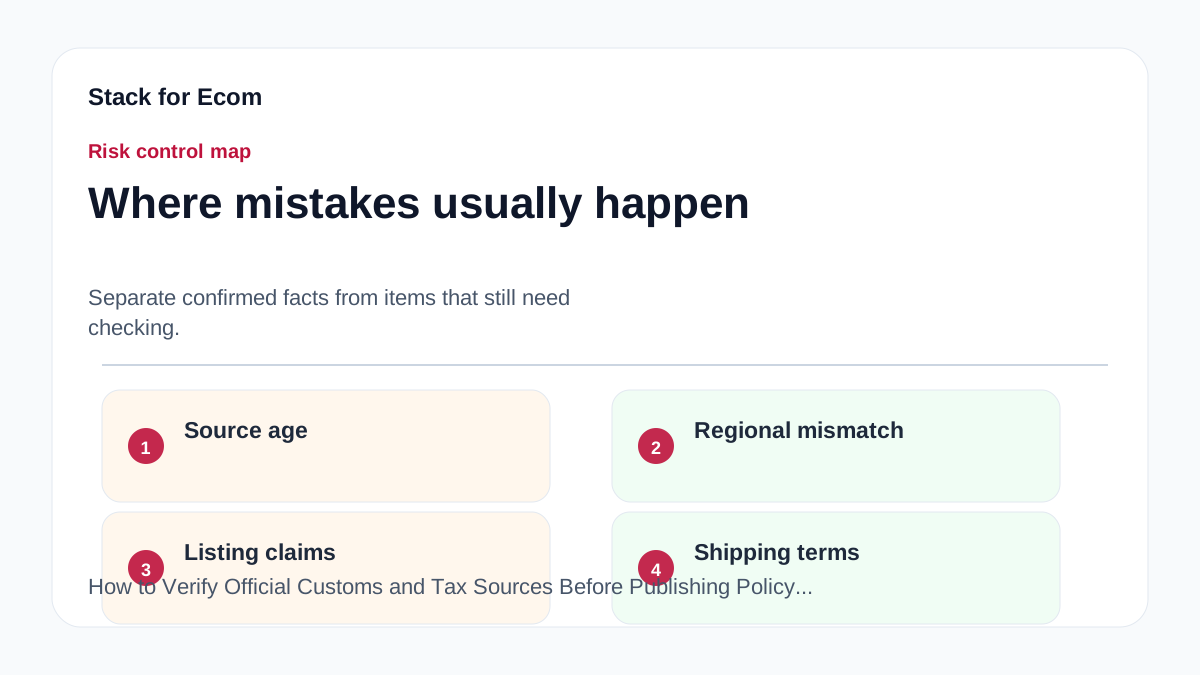
- Misinterpreting de minimis data: The de minimis volume and value statistics are based on Bills of Lading (BOLs) and their declared value at time of import. Do not confuse BOLs with individual packages or shipments. The data table covers fiscal years 2020 through 2025, but FY2025 numbers may be preliminary.
- Trusting AI chatbots without verification: The Global Business Navigator Chatbot is a beta tool trained on limited content. It may struggle with acronyms, abbreviations, and non-English nuances. Always verify its responses against the official Trade.gov pages.
- Using outdated regulations: Customs codes like the Union Customs Code are updated periodically. If you reference an old version, your advice could be invalid. Check the European Commission’s site for the latest version (source: EU Taxation and Customs).
- Ignoring state-level regulations: U.S. importers must comply with both federal and state regulations. CBP enforces federal rules, but states may have additional requirements (e.g., for dairy products). Always mention that readers should check state laws.
- Omitting disclaimers: Without a clear disclaimer, readers may assume your article is official guidance. Include a statement that the content is for informational purposes and not legal advice.
Suggested visuals
- Flowchart: “How to Verify a Customs Source” – A step-by-step diagram showing the verification process from topic identification to cross-referencing to publication.
- Screenshot of CBP’s de minimis data table – Highlighting the FY2020–FY2025 volumes and values to show readers what official data looks like.
- Comparison table: Official vs. Unofficial Sources – A table listing domains like cbp.gov, ec.europa.eu, trade.gov as official, and .com blogs as unofficial.
- Infographic: “What to Include in a CBP Declaration Form” – Visual breakdown of required fields: English description, quantity, purchase price in USD, weight, and country of origin (source: CBP Internet Purchases).
- Warning banner example – A mock-up of a disclaimer box that could appear at the top of policy articles, e.g., “This information is for educational purposes. Verify with official sources.”
- Timeline graphic – Showing how often major customs regulations are updated (e.g., Union Customs Code updates, CBP e-commerce strategy refresh).
Who this helps / Who should avoid
This helps:
- Content editors and writers for cross-border ecommerce blogs, newsletters, and help centers.
- Export compliance officers who need to publish internal guidelines.
- Small business owners who write their own shipping and customs guides.
Who should avoid:
- Readers looking for legal advice – this article is not a substitute for consulting a customs attorney or broker.
- Writers covering non-policy topics (e.g., product reviews, marketing tips) – the verification workflow is overkill for general content.
- Anyone who wants a quick copy-paste solution – this workflow requires effort and critical thinking.
Conclusion
Verifying official customs and tax sources is not optional; it is a professional responsibility. By following the workflow outlined above, you can ensure your content is accurate, up-to-date, and legally defensible. Always start with authoritative government domains, cross-reference multiple sources, and treat AI-generated content with skepticism. Add disclaimers and schedule regular reviews to keep your articles reliable. Your readers—and your publication’s reputation—depend on it.
References
- https://www.cbp.gov/trade/basic-import-export/internet-purchases
- https://www.cbp.gov/trade/basic-import-export/e-commerce
- https://taxation-customs.ec.europa.eu/customs-4/customs-procedures-import-and-export_en
- https://advertising.amazon.com/library/guides/getting-started-with-sponsored-ads
- https://www.trade.gov/ecommerce