TL;DR
- Incoterms define buyer and seller responsibilities for international shipping, including costs, risks, and documentation.
- Ecommerce sellers must understand which Incoterm they offer (e.g., EXW, FOB, DDP) to avoid unexpected costs or legal issues.
- The buyer is often the importer of record and must comply with U.S. Customs and Border Protection (CBP) rules—non-compliance can lead to fines or seizure.
- Always verify goods can be legally imported, use accurate descriptions on customs forms, and discuss insurance with buyers.
- Use the ITA’s Global Business Navigator Chatbot as a starting point, but double-check its responses with official sources.
Introduction
When you sell products internationally, the moment your package leaves your warehouse, a complex web of responsibilities begins. Who pays for shipping? Who handles customs clearance? Who bears the risk if the package is damaged in transit? These questions are answered by Incoterms—standardized trade terms published by the International Chamber of Commerce. For ecommerce sellers, especially small teams, choosing the wrong Incoterm can mean absorbing unexpected costs, facing customs delays, or even legal penalties.
The business impact is significant. According to U.S. Customs and Border Protection (CBP), total de minimis Bills of Lading (shipments valued under $2,500) reached 1.36 billion in Fiscal Year 2024, with a total declared value of $64.6 billion. That volume means millions of small packages crossing borders daily. If you misclassify or misdeclare goods, your shipment could be seized, fined, or returned. This article will help you build a repeatable checklist for selecting and applying Incoterms, ensuring you stay compliant and protect your margins.
Use this guide as a practical reference. It covers the core Incoterms relevant to ecommerce, a step-by-step checklist, common pitfalls, and how to leverage free tools like the ITA’s Global Business Navigator Chatbot without relying on them as legal advice. By the end, you’ll have a standard operating procedure (SOP) you can hand to your logistics team.
Main Content
1. Understanding Incoterms in the Ecommerce Context
Incoterms are not just for bulk freight. For ecommerce sellers, they define who is responsible for shipping, insurance, customs clearance, and duties. The most common terms you’ll encounter:
- EXW (Ex Works): The buyer picks up the goods at your location. You have minimal responsibility, but the buyer must handle all export/import formalities. This can be risky for international buyers unfamiliar with local rules.
- FOB (Free on Board): You deliver goods to the port and load them onto the vessel. Risk transfers at that point. The buyer handles ocean freight and customs.
- DDP (Delivered Duty Paid): You handle everything—shipping, customs clearance, duties, and taxes—until the goods reach the buyer. This is common on marketplaces like Amazon or eBay, but it exposes you to higher liability and costs.
- CIF (Cost, Insurance, and Freight): You pay for shipping and insurance to the destination port, but risk transfers once goods are on board.
Each term changes your cost structure and legal exposure. For example, if you offer DDP, you become the importer of record in the buyer’s country, which means you must comply with that country’s import regulations. If you offer EXW, the buyer bears all risk, but they may not understand local customs requirements, leading to delays.
2. The Buyer’s Role as Importer (U.S. Imports)
When goods move from any foreign country to the United States, they are being imported and must comply with specific CBP rules. The buyer (your customer) becomes the importer and is responsible for ensuring goods comply with state and federal import regulations. Non-compliance can result in fines, penalties, detention, or destruction of goods by CBP.
This means that even if you sell on a DDP basis, you are effectively acting as the importer. You must verify that the goods can be legally imported—whether for personal or commercial use. Before purchasing from a foreign source (or selling to a U.S. buyer), discuss shipping costs and delivery arrangements with the seller. Providing misleading or inaccurate information about the item’s nature or value on shipping documents is illegal, and the importer may face legal action and fines.
CBP requires a declaration form that includes the seller’s name and address, a detailed English description of items, quantity, purchase price in U.S. dollars, weight, and country of origin. Foreign shipments without this declaration may be subject to seizure, forfeiture, or return to sender.
3. Using the ITA’s Global Business Navigator Chatbot for Incoterms Guidance
The International Trade Administration (ITA) offers a free beta AI tool called the Global Business Navigator Chatbot. It is designed to provide general exporting process information and resources for U.S. exporters. The Chatbot is trained on ITA’s export-related content and uses Microsoft’s Azure AI services. As a beta product, it may produce inaccurate or incomplete information and should not be used as legal or professional advice.
If you are a U.S. seller shipping abroad, you can ask the Chatbot about Incoterms, customs procedures, or documentation. However, its knowledge is limited to public information on the Export Solutions web pages of Trade.gov. You must always double-check its responses using provided references or by visiting the Export Solutions web pages. The Chatbot does not collect user information or use chat history to learn; do not enter personally identifiable information (PII), sensitive, or proprietary data. It supports multiple languages, but because it is trained in English, verify translations, especially for acronyms, abbreviations, and nuances.
4. Documentation and Compliance Essentials
Every international shipment requires accurate documentation. For ecommerce sellers, the key documents include:
- Commercial Invoice: Must include seller’s name/address, buyer’s name/address, detailed English description of goods, quantity, unit price, total value in USD, weight, and country of origin.
- Bill of Lading (BOL): A document issued by a carrier to a shipper, signed by the captain, agent, or owner of a vessel. It provides evidence of receipt of goods, contract of carriage, and engagement to deliver. For air freight, an Air Waybill serves a similar purpose.
- Customs Declaration: CBP requires a precise cargo description regardless of value. Under 19 CFR §§ 4.7a, 122.48a, 123.91, 123.92, and 128.21, the description must be clear, concise, plain-language, and detailed enough for CBP to identify size, shape, and characteristics of the commodity. Superfluous information such as PII, type of packaging, or carrier disclaimers must not be transmitted in the commodity description field.
For shipments valued under $2,500 and not subject to quota or restrictions, goods shipped via international postal service may be cleared by CBP through a mail entry procedure. But even then, accurate documentation is critical.
5. Insurance and Valuation Risks
Sellers should discuss insurance options with buyers. Misrepresenting the value of an item on the Customs declaration to avoid duty is illegal. If you undervalue goods, you risk fines and seizure. If you overvalue, you pay higher duties. Use actual transaction value. For high-value items, consider offering shipping insurance to protect against loss or damage.
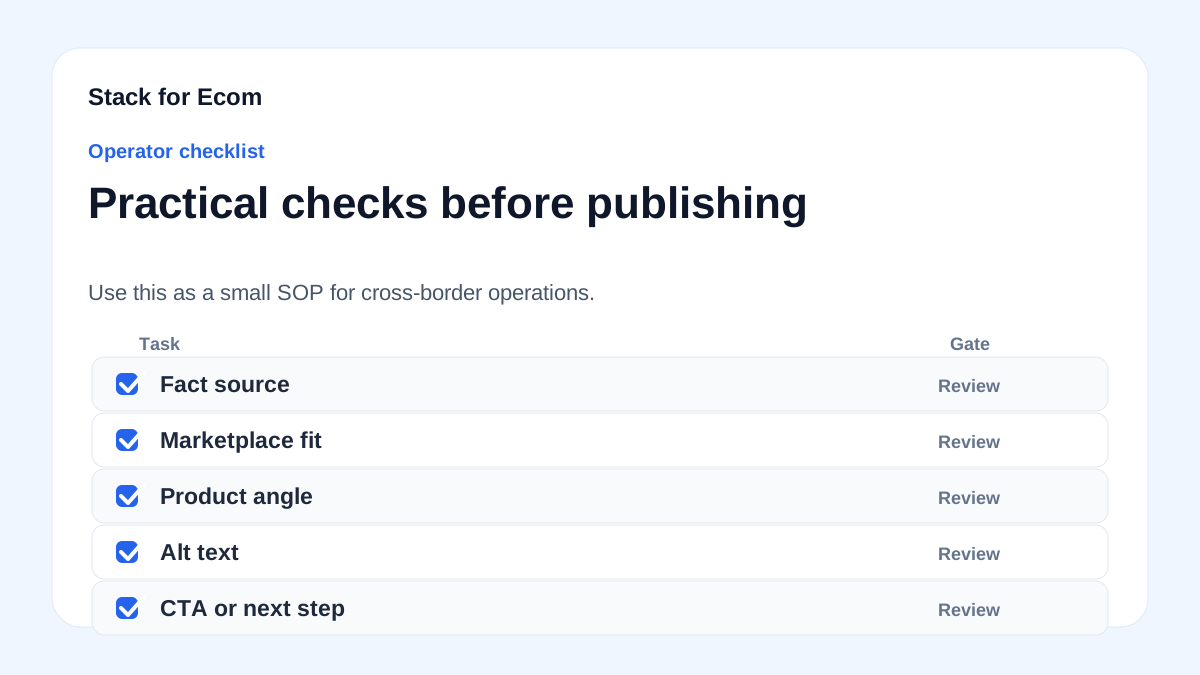
Step-by-step checklist
- Determine the Incoterm for each order. Choose between EXW, FOB, CIF, DDP, etc., based on your risk tolerance and the buyer’s expectations. Document the chosen term in the sales contract or invoice.
- Verify the goods can be legally imported into the destination country. Check CBP’s restricted/prohibited items list or use the ITA Chatbot for general guidance, then confirm with official sources.
- Confirm who is the importer of record. If you offer DDP, you are the importer. If you offer EXW, the buyer is the importer. Ensure they understand their responsibilities.
- Prepare accurate commercial invoice. Include seller’s name/address, buyer’s name/address, detailed English description, quantity, unit price, total value in USD, weight, and country of origin.
- Provide precise cargo description on the Bill of Lading or Air Waybill. Avoid vague terms like “gift” or “samples.” Use plain language that describes size, shape, and characteristics.
- Do not include PII or superfluous information in the commodity description field.
- Discuss insurance with the buyer. Recommend coverage for high-value items. Do not misrepresent value to reduce duties.
- Double-check all documents before shipment. Use the ITA Chatbot as a quick reference, but verify with official CBP or Trade.gov pages.
- Keep records of all shipping documents for at least five years in case of audits or disputes.
- Monitor de minimis thresholds. For shipments under $2,500, use postal service if possible to simplify clearance. For higher values, prepare for formal entry.
Potential pitfalls
- Choosing the wrong Incoterm without understanding liability. For example, offering DDP without knowing the destination country’s duties can eat your profit margin. Prevention: Calculate total landed cost before selecting DDP.
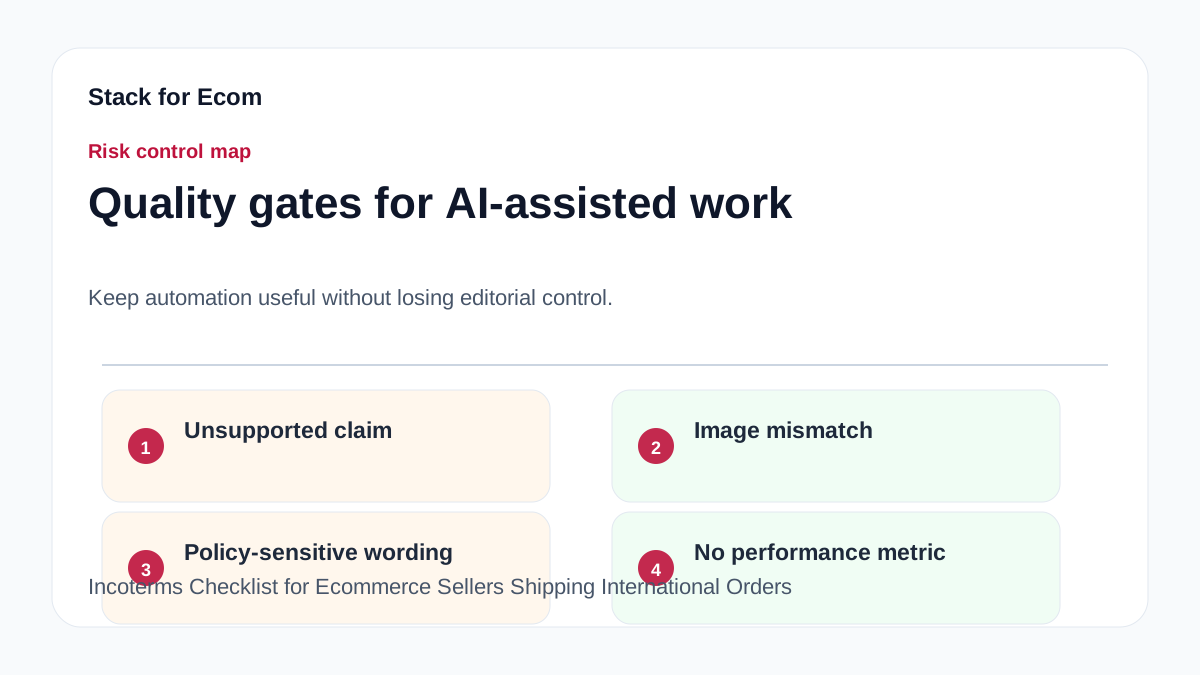
- Providing inaccurate cargo description. Using vague terms like “parts” or “accessories” can trigger CBP holds. Prevention: Use specific, plain-language descriptions (e.g., “steel bolts, 1 inch, 100 units”).
- Misrepresenting value to avoid duties. This is illegal and can lead to fines or seizure. Prevention: Declare the actual transaction value in USD.
- Failing to verify import restrictions. Some products (e.g., certain electronics, cosmetics) are restricted in the U.S. Prevention: Check CBP’s restricted items list or consult a customs broker.
- Relying solely on the ITA Chatbot for compliance. The Chatbot is beta and may produce incomplete information. Prevention: Always cross-reference with official Trade.gov or CBP pages.
- Not discussing insurance with the buyer. If goods are lost or damaged, the buyer may blame you. Prevention: Offer insurance as an add-on and document the agreement.
- Entering PII into the Chatbot. The Chatbot does not learn from history, but you should never share sensitive data. Prevention: Use generic terms when asking questions.
Suggested visuals
- Incoterms Decision Flowchart: A diagram showing the decision tree for choosing EXW, FOB, CIF, or DDP based on risk tolerance and buyer location.
- Sample Commercial Invoice Template: Annotated with required fields (seller info, buyer info, description, value, country of origin).
- CBP Declaration Form Example: A screenshot of a properly filled CBP form with a detailed English description highlighted.
- De Minimis Threshold Infographic: A bar chart showing FY2024 (1.36 billion BOLs, $64.6B) vs FY2025 (942.5 million BOLs, $48.1B) to illustrate volume trends.
- Bill of Lading vs Air Waybill Comparison Table: Key differences in purpose, parties, and usage for ecommerce shipments.
- IT Chatbot Interface Mockup: A screenshot of the Global Business Navigator Chatbot with a sample query about Incoterms, plus a note to verify responses.
Who this helps / Who should avoid
Who this helps:
- Ecommerce sellers shipping internationally from the U.S. (or to the U.S.) who need a repeatable SOP for Incoterms.
- Small logistics teams handling cross-border orders without dedicated customs brokers.
- Exporters using marketplaces like Amazon, eBay, or Shopify who want to avoid costly mistakes.
Who should avoid:
- Sellers who only ship domestically—Incoterms are not relevant.
- Large enterprises with dedicated trade compliance teams—they likely have more advanced procedures.
- Anyone expecting this guide to replace legal advice. Incoterms and customs regulations are complex; consult a qualified professional for specific situations.
Conclusion
Incoterms are not just shipping jargon—they are legal and financial commitments that affect your bottom line and compliance risk. By following the checklist above, you can systematically choose the right term, prepare accurate documentation, and avoid common pitfalls. Remember that the buyer is often the importer of record, so educate them on their responsibilities. Use free tools like the ITA’s Global Business Navigator Chatbot for initial guidance, but always verify with official sources like CBP and Trade.gov. With a solid SOP in place, you can scale your international sales with confidence.
References
- https://www.trade.gov/ecommerce
- https://www.cbp.gov/trade/basic-import-export/internet-purchases
- https://www.cbp.gov/trade/basic-import-export/e-commerce
- https://ads.tiktok.com/help/article/get-started-tiktok-ads-manager