TL;DR
This guide provides a practical, repeatable workflow for responding to buyer inquiries on Alibaba and Global Sources. It covers how to triage leads, craft professional responses, follow up effectively, and avoid common mistakes. The article is designed for small export teams and individual sellers looking to convert more inquiries into orders.
Introduction
Every day, thousands of buyers send inquiries on Alibaba and Global Sources. For sellers, the challenge is not just getting inquiries—it’s responding in a way that builds trust, answers questions, and moves the buyer toward a purchase. Many small teams struggle with slow response times, generic replies, or missing critical details that cause buyers to move on.
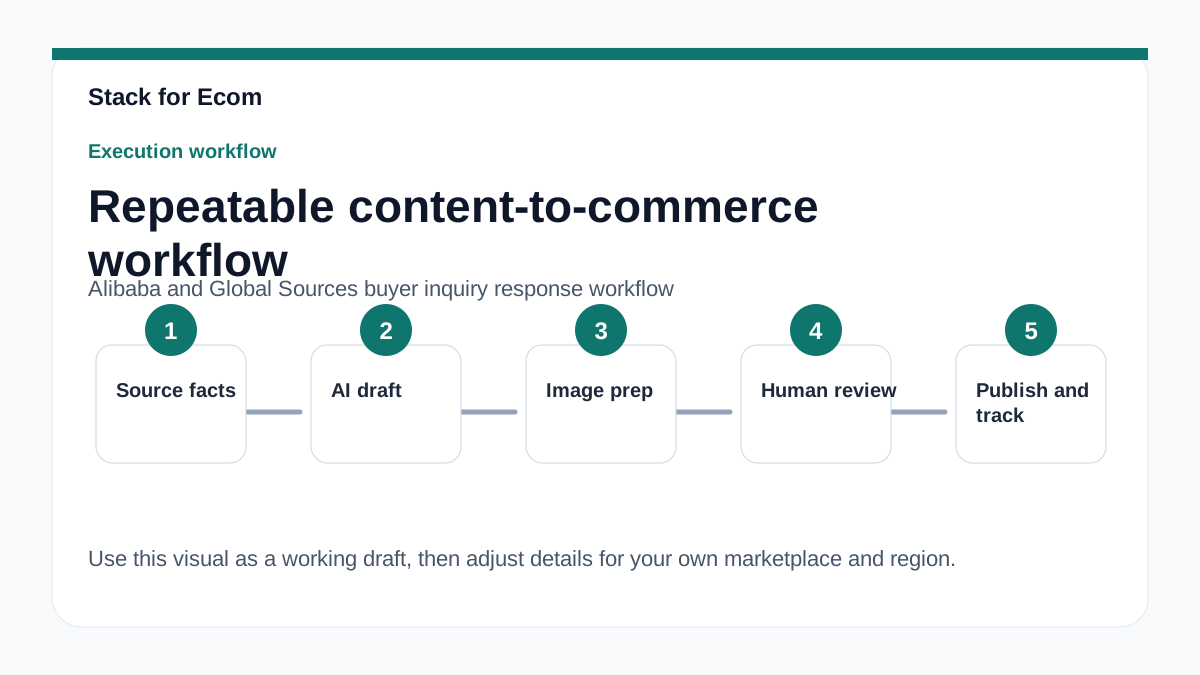
This article provides a structured workflow to manage buyer inquiries from receipt to follow-up. You’ll learn how to prioritize leads, craft responses that address buyer concerns, and use tools to stay organized. Whether you’re a solo exporter or part of a small team, this guide will help you turn more inquiries into confirmed orders.
Main Content
1. Triage and Prioritize Inquiries
Not all inquiries are equal. Some buyers are just browsing, while others are ready to place an order. The first step is to quickly assess each inquiry’s potential. Look at the buyer’s request: Are they asking for specific quantities, product specifications, or shipping terms? Do they mention a deadline? These signals indicate a serious buyer.
Use your CRM or a simple spreadsheet to log each inquiry with a priority score. For example, inquiries that include a company name, website, and detailed product requirements should be marked as high priority. Those with vague requests like “send me your catalog” can be handled with a standard response. This triage ensures you spend your limited time on the leads most likely to convert.
2. Craft a Professional and Personalized Response
Your response is your first impression. Avoid generic templates that sound robotic. Instead, address the buyer by name, refer to their specific request, and provide clear answers. If they asked about pricing, include a quote or a range. If they asked about lead time, give a realistic estimate. Always include your contact information and a call to action, such as “Please let me know if you need samples or have further questions.”
Personalization can be as simple as mentioning their company’s industry or the product they inquired about. For example, “Thank you for your interest in our stainless steel water bottles. We see you’re based in Germany—we have several clients there and can offer competitive shipping rates.” This shows you’ve done your homework and builds credibility.
3. Follow Up Strategically
Many buyers don’t respond to the first email. A structured follow-up sequence can re-engage them. Send a first follow-up 24-48 hours after your initial response. Keep it short: “Just checking if you received my previous email. Happy to answer any additional questions.” If there’s still no reply, wait another 3-5 days and send a second follow-up with a new value-add, such as a case study or a limited-time discount.
Track your follow-ups in your CRM or a simple task list. Avoid bombarding buyers with daily emails—this can annoy them and hurt your reputation. A well-timed follow-up shows persistence without being pushy.
4. Use Tools to Streamline the Process
While you don’t need expensive software, basic tools can save time. Use email templates for common scenarios (e.g., price inquiry, sample request, shipping question) but customize each one. A CRM like HubSpot (free tier) or even a shared Google Sheet can help your team track inquiry status, follow-up dates, and notes.
For teams handling a high volume of inquiries, consider integrating with platforms like Alibaba’s Trade Manager or Global Sources’ messaging system. These tools often have built-in templates and analytics. The key is to maintain a consistent process so no inquiry falls through the cracks.
Step-by-step checklist
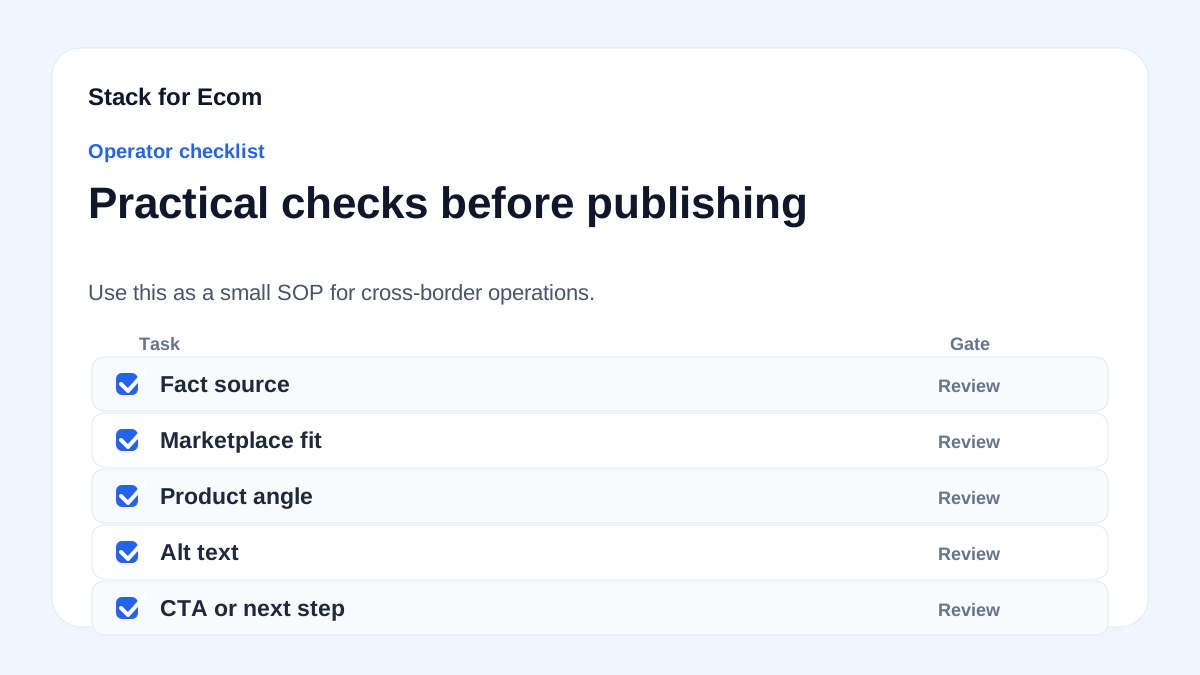
- Log the inquiry in your CRM or spreadsheet immediately after receiving it.
- Assess the lead’s quality based on detail level, company info, and urgency.
- Check the buyer’s profile on the platform (if available) for reviews, purchase history, or company size.
- Draft a personalized response that addresses their specific request and includes a clear call to action.
- Send the response within 24 hours—faster is better.
- Set a follow-up reminder for 48 hours after your initial reply.
- Send first follow-up if no response, keeping it short and polite.
- Send second follow-up 5-7 days later with new information or an incentive.
- Move the lead to “closed” or “nurture” based on their response (or lack thereof).
- Review your conversion rate monthly to identify areas for improvement.
Potential pitfalls
- Sending generic responses – Buyers can spot a template a mile away. Always personalize.
- Ignoring time zone differences – If a buyer in Asia sends an inquiry at night, respond during their business hours.
- Overpromising on lead time or pricing – Be realistic to avoid losing trust later.
- Failing to follow up – Many sales are lost simply because the seller didn’t follow up.
- Using a single email for all inquiries – Different products or regions may require different approaches.
- Not tracking conversations – Without a log, you may repeat yourself or miss important details.
Suggested visuals
- A flowchart showing the inquiry triage process (incoming → assess → respond → follow-up → close).
- A screenshot of a well-crafted personalized response on Alibaba’s Trade Manager.
- A table comparing high-priority vs. low-priority inquiry signals (e.g., specific vs. vague request).
- A calendar or Gantt chart illustrating the follow-up sequence over 7-10 days.
- An example of a CRM dashboard tracking inquiry status and conversion rates.
Who this helps / Who should avoid
This helps:
- Small export teams with 1-5 people handling inquiries on Alibaba or Global Sources.
- Individual sellers or entrepreneurs just starting to export.
- Teams looking to standardize their inquiry response process.
Who should avoid:
- Large enterprises with dedicated sales teams and advanced CRM systems—they likely already have a refined process.
- Sellers who only use retail channels (e.g., Amazon, eBay) and do not handle B2B inquiries.
Conclusion
Responding to buyer inquiries on Alibaba and Global Sources doesn’t have to be chaotic. By triaging leads, personalizing responses, following up strategically, and using simple tools, you can increase your conversion rate and build lasting buyer relationships. Start implementing this workflow today, and track your results over the next month. Small improvements in your response process can lead to significant gains in sales.
Implementation notes for operators
For a small cross-border ecommerce or foreign trade team, the safest way to apply this topic is to turn the advice into a repeatable operating checklist. Start with one product line, one marketplace, or one buyer segment instead of changing the whole workflow at once. Record the baseline before the change, including listing traffic, inquiry reply time, conversion rate, refund rate, ad spend, or policy review incidents. A simple baseline makes it easier to decide whether the new process is actually helping.
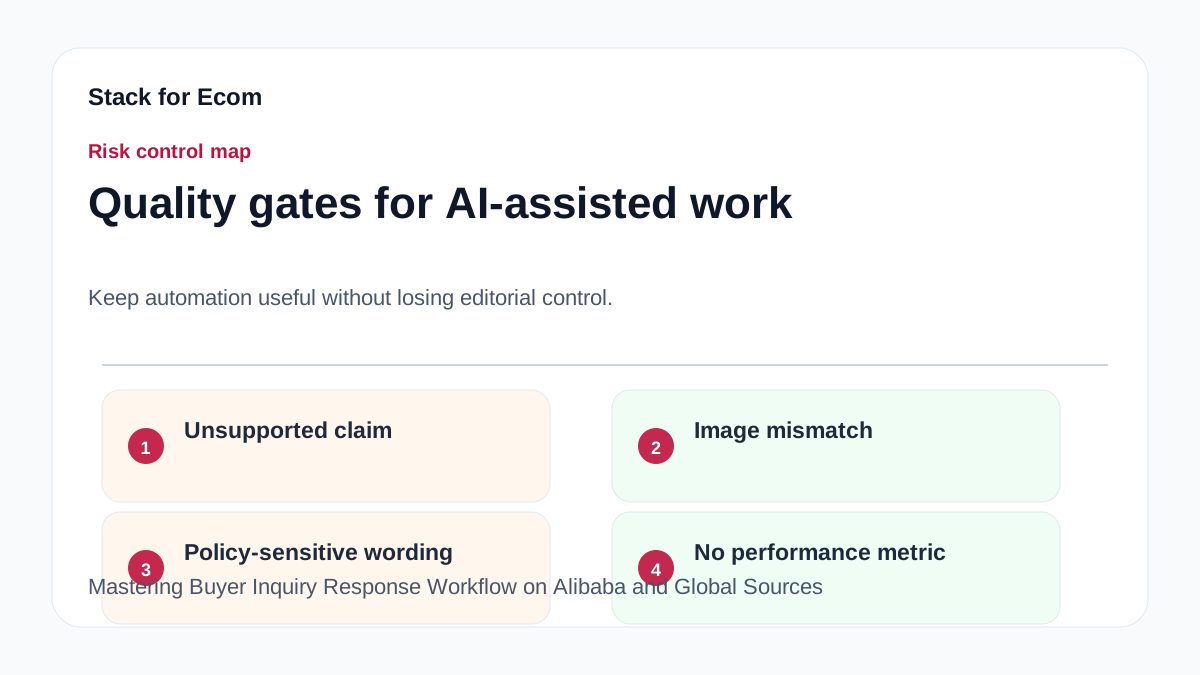
The next step is to assign ownership. One person should maintain the source material, one person should review marketplace or policy constraints, and one person should check the final customer-facing text or image before publishing. In a solo operation, these can be three passes by the same person, but they should still happen separately. This reduces the risk of publishing unsupported claims, mismatched product images, or outdated compliance notes.
When software is involved, keep the tool workflow narrow at first. Use a spreadsheet, template, or lightweight internal tool to capture the fields that matter most for Alibaba and Global Sources buyer inquiry response workflow: source URL, last checked date, owner, action taken, and next review date. Once the process is stable, the same fields can become the foundation for a more advanced dashboard, content generator, or approval queue.
Review cadence
Review the workflow every 30 days for evergreen operational articles and every 7-14 days for policy, marketplace, or customs updates. The review should answer three questions: what changed, what evidence supports the change, and what action should the seller take now. If the answer is not clear, keep the recommendation conservative and point readers back to the references.
References
- https://www.trade.gov/export-solutions
- https://advertising.amazon.com/library/guides/getting-started-with-sponsored-ads
- https://ads.tiktok.com/help/article/get-started-tiktok-ads-manager
- https://ads.tiktok.com/help/article/about-catalogs
- https://support.google.com/google-ads/answer/6275312
- https://www.trade.gov/ecommerce