TL;DR
- When you ship goods from a foreign country to the United States, you are importing, and the buyer becomes the importer responsible for compliance with state and federal import regulations. Source: https://www.cbp.gov/trade/basic-import-export/internet-purchases
- A full and accurate customs declaration in English, securely attached to the outside of the shipment, is critical. Inaccurate descriptions can lead to wrong duty rates, seizure, or fines. Source: https://www.cbp.gov/trade/basic-import-export/internet-purchases
- Missing a CBP declaration form and invoice can result in seizure, forfeiture, or return to sender. Source: https://www.cbp.gov/trade/basic-import-export/internet-purchases
- In fiscal year 2024, total de minimis shipments reached 1.36 billion with a total value of $64.6 billion, making accurate data essential for dispute evidence. Source: https://www.cbp.gov/trade/basic-import-export/e-commerce
- Use the ITA's beta Global Business Navigator chatbot for general export process information, but never rely on it for legal advice or company-specific guidance. Source: https://www.trade.gov/ecommerce
- There is no payment dispute resolution content in the TikTok Ads Help Center source provided; that URL returns an error. Source: https://ads.tiktok.com/help/article/get-started-tiktok-ads-manager
Introduction
Cross-border sellers face a frustrating reality: when a payment dispute or chargeback hits, the evidence needed to win often sits in customs documents, carrier records, and import compliance files that were never designed for dispute resolution. The operator problem is straightforward. A buyer in the United States files a chargeback claiming the goods never arrived or were not as described, and the seller must respond within a short window with proof that the shipment was sent, properly declared, and compliant with import rules. Without that proof, the seller loses the revenue and may also pay dispute fees.
The business impact goes beyond a single transaction. High dispute rates can lead to payment processor penalties, reserve requirements, or account termination. For small export teams, one poorly documented shipment can trigger a cascade of chargebacks because the same weak process affects many orders. Import compliance is not just a customs issue; it is a payment risk issue. When goods are detained, destroyed, or returned due to inaccurate declarations, buyers have legitimate grounds to dispute, and sellers have little defense.
This article explains how to use customs and import compliance facts to build a dispute resolution workflow. You will learn how CBP import rules affect your evidence, how to prepare declarations that stand up to scrutiny, and how to use available trade resources without overstepping into legal advice. Use this as a practical guide to strengthen your payment dispute responses and reduce avoidable losses. Details may vary; check references.
Main Content
Understand the Importer Responsibility and Its Impact on Disputes
When goods move from any foreign country to the United States, they are being imported and are subject to specific rules and regulations. Source: https://www.cbp.gov/trade/basic-import-export/internet-purchases. When buying goods from foreign sources, the buyer becomes the importer and is responsible for ensuring the goods comply with state and federal import regulations. Source: https://www.cbp.gov/trade/basic-import-export/internet-purchases. This matters for disputes because the buyer's role as importer can shift responsibility for certain compliance failures. However, sellers still need to provide accurate declarations and documentation. If a buyer claims the goods were misrepresented, the seller's declaration and invoice become key evidence.
For example, a U.S. buyer purchases electronics from a seller in Asia. The buyer is the importer of record and must ensure the products meet federal safety requirements. If the goods are detained because they fail health code requirements or violate quota restrictions, CBP can impose fines, penalties, detention, or destruction. Source: https://www.cbp.gov/trade/basic-import-export/internet-purchases. The buyer may then file a chargeback claiming the seller shipped non-compliant goods. The seller's defense depends on whether the product description and customs declaration were accurate and whether the seller disclosed compliance requirements. Details may vary; check references.
All merchandise imported into the United States, whether new or used, must clear CBP and may be subject to duty payment and applicable import regulations. Source: https://www.cbp.gov/trade/basic-import-export/internet-purchases. This means every cross-border shipment has a customs footprint. Sellers should treat that footprint as dispute evidence from day one. Keep copies of the declaration, invoice, carrier tracking, and any CBP correspondence. If a dispute arises, you can show that the shipment was properly declared and that any delays or detentions were due to customs processes, not seller negligence.
Prepare Customs Declarations That Support Your Dispute Case
A U.S. Customs and Border Protection Declaration form should include a full and accurate description of the merchandise and be securely attached to the outside of the shipment. Source: https://www.cbp.gov/trade/basic-import-export/internet-purchases. The description of items on the customs declaration must be in English and detailed enough to determine the classification number and duty rate; inaccurate information can result in wrong duty rates, seizure, or fines. Source: https://www.cbp.gov/trade/basic-import-export/internet-purchases. For dispute resolution, this means your declaration is not just a customs form; it is a record of what you shipped. If a buyer claims the item was different from what was described, your declaration can either support or undermine your case.
Foreign shipments not accompanied by a U.S. Customs and Border Protection declaration form and an invoice may be subject to seizure, forfeiture, or return to sender. Source: https://www.cbp.gov/trade/basic-import-export/internet-purchases. Missing documents create a gap that buyers can exploit in disputes. A buyer might claim the shipment was never sent or was sent incorrectly. Without a declaration and invoice, you cannot easily prove otherwise. Always include both documents and keep digital copies.
19 CFR § 4.7a, 122.48a, 123.91, 123.92 and 128.21 require a precise, specific description of merchandise regardless of value. Source: https://www.cbp.gov/trade/basic-import-export/e-commerce. A precise cargo description must be clear, concise, in plain language, and detailed enough for U.S. Customs to identify the size, shape and characteristics of the commodity. Source: https://www.cbp.gov/trade/basic-import-export/e-commerce. Superfluous information such as personally identifiable information (PII), type of packaging, and carrier disclaimers should not be transmitted in the commodity description field. Source: https://www.cbp.gov/trade/basic-import-export/e-commerce. For dispute evidence, a precise description helps show exactly what was shipped. Avoid vague terms like "gift" or "sample" because they can trigger scrutiny and weaken your position if a dispute arises.
Use De Minimis Data and CBP Strategy to Inform Your Risk Management
De minimis volume and value statistics are based on the number of Bills of Lading (BOLs) and their declared value at the time of import. Source: https://www.cbp.gov/trade/basic-import-export/e-commerce. In fiscal year 2024, total de minimis shipments reached 1.36 billion with a total value of $64.6 billion. Source: https://www.cbp.gov/trade/basic-import-export/e-commerce. These numbers show the scale of low-value cross-border trade. For sellers, this means payment disputes on small shipments are common and often handled with limited documentation. If you rely on de minimis treatment, you still need accurate descriptions and records. The volume also means payment processors and customs authorities are paying attention to patterns.
CBP's E-Commerce Strategy focuses on four primary goals and identifies private industry and foreign governments as key resources. Source: https://www.cbp.gov/trade/basic-import-export/e-commerce. The strategy includes efforts to educate the public and trade community about importer responsibilities for customs compliance. Source: https://www.cbp.gov/trade/basic-import-export/e-commerce. For dispute resolution, this signals that compliance education is a shared responsibility. Sellers who document their compliance efforts can use that as evidence of good faith. If a buyer disputes a charge, showing that you followed CBP guidance and educated yourself on importer responsibilities can support your case.
For merchandise shipped through the international postal service valued under $2,500 and not subject to quota or restriction, a CBP official will usually prepare import paperwork, assess duty, and release it for delivery. Source: https://www.cbp.gov/trade/basic-import-export/internet-purchases. This process can create delays that buyers may dispute. Sellers should set expectations with buyers about customs processing times and keep tracking information. If a dispute arises due to delay, you can show that the shipment was in CBP custody and provide the postal or carrier records. Details may vary; check references.
Leverage Trade Resources Without Overstepping Legal Boundaries
The International Trade Administration (ITA) offers a beta AI chatbot called the Global Business Navigator, built with Microsoft Azure AI services, to provide general information on the exporting process and resources for U.S. exporters. Source: https://www.trade.gov/ecommerce. The chatbot's knowledge is limited to public information on the Export Solutions web pages of Trade.gov and cannot provide responses specific to a company's product or a specific foreign market. Source: https://www.trade.gov/ecommerce. For dispute resolution, you can use the chatbot to find general export process information, but you must not rely on it for legal advice or company-specific guidance. As a beta product, the chatbot may occasionally produce inaccurate or incomplete information, and users are advised to double-check responses using provided references or by visiting the Export Solutions web pages on Trade.gov. Source: https://www.trade.gov/ecommerce.
The chatbot's responses should not be used as legal or professional advice, and inaccurate advice from the chatbot would not be a defense to violating any export rules or regulations. Source: https://www.trade.gov/ecommerce. This is critical for payment disputes. If you cite chatbot output in a dispute response, it will not protect you from compliance failures. Instead, use the chatbot as a starting point for research, then verify with official sources. The chatbot does not collect user information or use chat history to learn new information, and all feedback is anonymous. Source: https://www.trade.gov/ecommerce. Users are instructed not to enter personally identifiable information (PII), sensitive, or proprietary information into the chatbot. Source: https://www.trade.gov/ecommerce. Never enter buyer payment details or dispute information into the chatbot.
The chatbot supports a wide range of languages, but because it is trained in English and responses are translated, users should verify the translation, as it may have difficulty with acronyms, abbreviations, and nuances in other languages. Source: https://www.trade.gov/ecommerce. If you use the chatbot to understand export rules for a dispute, confirm the translation with a qualified human. For payment dispute resolution, the safest approach is to rely on official CBP and ITA documentation, not chatbot summaries. Use the chatbot to locate resources, then read the original guidance.
Build a Dispute Evidence File from Customs and Shipping Records
Your dispute evidence file should include the customs declaration, commercial invoice, carrier tracking, and any CBP notices. Because all merchandise imported into the United States must clear CBP and may be subject to duty payment and applicable import regulations, you should retain proof that the shipment entered the customs process. Source: https://www.cbp.gov/trade/basic-import-export/internet-purchases. If a buyer claims non-delivery, the carrier tracking and customs clearance records can show that the shipment arrived in the destination country and was processed.
For postal shipments under $2,500, a CBP official usually prepares import paperwork and releases the item for delivery. Source: https://www.cbp.gov/trade/basic-import-export/internet-purchases. This means the seller may not have direct control over the import paperwork, but can still request proof of mailing and tracking. Keep those records. If a dispute arises, you can show that the shipment was handed to the postal service and cleared customs. Details may vary; check references.
Remember that inaccurate information on the customs declaration can result in wrong duty rates, seizure, or fines. Source: https://www.cbp.gov/trade/basic-import-export/internet-purchases. If your declaration was inaccurate, a buyer may use that as grounds for a dispute. Prevention is better than cure. Train your team to complete declarations accurately and consistently. Use a checklist for every shipment, and audit a sample of declarations monthly. This reduces both customs risk and payment dispute risk.
Step-by-step checklist
- Verify that every cross-border shipment to the United States includes a full and accurate CBP declaration form in English, securely attached to the outside of the shipment. Source: https://www.cbp.gov/trade/basic-import-export/internet-purchases
- Include a commercial invoice with every shipment; missing declaration and invoice can lead to seizure, forfeiture, or return to sender. Source: https://www.cbp.gov/trade/basic-import-export/internet-purchases
- Write a precise, specific commodity description that is clear, concise, in plain language, and detailed enough for U.S. Customs to identify size, shape, and characteristics. Source: https://www.cbp.gov/trade/basic-import-export/e-commerce
- Avoid superfluous information such as PII, type of packaging, and carrier disclaimers in the commodity description field. Source: https://www.cbp.gov/trade/basic-import-export/e-commerce
- Confirm the description is detailed enough to determine the classification number and duty rate; inaccurate information can result in wrong duty rates, seizure, or fines. Source: https://www.cbp.gov/trade/basic-import-export/internet-purchases
- For postal shipments valued under $2,500 and not subject to quota or restriction, expect a CBP official to prepare import paperwork and release for delivery; keep tracking and proof of mailing. Source: https://www.cbp.gov/trade/basic-import-export/internet-purchases
- Retain copies of the customs declaration, invoice, carrier tracking, and any CBP notices for every order for at least the dispute window. Source: https://www.cbp.gov/trade/basic-import-export/internet-purchases
- Use the ITA Global Business Navigator chatbot only for general export process information, and double-check responses with official references; never enter PII or sensitive information. Source: https://www.trade.gov/ecommerce
- Train staff that the buyer is the importer and responsible for compliance, but the seller must still provide accurate declarations and documentation. Source: https://www.cbp.gov/trade/basic-import-export/internet-purchases
- Review de minimis shipment data and CBP E-Commerce Strategy goals to align your risk management with current enforcement priorities. Source: https://www.cbp.gov/trade/basic-import-export/e-commerce
Potential pitfalls
- Vague or inaccurate commodity descriptions. Prevention: Use plain, specific language that identifies the item's size, shape, and characteristics; avoid generic terms like "gift" or "sample." Source: https://www.cbp.gov/trade/basic-import-export/e-commerce
- Missing declaration form or invoice. Prevention: Attach both documents to every shipment and keep digital copies; missing documents can lead to seizure, forfeiture, or return to sender. Source: https://www.cbp.gov/trade/basic-import-export/internet-purchases
- Including PII or carrier disclaimers in the commodity description field. Prevention: Restrict the description field to precise merchandise details only; remove packaging and disclaimer text. Source: https://www.cbp.gov/trade/basic-import-export/e-commerce
- Relying on the ITA chatbot for legal or company-specific advice. Prevention: Treat chatbot output as general information only; verify with official sources and never use it as a defense for compliance violations. Source: https://www.trade.gov/ecommerce
- Assuming the buyer's importer responsibility eliminates seller risk. Prevention: Document your own compliance efforts and provide accurate declarations; buyers can still dispute if goods are non-compliant or misdescribed. Source: https://www.cbp.gov/trade/basic-import-export/internet-purchases
- Ignoring customs delays in buyer communication. Prevention: Set expectations about CBP processing times and share tracking; delays can trigger disputes if buyers feel uninformed. Source: https://www.cbp.gov/trade/basic-import-export/internet-purchases
Suggested visuals
- A flowchart showing the cross-border shipment process from seller to buyer, highlighting where the customs declaration, invoice, CBP clearance, and potential dispute points occur.
- A screenshot-style table comparing accurate vs. inaccurate commodity descriptions, with columns for description, classification impact, and dispute risk.
- A bar chart of fiscal year 2024 de minimis shipments (1.36 billion) and total value ($64.6 billion) to illustrate scale. Source: https://www.cbp.gov/trade/basic-import-export/e-commerce
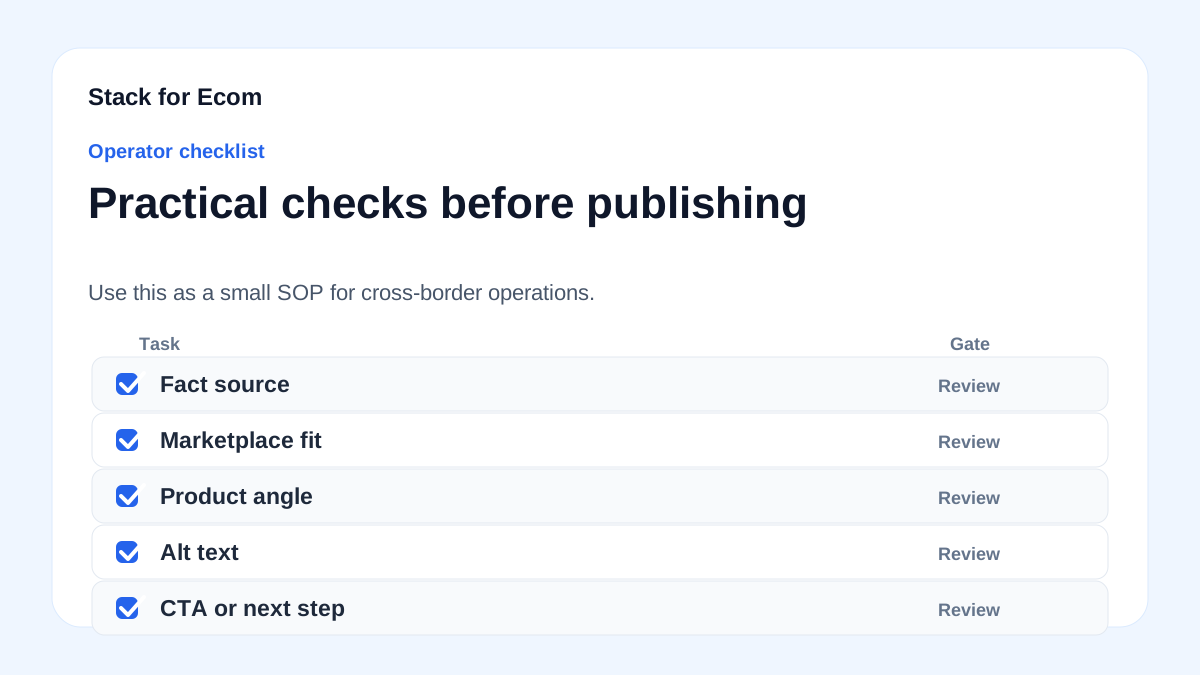
- A checklist graphic for preparing a shipment: declaration form, invoice, precise description, no PII, tracking, and record retention.
- A diagram of the ITA Global Business Navigator chatbot's scope: general export information only, no company-specific advice, no PII, verify translations. Source: https://www.trade.gov/ecommerce
- A sample dispute evidence file structure showing folders for customs declaration, invoice, carrier tracking, CBP notices, and buyer communication.
Who this helps / Who should avoid
This guide helps cross-border ecommerce sellers, export operations teams, and payment dispute handlers who ship goods to the United States and need to respond to chargebacks or payment disputes. It is also useful for small operations teams that want to build a repeatable compliance and evidence workflow. If you are a U.S. buyer importing goods, this guide helps you understand your importer responsibilities and how to avoid disputes. Source: https://www.cbp.gov/trade/basic-import-export/internet-purchases
Who should avoid: sellers looking for legal advice or definitive rulings on specific products. This article does not provide legal advice, and the ITA chatbot explicitly should not be used as legal or professional advice. Source: https://www.trade.gov/ecommerce. Also avoid relying on this guide if your dispute involves the TikTok Ads Help Center article referenced, because that source is unavailable and contains no payment dispute content. Source: https://ads.tiktok.com/help/article/get-started-tiktok-ads-manager. Details may vary; check references.
Conclusion
Payment dispute resolution in cross-border ecommerce is inseparable from import compliance. The customs declaration, invoice, and precise commodity description are not just regulatory requirements; they are your evidence when a buyer files a chargeback. By following CBP rules for accurate declarations, retaining records, and understanding the buyer's role as importer, you can build a defensible position. Use the ITA Global Business Navigator chatbot only for general research, and always verify with official sources. Remember that in fiscal year 2024, de minimis shipments reached 1.36 billion with a total value of $64.6 billion, showing the scale of low-value trade and the importance of robust processes. Source: https://www.cbp.gov/trade/basic-import-export/e-commerce. Start with the checklist, avoid the pitfalls, and treat every shipment as potential dispute evidence. Details may vary; check references.
References
- https://www.cbp.gov/trade/basic-import-export/internet-purchases
- https://www.cbp.gov/trade/basic-import-export/e-commerce
- https://www.trade.gov/ecommerce
- https://ads.tiktok.com/help/article/get-started-tiktok-ads-manager