TL;DR
- Product image alt text is a cross-border SEO and accessibility control, but the source material provided does not include alt text rules. Details may vary; check references.
- Google Merchant Center requires accurate, correctly formatted product data to prevent disapprovals, limited eligibility, or display issues, and product data must be sent at least every 30 days.
- In the EEA and Switzerland, Shopping ads participation is done through one or more Shopping Comparison Services (CSSs) of the advertiser's choice.
- Amazon Ads recommends new advertisers start with Sponsored Products, use separate campaigns for product groups, and target at least 30 keywords when launching manual keyword targeting.
- U.S. imports must clear CBP, may require duty payments, and declaration descriptions must be in English.
- Use the checklist below as a repeatable SOP for alt text and feed hygiene across markets.
Introduction
Cross-border sellers often treat product image alt text as a last-minute accessibility checkbox. In practice, it sits at the intersection of three operator problems: search visibility in multiple languages, feed compliance, and marketplace ad eligibility. When alt text is missing, duplicated, or auto-translated badly, you lose a cheap signal that helps search engines and shopping systems understand what the image shows. The business impact is measurable: weaker image search coverage, lower click-through on shopping surfaces, and more time spent fixing disapprovals. The facts provided do not include specific alt text best practices, so this guide focuses on what is confirmed about product data, feeds, and import rules, and flags where you must verify current platform guidance.
Use this article as a working framework, not a policy substitute. Start with the confirmed requirements: Google Merchant Center needs accurate, correctly formatted product data to prevent disapprovals, limited eligibility, or display issues; product data must be sent at least every 30 days; and attribute names and values using supported values must be submitted in English, while free-form text attributes like title and description must use the same language across the feed. Then apply the same discipline to alt text: one consistent language per feed, no promotional stuffing, and a clear description of the image.
If you run Shopping or Performance Max campaigns, remember that products should be added to the linked Merchant Center feed for the shopping ads destination, and when running both campaign types, additions or changes must be made in both. For Amazon, Sponsored Products are self-service, cost-per-click ads for individual product listings, and Amazon recommends separate campaigns for product groups. Alt text is not a direct ad input, but it supports the landing page and image context that shoppers and systems evaluate. Details may vary; check references.
Main Content
1. What alt text is and why cross-border sellers should care
Alt text is the written description attached to an image in HTML. For cross-border sellers, it serves two practical purposes: it helps visually impaired shoppers understand the product image, and it gives search engines and shopping systems a text signal about the image content. The source material provided does not contain alt text rules, so treat any specific length or keyword guidance as something to verify with current platform documentation. What is confirmed is that Google Merchant Center requires product data to be accurate and correctly formatted to prevent disapprovals, limited eligibility, or display issues. Alt text that contradicts the feed title, description, or image can create the same kind of conflicting data problem.
Consider a seller listing a stainless steel water bottle in Germany, France, and the United States. The feed title should match the landing page title without promotional text, all caps, or gimmicky characters. The alt text should describe the same product in the same language as the feed's free-form text attributes. If the feed is in German, the alt text should be in German; if the feed is in English, the alt text should be English. Mixing languages inside one feed is a common cause of confusing signals and manual cleanup.
Alt text also supports image search and visual discovery. A shopper searching for "insulated water bottle 750ml" may encounter your image in search results. A clear, factual description improves the chance that the image is understood correctly. Avoid keyword stuffing; it does not help and may look spammy. Details may vary; check references.
2. Feed language, attribute formatting, and alt text consistency
Google Merchant Center has explicit language rules. Attribute names and values using supported values must be submitted in English, while free-form text attributes like title and description must use the same language across the feed. Attribute names with multiple words must use an underscore, such as image_link. The ID [id] attribute is required, must be unique per product, max 50 characters, and should remain consistent across updates, countries, and languages. The title [title] attribute is required, uses plain text with a maximum of 150 characters, and must match the landing page title without promotional text, all caps, or gimmicky characters.
These rules matter for alt text because alt text is free-form text. If your feed uses German titles and descriptions, your alt text should be German. If your feed uses English, your alt text should be English. Do not mix languages within a single feed. For multi-country sellers, maintain separate feeds per language and keep the product ID consistent across countries and languages. This makes it easier to map alt text to the correct product variant and avoids conflicting data between feed and website.
Common product data problems include incorrect google product category or gtin values, missing variant attributes, low-quality images, and conflicting data between feed and website. Alt text that describes a different color, size, or material than the feed attributes creates a conflict. For example, if the feed lists a "red cotton t-shirt" but the alt text says "blue polyester shirt," you have introduced a data conflict that can trigger disapprovals or display issues. Keep alt text factual and aligned with the feed.
3. Shopping ads, CSS, and market-specific requirements
Setting up a Performance Max campaign with a Merchant Center feed or a Shopping campaign requires meeting specific requirements. Advertisers must set up and link both a Google Merchant Center account and a Google Ads account. Shopping campaigns and Shopping ads content must comply with Shopping ads policies, which differ from Google Ads policies. Product data must be sent at least every 30 days and must meet Google's data quality standards. Product data submission standards are defined in the product data specification, and data is submitted regularly via Merchant Center.
In European Economic Area (EEA) countries and Switzerland, Shopping ads participation is done through one or more Shopping Comparison Services (CSSs) of the advertiser's choice. This changes the operational path for many European sellers. If you sell into the EEA or Switzerland, confirm which CSS you use and how product data flows. Alt text on your own site is separate from CSS data, but consistency between your site, feed, and CSS listing helps avoid conflicting data. When running both Shopping and Performance Max campaigns, additions or changes must be made in both campaign types. If you update alt text as part of a product content refresh, check whether the change also needs to be reflected in the feed or campaign assets.
For titles created using generative AI, the structured title [structured_title] attribute must be used with the trained_algorithmic_media value; otherwise, use the title [title] attribute. AI regulations in the European Union, India, and New York require ads with certain AI-generated or edited assets to include disclosures or labels. If you use AI to generate alt text or image descriptions, check whether disclosure rules apply in your target markets. Details may vary; check references.
4. Amazon Ads context and operational separation
Amazon Ads offers Sponsored Products, Sponsored Brands, Display ads, Brand Stores, and Streaming TV as advertising solutions. Sponsored Products are self-service, cost-per-click ads for individual product listings that appear in shopping results and on product detail pages across desktop and mobile. Amazon recommends new advertisers start with Sponsored Products using automatic targeting or manual keyword or product targeting. For manual keyword targeting, Amazon recommends targeting at least 30 keywords and starting with broad match. Amazon also advises using separate campaigns for product groups, with each group having a pair of automatic targeting and manual targeting campaigns.
Alt text is not an Amazon Ads input, but it supports the product detail page and image context. If your Amazon listing images are weak or inconsistent, ad performance can suffer. Sponsored Products reports include search term report, targeting report, advertising product report, placement report, performance over time report, and purchased product report. Use these reports to identify which products need better image content and clearer descriptions. South Africa is launching to domestic sellers and vendors only, per Amazon's note. If you sell into South Africa, confirm eligibility before planning campaigns.
Amazon recommends a minimum daily budget of $10 for the United States and Canada, £10 for the United Kingdom, and 10 € for Germany, France, Italy, Spain, Belgium, Ireland, and The Netherlands. These budgets are for Sponsored Products, not alt text, but they show the level of operational commitment required. Keep alt text work separate from ad budget decisions, and document who owns image descriptions versus feed attributes.
5. Import compliance and declaration language
When goods move from a foreign country to the United States, they are being imported and are subject to specific rules and regulations. The importer, which is the buyer when purchasing from foreign sources, is responsible for assuring that goods comply with both state and federal government import regulations. Importing goods that are unsafe, fail to meet health code requirements, or violate quota restrictions could result in fines, penalties, detention, or destruction by CBP. Merchandise imported into the United States, whether used or new, must clear CBP and may be subject to duty payments and applicable import regulations.
A U.S. Customs and Border Protection Declaration form should include a full and accurate description of the merchandise and be securely attached to the outside of the shipment. The description of items on the declaration must be in English, which is a legal requirement, and should be detailed and accurate to determine the classification number and duty rate. Foreign shipments not accompanied by a U.S. Customs and Border Protection declaration form and an invoice may be subject to seizure, forfeiture, or return to sender. For merchandise shipped through the international postal service valued at less than $2,500 and not subject to quota or restrictions, a CBP official usually prepares the paperwork, assesses duty, and releases it for delivery.
This matters for cross-border SEO because your product content, including image descriptions and declarations, must be accurate. If your alt text says "leather bag" but the declaration says "synthetic handbag," you have conflicting descriptions. Keep product descriptions, feed attributes, and customs declarations aligned. Details may vary; check references.
6. Tooling and workflow angle
You do not need a specialized alt text tool to start. A spreadsheet, a feed management platform, and a content management system can handle most of the work. The key is to define a single source of truth for product descriptions and image alt text, then map that source to each market's feed. Use the product ID [id] attribute as the stable key across updates, countries, and languages. Keep attribute names in English with underscores where required, such as image_link, and keep free-form text in one language per feed.
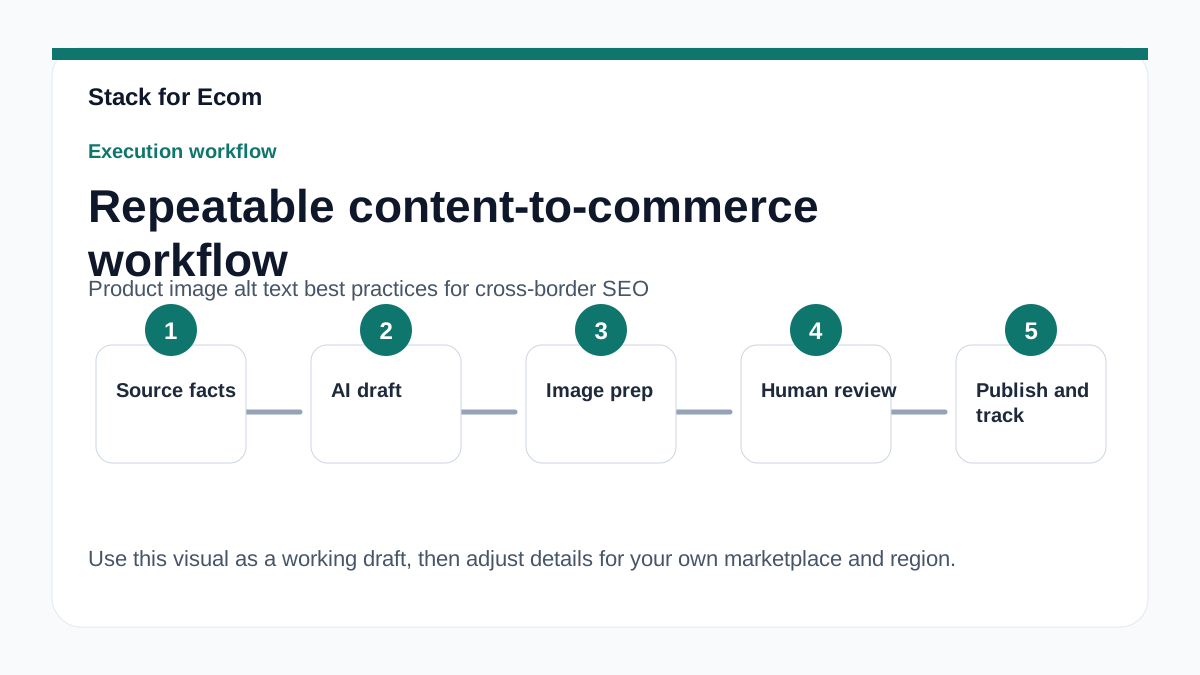
For Google, remember that product data must be sent at least every 30 days and must meet data quality standards. For Amazon, use the reporting suite to monitor performance and identify products with weak image content. For imports, keep declaration descriptions in English and attach the required forms. A simple workflow: (1) write alt text in the feed language, (2) validate against feed attributes, (3) check for conflicts with the website, (4) confirm import declaration language, (5) log changes for both Shopping and Performance Max campaigns when applicable. Details may vary; check references.
Step-by-step checklist
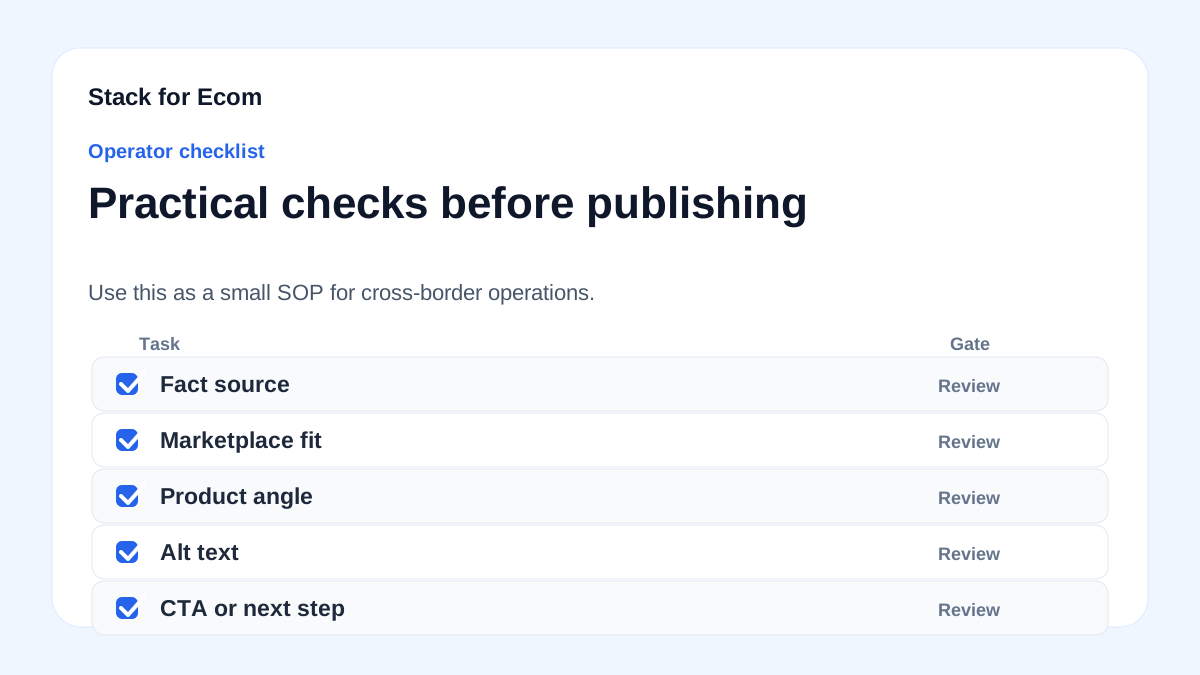
- Confirm the target market and feed language. Free-form text attributes like title and description must use the same language across the feed.
- Write alt text in the same language as the feed's free-form text. Do not mix languages within one feed.
- Keep alt text factual and aligned with the product title, description, and image. Avoid promotional text, all caps, and gimmicky characters.
- Use the product ID [id] attribute as the stable key. It must be unique per product, max 50 characters, and consistent across updates, countries, and languages.
- Check attribute names. Use underscores for multi-word names, such as image_link, and submit supported values in English.
- Validate feed data quality. Incorrect google product category or gtin values, missing variant attributes, low-quality images, and conflicting data between feed and website are common problems.
- Send product data at least every 30 days and meet Google's data quality standards.
- For EEA and Switzerland, confirm your Shopping Comparison Service (CSS) setup and how product data flows.
- If running both Shopping and Performance Max campaigns, make additions or changes in both campaign types.
- For Amazon, use separate campaigns for product groups and start manual keyword targeting with at least 30 keywords and broad match.
- For U.S. imports, ensure the declaration description is in English, detailed, and accurate, and attach the form securely to the outside of the shipment.
- Log alt text changes and feed updates in one place so you can trace conflicts and disapprovals.
Potential pitfalls
- Mixing languages in one feed. Prevention: define one feed language and keep all free-form text, including alt text, in that language.
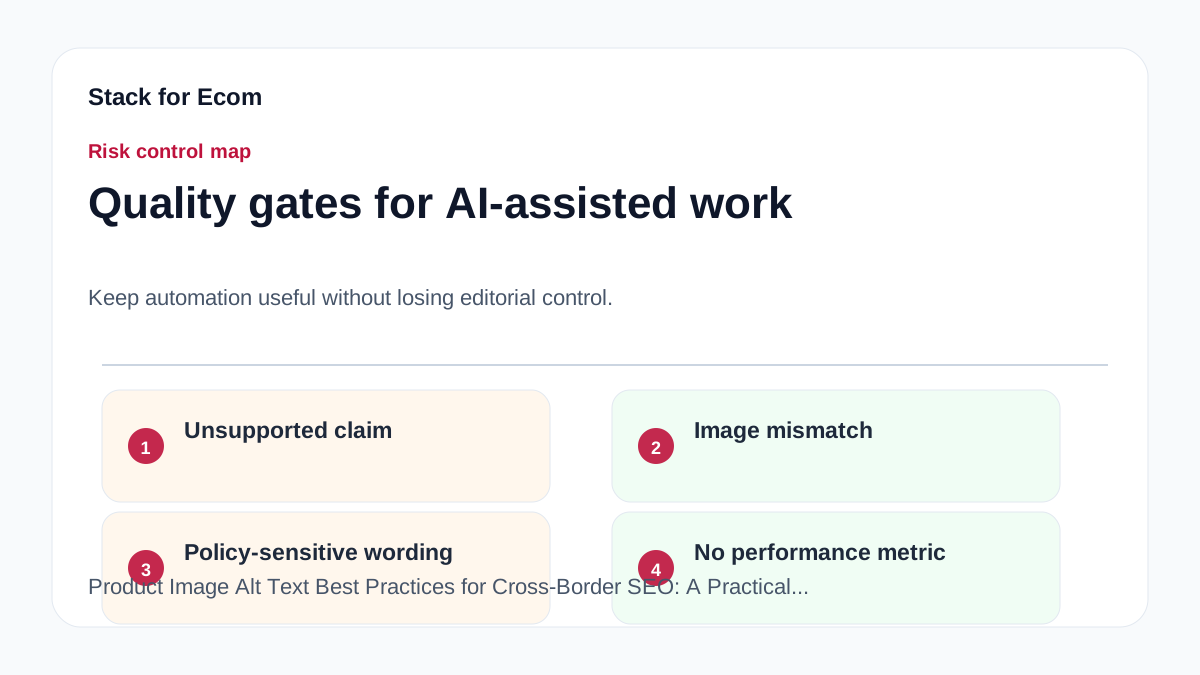
- Alt text that contradicts feed attributes. Prevention: cross-check alt text against title, description, color, size, and material before publishing.
- Missing or inconsistent product IDs. Prevention: use the ID [id] attribute as the stable key and keep it consistent across countries and languages.
- Ignoring market-specific ad paths. Prevention: in the EEA and Switzerland, confirm your CSS setup and how Shopping ads participation works.
- Forgetting dual campaign updates. Prevention: when running Shopping and Performance Max, make additions or changes in both campaign types.
- Weak import documentation. Prevention: ensure the CBP declaration form includes a full and accurate description in English and is attached to the outside of the shipment.
- Assuming alt text rules from one platform apply everywhere. Prevention: verify current guidance for each platform and market; the provided sources do not include alt text best practices.
Suggested visuals
- A workflow diagram showing alt text creation, feed validation, and campaign update steps across Google and Amazon.
- A table comparing feed language rules for attribute names versus free-form text attributes like title, description, and alt text.
- A screenshot-style mockup of a Merchant Center feed row highlighting image_link, id, and title fields.
- A market map showing EEA and Switzerland CSS requirements alongside U.S. import declaration requirements.
- A checklist graphic for the 12-step SOP, suitable for internal training.
- A before-and-after example of alt text that conflicts with feed attributes versus alt text that aligns.
Who this helps / Who should avoid
This helps cross-border ecommerce operators, marketplace sellers, feed managers, and small export teams who need a repeatable way to manage product image alt text alongside feed compliance and ad eligibility. It also helps teams preparing for Google Shopping, Performance Max, or Amazon Sponsored Products who want to reduce data conflicts and disapprovals.
This may not help sellers looking for platform-specific alt text length limits or keyword formulas, because the provided sources do not include those details. It also may not help teams that do not manage product feeds, marketplaces, or cross-border shipping. If you need legal advice on AI disclosure rules or customs classification, consult a qualified professional. Details may vary; check references.
Conclusion
Product image alt text for cross-border SEO is not a standalone trick. It is part of a larger product data discipline that includes feed language consistency, accurate attributes, regular data submission, and market-specific ad paths. The confirmed facts point to a clear operating principle: keep your product data accurate, correctly formatted, and consistent across feed, website, and campaigns. Use the checklist as your SOP, watch the pitfalls, and verify platform guidance when the sources do not cover a detail.
Start with one market and one feed. Write alt text in the feed language, align it with the product title and description, and use the product ID as your stable key. Then expand to additional markets, confirming CSS requirements in the EEA and Switzerland and import declaration requirements for the United States. When you run both Shopping and Performance Max campaigns, update both. When you use AI-generated titles, use the structured title [structured_title] attribute with trained_algorithmic_media where required. Details may vary; check references.
References
- https://ads.tiktok.com/help/article/about-catalogs
- https://support.google.com/google-ads/answer/6275312
- https://support.google.com/merchants/answer/7052112
- https://advertising.amazon.com/library/guides/getting-started-with-sponsored-ads
- https://ads.tiktok.com/help/article/get-started-tiktok-ads-manager
- https://www.cbp.gov/trade/basic-import-export/internet-purchases