TL;DR
- No direct product image background removal tool comparison content is available from the provided sources; the TikTok Ads Help Center pages about catalogs and getting started with TikTok Ads Manager are no longer available or failed to load. Details may vary; check references.
- For ecommerce sellers, image quality and product data accuracy are critical: low-quality images and conflicting data between feed and website are common Merchant Center data problems (Google Merchant Center product data specification).
- Product data must be sent at least every 30 days and meet data quality standards; incorrect or missing information can cause disapprovals, limited eligibility, or incorrect product displays (Google Ads Shopping requirements, Merchant Center product data specification).
- AI regulations in the European Union, India, and New York require ads with certain AI-generated or edited assets to include disclosures or labels (Merchant Center product data specification).
- Exporters and importers must comply with customs rules; misrepresenting value or nature of an item on Customs documents is illegal (CBP internet purchases).
Introduction
If you sell products online, you already know that clean, professional product images drive clicks and conversions. But when you start comparing background removal tools, the decision is not just about which tool produces the prettiest cutout. The real operator problem is that image editing choices feed directly into product data pipelines, advertising eligibility, and cross-border compliance. A background removal tool that outputs images with the wrong dimensions, file format, or AI-generated edits can trigger disapprovals in Google Merchant Center, limit your Shopping campaign eligibility, or violate new AI disclosure rules in the EU, India, or New York. Details may vary; check references.
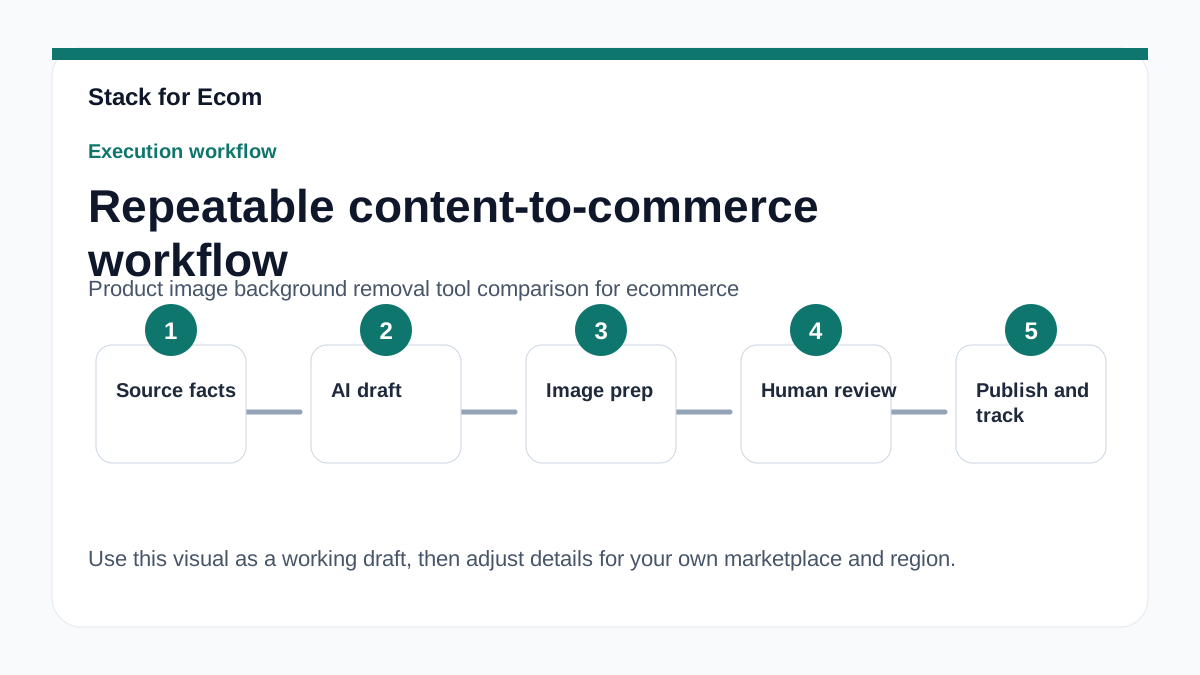
This article is written for sellers, exporters, and small operations teams who need a repeatable way to evaluate background removal tools without breaking their product feed or running afoul of platform policies. We will not invent tool names or fabricate comparison data. Instead, we will give you a structured framework based on confirmed platform requirements and compliance facts. You will learn how to map tool capabilities to Merchant Center data quality standards, how to handle AI-generated or edited assets, and how to keep your export documentation consistent with what you advertise.
Use this guide as a decision checklist. Start with the TL;DR, then read the Main Content sections that match your sales channels. The Step-by-step checklist is designed to be copied into your team's SOP. The Potential pitfalls section lists common mistakes and prevention advice. Because the TikTok Ads Help Center articles about catalogs and getting started with TikTok Ads Manager are no longer available or failed to load, we cannot extract TikTok-specific catalog or seller requirements from those sources. Details may vary; check references.
Main Content
Why background removal is a data quality issue, not just a design choice
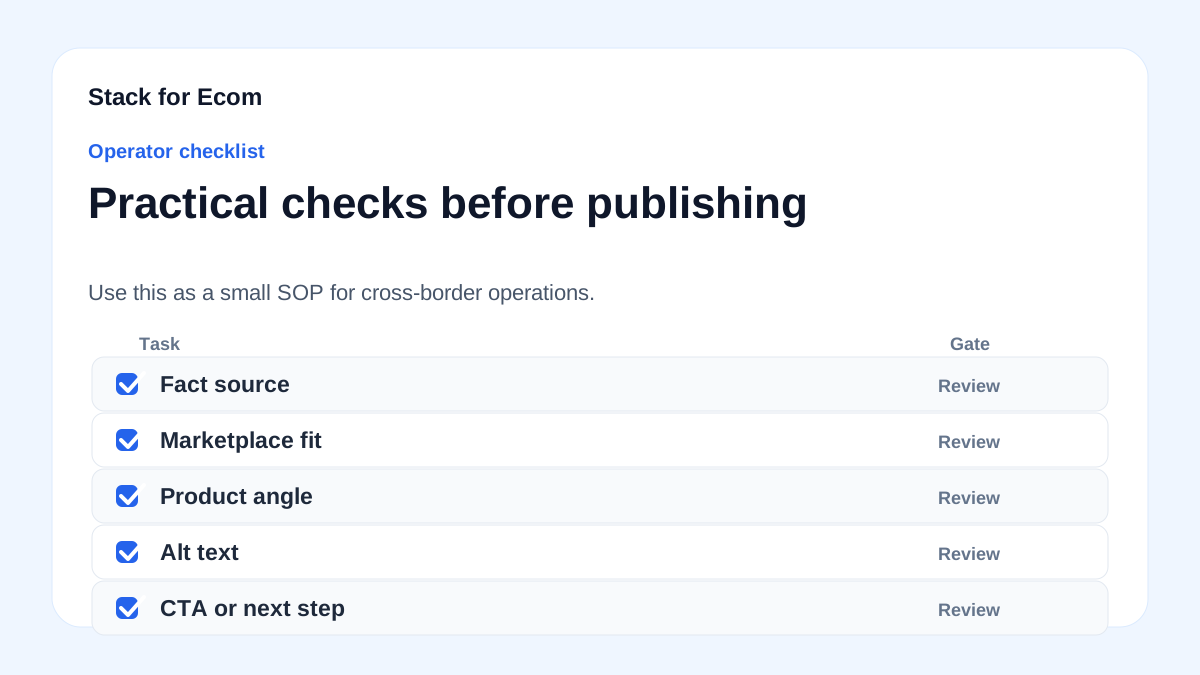
In Google Merchant Center, product data must be formatted according to the product data specification to match products to queries and prevent disapprovals or display issues (Merchant Center product data specification). Low-quality images are explicitly listed as a common data problem, alongside incorrect google_product_category or gtin values, missing variant attributes such as item_group_id, color, or size, and conflicting data between feed and website. That means your background removal workflow must output images that meet the same quality bar as the rest of your feed. If your tool produces inconsistent backgrounds, watermarks, or images that do not match the landing page, you risk disapprovals or limited eligibility.
For example, a small exporter selling handmade ceramics might use a background removal tool to create white-background images for a Shopping campaign. If the tool outputs images with a slightly different white balance than the website's product page, Google's systems may see conflicting data between feed and website. The fix is not to abandon the tool but to standardize output settings and run a sample through Merchant Center diagnostics before scaling.
Another example: a fashion seller with variants in multiple colors and sizes must ensure that background removal does not remove or obscure variant-defining details. Missing variant attributes such as color or size are already a common data problem; an image that makes a navy shirt look black can compound the issue. Always keep a master image and a processed image, and verify that variant attributes in the feed match what the image shows.
Platform requirements you must respect before comparing tools
Before you compare background removal tools, confirm which advertising platforms you will use. Setting up a Performance Max campaign with a Merchant Center feed or a Shopping campaign requires meeting specific requirements (Google Ads Shopping requirements). Business type, products, promotions, and website must meet Shopping ads requirements before advertising begins. Advertisers must set up and link Google Merchant Center and Google Ads accounts. Shopping campaigns and Shopping ads content must comply with Shopping ads policies, which differ from Google Ads policies.
In European Economic Area (EEA) countries and Switzerland, Shopping ads participation is done through one or more Shopping Comparison Services (CSSs) of the advertiser's choice (Google Ads Shopping requirements). This means your background removal tool comparison should also consider whether the tool's output meets CSS requirements, which may differ from Google's baseline. If you run both Shopping and Performance Max campaigns, additions or changes must be made in both campaign types. A tool that exports images in a format that is easy to update in both campaign types will save you time and reduce errors.
Up-to-date product data must be sent at least every 30 days and meet data quality standards defined in the product data specification (Google Ads Shopping requirements). Product data is submitted regularly through Merchant Center. If your background removal tool cannot be integrated into a scheduled feed update, you may fall out of compliance. Look for tools that support batch processing and consistent naming conventions so your feed updates remain predictable.
AI-generated and AI-edited images: disclosure rules to watch
AI regulations in the European Union, India, and New York require ads with certain AI-generated or edited assets to include disclosures or labels informing consumers that the ads were made with AI (Merchant Center product data specification). If your background removal tool uses generative AI to create or substantially edit product images, you may need to disclose that. Titles created using generative AI must use the structured title [structured_title] attribute with the digital_source_type sub-attribute set to trained_algorithmic_media. This is a specific, confirmed requirement that affects how you submit product data, not just how you edit images.
Consider a seller who uses an AI background removal tool to place a product in a lifestyle scene. If the tool generates a new background that did not exist in the original photo, that could count as an AI-generated or edited asset. In the EU, India, or New York, the ad may need a label. The safe approach is to document which images are AI-edited and to test a small campaign before scaling. Details may vary; check references.
Also note that attribute names and values that use supported values must be submitted in English, while free-form text attributes like title and description must use the same language across all attributes in a feed (Merchant Center product data specification). If your background removal tool adds text or labels to images, ensure that text does not conflict with feed language requirements. Keep image text minimal and let the feed attributes carry the structured data.
Feed attributes and image consistency: id, title, and variant data
The ID [id] attribute is required, must be unique per product, max 50 characters, and should remain the same when updating data and across countries or languages (Merchant Center product data specification). When you reprocess images with a background removal tool, do not change the product ID. Keeping the same ID ensures that Merchant Center can match updated images to the correct product and prevents duplicate listings.
The title [title] attribute is required, uses plain text with a maximum of 150 characters, and must accurately describe the product while matching the landing page title (Merchant Center product data specification). If your background removal tool also generates titles or alt text, verify that the output matches the landing page. A mismatch between feed title and landing page title is a common cause of disapprovals. For example, if the tool shortens a title to fit an image overlay, the feed title may no longer match the landing page, creating conflicting data.
Variant attributes such as item_group_id, color, and size must be present when applicable. A background removal tool that crops images differently for each variant can make it harder to verify that the correct variant is shown. Standardize your crop and background settings across variants, and spot-check a sample of variant images against the feed. If you sell in multiple countries or languages, remember that the ID should remain the same across countries or languages, even if titles and descriptions are localized.
Cross-border compliance and export documentation
When goods move from any foreign country to the United States, they are being imported and are subject to specific rules and regulations (CBP internet purchases). The importer, which is the buyer when purchasing from foreign sources, is responsible for assuring that goods comply with state and federal government import regulations. Importing goods that are unsafe, fail to meet health code requirements, or violate quota restrictions could result in fines, penalties, detention, or destruction by CBP. All merchandise imported into the United States, whether used or new, must clear CBP and may be subject to duty payment and applicable import regulations.
A U.S. Customs and Border Protection Declaration form should include a full and accurate description of the merchandise in English and be securely attached to the outside of the shipment (CBP internet purchases). Foreign shipments not accompanied by a U.S. Customs and Border Protection declaration form and an invoice may be subject to seizure, forfeiture, or return to sender. For merchandise shipped through the international postal service valued at less than $2,500 and not subject to quota or restriction, a CBP official will usually prepare import paperwork, assess duty, and release it for delivery. Misrepresenting the value or nature of an item on Customs documents is illegal, and the importer could face legal action and fines for this violation.
Why does this matter for background removal tools? Because your product images and descriptions must be consistent with your customs documentation. If you use a background removal tool to create a lifestyle image that implies a different product composition, material, or origin, you could create a mismatch between what you advertise and what you declare. Keep a single source of truth for product attributes, and use that source for both your feed and your customs paperwork. For general information on the exporting process and resources for U.S. exporters, the International Trade Administration (ITA) offers a beta AI chatbot called the Global Business Navigator, built with Microsoft Azure AI services (ITA ecommerce). The chatbot's knowledge is limited to public information on the Export Solutions web pages of Trade.gov and cannot provide responses specific to a company's product or a specific foreign market. As a beta product, it may occasionally produce inaccurate or incomplete information, and users are advised to double-check responses using provided references or by visiting the Export Solutions web pages on Trade.gov. The chatbot does not collect user information, does not use chat history to learn new information, and all feedback is anonymous; users are instructed not to enter personally identifiable information (PII), sensitive, or proprietary information. Conversations with the chatbot may be reviewed to help ITA improve the tool and address harmful, illegal, or otherwise inappropriate questions. The chatbot supports a wide range of languages, but because it is trained in English and responses are translated, users should verify translations as it may have difficulty with acronyms, abbreviations, and nuances in other languages. The chatbot is trained to decline out of scope or inappropriate requests, and its responses should not be used as legal or professional advice; inaccurate advice would not be a defense to violating export rules or regulations.
Step-by-step checklist
- Confirm your sales channels and advertising platforms. If you use Google Shopping or Performance Max, ensure you meet the requirements for Merchant Center and Google Ads account linking (Google Ads Shopping requirements).
- Review the product data specification and identify all image-related requirements, including low-quality image flags and conflicting data between feed and website (Merchant Center product data specification).
- Inventory your product images. Note which images are original, which are AI-edited, and which need background removal. Document the source of each image.
- Define output standards for your background removal tool: file format, dimensions, background color, and naming conventions. Ensure outputs can be batch-processed for feed updates at least every 30 days (Google Ads Shopping requirements).
- Test the tool on a small sample of products. Run the processed images through Merchant Center diagnostics to check for disapprovals or display issues before scaling.
- Verify that product IDs remain unchanged after image reprocessing. The ID must be unique per product, max 50 characters, and should remain the same when updating data and across countries or languages (Merchant Center product data specification).
- Check that titles and descriptions match the landing page. The title attribute must accurately describe the product while matching the landing page title, max 150 characters, plain text (Merchant Center product data specification).
- If the tool uses generative AI, determine whether AI disclosure rules apply in your target markets. AI regulations in the European Union, India, and New York require ads with certain AI-generated or edited assets to include disclosures or labels (Merchant Center product data specification).
- If you use generative AI for titles, use the structured title [structured_title] attribute with the digital_source_type sub-attribute set to trained_algorithmic_media (Merchant Center product data specification).
- Ensure that attribute names and values using supported values are submitted in English, and that free-form text attributes like title and description use the same language across all attributes in a feed (Merchant Center product data specification).
- Cross-check product images and descriptions against customs documentation. A CBP Declaration form should include a full and accurate description of the merchandise in English and be securely attached to the outside of the shipment (CBP internet purchases).
- Schedule regular feed updates. Up-to-date product data must be sent at least every 30 days and meet data quality standards (Google Ads Shopping requirements).
Potential pitfalls
- Using a tool that outputs inconsistent backgrounds across variants. Prevention: standardize background color and lighting settings, and spot-check variant images against feed attributes such as color and size.
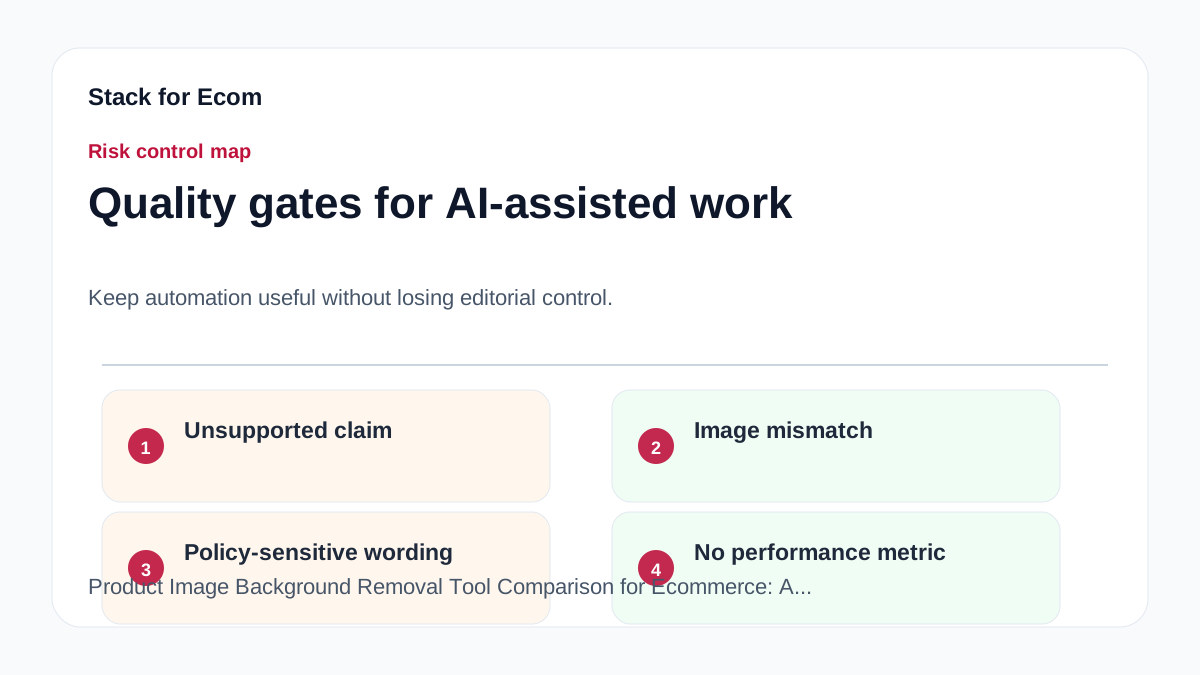
- Ignoring AI disclosure rules. Prevention: identify which images are AI-generated or AI-edited, and check whether EU, India, or New York disclosure requirements apply before launching ads (Merchant Center product data specification).
- Changing product IDs when reprocessing images. Prevention: keep the ID attribute unique, max 50 characters, and unchanged when updating data and across countries or languages (Merchant Center product data specification).
- Letting feed titles drift from landing page titles. Prevention: verify that the title attribute accurately describes the product and matches the landing page title, within 150 characters (Merchant Center product data specification).
- Failing to update product data at least every 30 days. Prevention: integrate background removal and image updates into a scheduled feed refresh that meets the 30-day requirement (Google Ads Shopping requirements).
- Creating mismatches between advertised product and customs declaration. Prevention: use a single source of truth for product attributes, and ensure the CBP Declaration form includes a full and accurate description in English (CBP internet purchases).
- Assuming TikTok catalog or TikTok Ads Manager requirements from unavailable pages. Prevention: the requested TikTok Ads Help Center articles are no longer available or failed to load, so no factual details about catalogs, policies, dates, or seller requirements can be extracted from those sources. Details may vary; check references.
Suggested visuals
- A workflow diagram showing the path from original product photo to background removal tool to Merchant Center feed, with checkpoints for image quality, ID stability, and title matching.
- A comparison table template with columns for tool name, output format, batch processing, AI disclosure support, and feed integration, to be filled in by the reader based on their own testing.
- A screenshot of Google Merchant Center diagnostics highlighting a low-quality image warning or a conflicting data alert, used as a teaching example.
- A decision tree for AI disclosure: does the tool use generative AI? Is the target market EU, India, or New York? If yes, add disclosure or label.
- A sample CBP Declaration form with callouts for full and accurate merchandise description in English and secure attachment to the outside of the shipment.
- A timeline chart showing the 30-day product data update requirement and the steps for reprocessing images without changing product IDs.
Who this helps / Who should avoid
This guide helps ecommerce sellers, exporters, and small operations teams who use or plan to use background removal tools and need to keep their product feeds compliant with Google Merchant Center and Google Ads requirements. It also helps teams that advertise in the European Economic Area (EEA) countries and Switzerland through Shopping Comparison Services (CSSs), and those who need to align product images with customs documentation for cross-border shipments.
This guide is not for readers looking for a ranked list of specific background removal tools with performance benchmarks. No such comparison content is present in the provided sources, and the TikTok Ads Help Center pages about catalogs and getting started with TikTok Ads Manager are no longer available or failed to load. Details may vary; check references. If you need legal or professional advice on export regulations or AI disclosure laws, consult a qualified professional; the ITA chatbot's responses should not be used as legal or professional advice (ITA ecommerce).
Conclusion
Comparing product image background removal tools for ecommerce is not just a design decision. It is a data quality, platform compliance, and cross-border documentation decision. The confirmed facts point to a clear set of requirements: product data must be sent at least every 30 days, images must meet quality standards, IDs must remain stable, titles must match landing pages, and AI-generated or edited assets may need disclosure in the EU, India, and New York. On the export side, customs documentation must include a full and accurate description in English, and misrepresenting value or nature of an item is illegal.
Because the requested TikTok Ads Help Center articles are no longer available or failed to load, we cannot extract TikTok-specific catalog or seller requirements from those sources. Use the checklist in this article as your SOP, test tools on a small sample before scaling, and keep a single source of truth for product attributes. When in doubt, check the references provided and verify current requirements directly with the platforms and customs authorities.
References
- https://ads.tiktok.com/help/article/about-catalogs
- https://support.google.com/google-ads/answer/6275312
- https://support.google.com/merchants/answer/7052112
- https://ads.tiktok.com/help/article/get-started-tiktok-ads-manager
- https://www.trade.gov/ecommerce
- https://www.cbp.gov/trade/basic-import-export/internet-purchases