TL;DR
- Product listing translation is not just about language; it involves platform-specific requirements, compliance, and search optimization.
- Amazon requires unified accounts for certain regions and has specific listing and advertising rules.
- TikTok Shop's catalog help page is currently unavailable; verify details directly.
- Google Merchant Center (used for Shopify via Shopping ads) mandates English for attribute values and consistent language for text attributes.
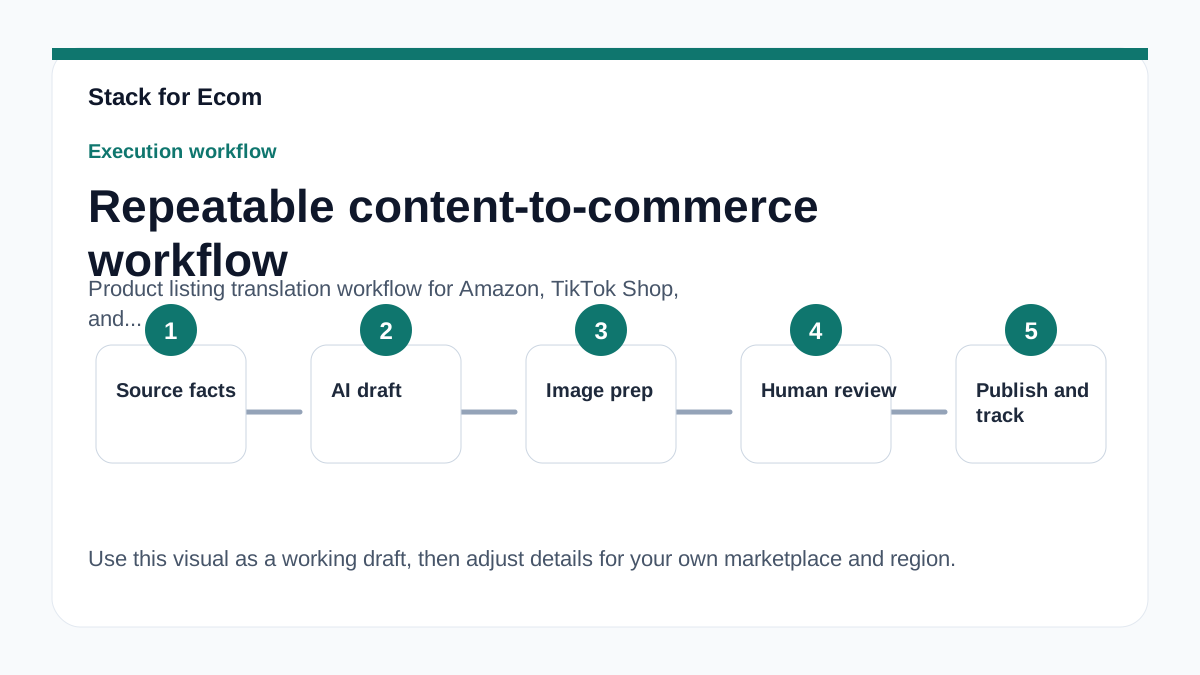
- Build a repeatable workflow: source, translate, adapt, review, and publish across platforms.
- Use tools to manage translation memory and consistency, but always have human review for compliance.
Introduction
Expanding your ecommerce business across Amazon, TikTok Shop, and Shopify means your product listings must speak the language of each market. But translation is more than swapping words—it involves adapting to platform rules, local regulations, and search behavior. Many sellers lose sales because they either skip translation or do it inconsistently, leading to compliance issues, poor ad performance, or even listing suppression.
The business impact is significant: a poorly translated listing can confuse customers, hurt your conversion rate, and waste ad spend. For example, Amazon's global selling requires meeting country-specific tax, regulation, and listing requirements, and Google Merchant Center (which powers Shopping ads for Shopify) has strict language rules. If you ignore these, your products may not appear in search results or ads.
This guide gives you a practical, step-by-step workflow for translating and localizing product listings across these three platforms. You'll learn how to handle platform-specific requirements, avoid common pitfalls, and create a repeatable process that saves time and reduces errors. Use this as your playbook for going global without losing your mind.
Main Content
Understanding Platform-Specific Translation Requirements
Each platform has unique rules that affect how you translate and format your listings. Amazon, for instance, requires sellers to have a unified North America and Brazil account to reach customers in the US, Canada, Mexico, and Brazil. This means your listings must be translated into English (for US/Canada), Spanish (for Mexico), and Portuguese (for Brazil) to comply with local listing requirements. Amazon's global selling documentation emphasizes that product requirements vary by country, so you must use tools like Manage Your Compliance to ensure your translated listings meet local regulations.
TikTok Shop, on the other hand, is newer and less documented. The official 'About catalogs' help page is currently unavailable, returning a 'no longer exists' message and redirecting to the help center home after 5 seconds. This means you cannot rely on that page for translation guidance. Instead, check TikTok's seller center for current catalog requirements, but expect that translations should be accurate and culturally appropriate for each market.
Shopify, being a self-hosted platform, gives you flexibility, but if you use Google Shopping or Performance Max campaigns, you must follow Google Merchant Center rules. For example, attribute names and values for supported-value attributes (like condition) must be in English, even if your product title is in another language. This hybrid approach requires a careful balance between local language and platform technical requirements.
Building a Scalable Translation Workflow
A scalable workflow starts with a source-of-truth product catalog. Maintain a master file with all product details in your primary language (e.g., English). Then, for each target market, create a translation file that includes not just the text but also notes on local compliance. For Amazon, you'll need to adapt titles, bullet points, and descriptions to meet character limits and keyword rules. For Shopify, you'll need to ensure your translated titles and descriptions are consistent across your store and any Google Merchant Center feed.
Use translation memory tools or services to keep consistency across platforms. For example, if you translate a product title for Amazon, reuse that translation for your Shopify store and TikTok Shop, but always adapt to each platform's character limits and style. For instance, Amazon titles have a 200-character limit (though best practice is under 80), while Google Merchant Center titles have a 150-character limit. Your workflow should include a step to truncate or rephrase titles to fit each platform.
Automation can help, but human review is critical for compliance. For Amazon, you must ensure that translated listings meet local tax, regulation, and safety requirements. For Google Merchant Center, you must ensure that all text attributes use the same language in a feed—you cannot mix languages within a single feed. This means you may need separate feeds for each language, which your workflow should account for.
Ad Campaign Localization and Translation
Translation extends to your advertising campaigns. On Amazon, Sponsored Products ads use your product listing text, so your translated listings directly impact ad performance. Amazon recommends starting with automatic targeting, which uses your product information to match search terms. If your listing is in the wrong language, your ads won't show for relevant searches. For manual targeting, you need to translate your keywords as well—not just your listing text.
Google Shopping ads (for Shopify) require a Merchant Center feed that meets data quality standards. The feed must be submitted at least every 30 days, and all attributes must comply with the product data specification. For titles, you must avoid promotional text, all caps, or gimmicky characters. If you use generative AI to create titles, you must use the structured_title attribute with digital_source_type set to trained_algorithmic_media. This is a translation nuance: even if you translate a title, you must ensure it meets these technical requirements.
For TikTok Shop, advertising is still evolving, but you can apply similar principles: translate your ad copy and ensure it aligns with your product listing. Since the catalog help page is unavailable, rely on TikTok's ad policies and best practices from other platforms, but verify directly with TikTok support for the latest requirements.
Compliance and Quality Assurance in Translation
Compliance is non-negotiable. Amazon's global selling requires you to complete tax, regulation, compliance, safety, and listing requirements for each country. For example, if you sell in Europe, you need to comply with EU regulations, which might require translations in multiple languages. Your workflow must include a compliance check for each target market, using tools like Amazon's Manage Your Compliance.
For Google Merchant Center, compliance includes following Shopping ads policies, which differ from standard Google Ads policies. For example, if you sell mobile phones, you must include 'with contract' or 'with payment plan' in the title for US customers. For Russia, you must include age ratings for books at the beginning of the title. These are not translation issues but localization requirements that your translation team must know.
Quality assurance should include a review by a native speaker who understands both the language and the platform. For Amazon, you must ensure that product variants have distinguishing features in the title (e.g., color or size). For Google, IDs must be unique and consistent across languages—use the same ID for the same product across countries to avoid duplication.
Step-by-step checklist
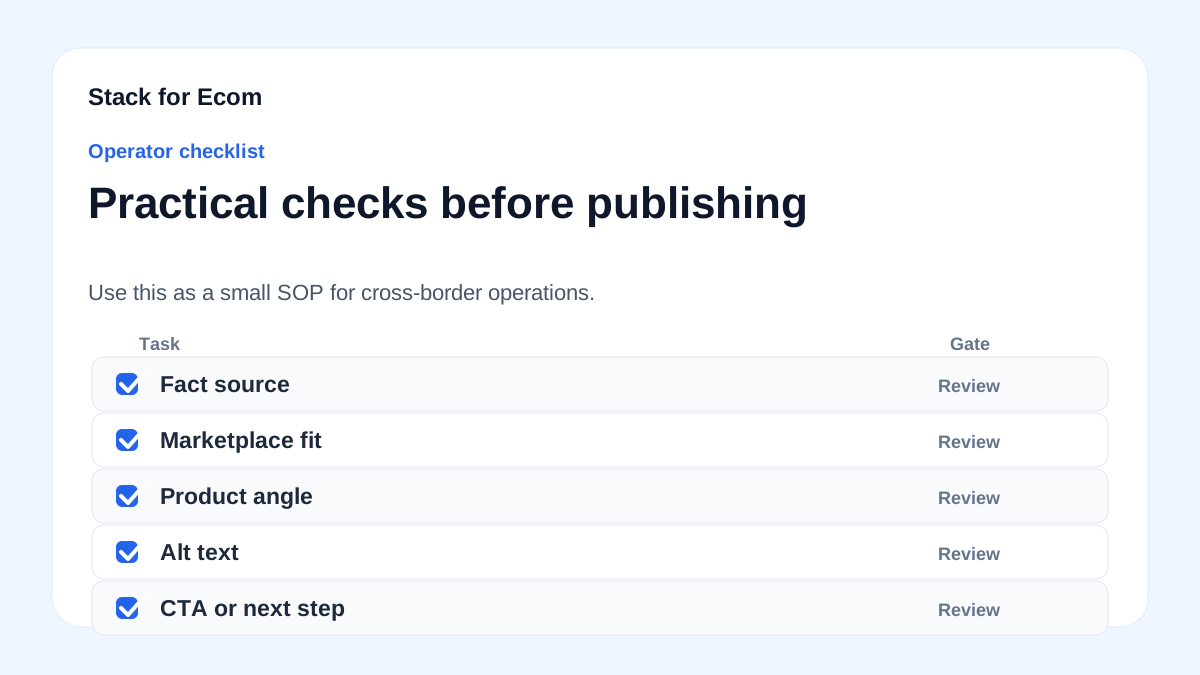
- [ ] Create a master product catalog in your source language with all attributes (title, description, images, IDs).
- [ ] Identify target markets and platforms (Amazon, TikTok Shop, Shopify) and list their specific language and compliance requirements.
- [ ] For each product, create a translation brief that includes character limits, keyword targets, and local compliance notes.
- [ ] Translate titles, descriptions, bullet points, and keywords using professional translators or translation memory tools.
- [ ] Adapt translations to each platform: truncate titles for Google (150 chars) and Amazon (200 chars), add platform-specific phrases (e.g., 'with contract').
- [ ] Ensure Google Merchant Center feeds use English for attribute values and a single language for text attributes per feed.
- [ ] Submit Amazon listings to each regional account (e.g., North America and Brazil, Europe, Asia-Pacific) and complete compliance checks.
- [ ] Set up TikTok Shop catalogs and verify current requirements directly with TikTok, as the help page is unavailable.
- [ ] For ads, create localized campaigns: Amazon Sponsored Products with translated keywords; Google Shopping/Performance Max with a compliant feed.
- [ ] Run a quality assurance review by native speakers to check for cultural appropriateness and platform policy compliance.
- [ ] Monitor performance and update translations based on search term reports and ad data.
Potential pitfalls
- Ignoring platform-specific character limits: Amazon and Google have different title limits. Prevention: create a translation brief with limits for each platform.
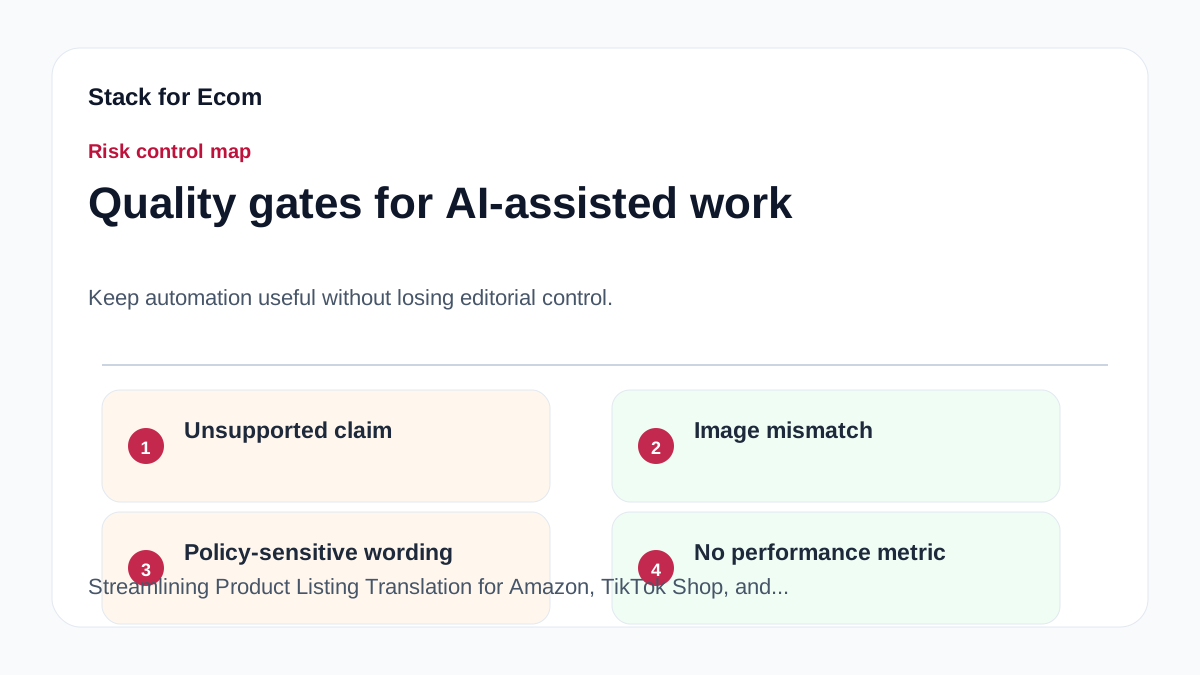
- Mixing languages in Google Merchant Center feeds: This violates the single-language rule for text attributes. Prevention: maintain separate feeds per language.
- Using machine translation without human review: Can lead to compliance issues or cultural faux pas. Prevention: always have a native speaker review.
- Forgetting compliance for Amazon: Each country has unique tax and safety requirements. Prevention: use Amazon's Manage Your Compliance tool and check local regulations.
- Relying on outdated TikTok documentation: The catalog help page is gone. Prevention: contact TikTok support or check seller center for current rules.
- Not updating ad campaigns after translation changes: If you change a listing, you must update ads. Prevention: have a workflow to sync changes across campaigns.
Suggested visuals
- A flowchart showing the translation workflow from master catalog to platform-specific listings.
- A table comparing character limits for titles across Amazon, Google Merchant Center, and TikTok Shop (if known).
- A screenshot of Amazon's Manage Your Compliance dashboard to illustrate compliance checks.
- A diagram showing how to structure Google Merchant Center feeds for multiple languages.
- A before/after example of a product title translated and optimized for Amazon vs Google.
- A checklist infographic for the step-by-step SOP.
Who this helps / Who should avoid
Helps:
- Sellers expanding from one marketplace to multiple countries.
- Ecommerce teams managing listings on Amazon, Shopify, and TikTok Shop simultaneously.
- Marketing managers running cross-border ad campaigns.
- Operations teams looking to standardize localization processes.
Who should avoid:
- Sellers who only operate in a single country with a single language—this workflow may be overkill.
- Businesses without any translation budget or human review capability—automation alone won't ensure compliance.
- Those selling exclusively on TikTok Shop with no other platforms—the unavailable help page makes it risky to rely on third-party guides.
Conclusion
Product listing translation is a strategic process that goes beyond language. By following a structured workflow, you can ensure your listings meet platform-specific rules, comply with local regulations, and resonate with customers. Start by building a master catalog, then adapt for each platform, and always include compliance checks. Use tools to streamline, but never skip human review. With this guide, you're ready to take your products global with confidence.
References
- https://ads.tiktok.com/help/article/about-catalogs
- https://sell.amazon.com/global-selling
- https://advertising.amazon.com/library/guides/getting-started-with-sponsored-ads
- https://support.google.com/merchants/answer/7052112
- https://support.google.com/google-ads/answer/6275312