TL;DR
- A supplier audit checklist for foreign trade quality control helps you verify that goods, documentation, and shipping methods meet import rules before they leave the factory.
- The importer is responsible for ensuring goods comply with state and federal import regulations; non-compliance can lead to fines, penalties, detention, or destruction (CBP).
- Precise cargo descriptions are required regardless of value under 19 CFR § 4.7a, 122.48a, 123.91, 123.92, and 128.21; only the cargo description should be in the commodity description field.
- The Global Business Navigator (ITA) is a beta AI chatbot trained on public Export Solutions content; it cannot give company- or market-specific advice, and users must double-check responses and avoid entering PII or proprietary information.
- Use this guide as a repeatable SOP: audit suppliers, verify importability, confirm shipping and customs broker arrangements, and document everything.
Introduction
Foreign trade quality control often fails not because the product is bad, but because the paperwork, packaging, and shipping method do not match what customs expects. When goods move from a foreign country to the United States, they are imports subject to specific rules and regulations. The importer—not the supplier—is responsible for ensuring compliance, and may face fines, penalties, detention, or destruction for non-compliant goods. A supplier audit checklist turns that responsibility into a set of verifiable steps you can run before every shipment.
The business impact is direct: quota restrictions based on country of origin can delay clearance and incur storage charges, and transportation and handling costs can exceed the purchase price. Misleading or inaccurate information about the nature or value of an item on customs documents is illegal and can trigger legal action and fines. For small operations teams, the difference between a smooth clearance and a costly hold is usually a few checks completed at the right time.
This article gives you a practical, source-based checklist for auditing suppliers in foreign trade quality control. It is written for exporters, importers, and operations teams who need a repeatable process. Use it alongside official references, and treat any AI-generated guidance—including the ITA's Global Business Navigator—as a starting point that must be verified. Details may vary; check references.
Main Content
1. Confirm importability and restrictions before you buy
Before buying from a foreign source, check whether the goods can be legally imported and whether restrictions or special forms apply. This is the first gate in any supplier audit. Certain products, such as dairy from particular countries, may require a permit to import. If you skip this step, you may discover the problem only when the shipment reaches the port of entry, when options are limited and costs are already sunk.
For example, a U.S. buyer sourcing specialty cheese from a supplier in a quota-restricted country should verify whether a permit is needed and whether quota restrictions based on country of origin could delay clearance and incur storage charges. A supplier audit checklist should include a line item for "importability confirmed" with the date, the reference checked, and the person responsible. This turns a vague concern into an auditable record.
The Global Business Navigator, an AI chatbot from the International Trade Administration (ITA), is currently in beta testing and designed to provide general information on the exporting process and resources for U.S. exporters. It is built using Microsoft's Azure AI services and trained on ITA's export-related content. However, its knowledge is limited to public information on the Export Solutions web pages of Trade.gov, and it cannot provide responses specific to a company's product or a specific foreign market. Use it for orientation, not as a substitute for checking the actual regulations. Details may vary; check references.
2. Audit the supplier's documentation and cargo description
Under 19 CFR § 4.7a, 122.48a, 123.91, 123.92, and 128.21, a precise or specific description of merchandise is required regardless of value. A precise cargo description must be clear, concise, in plain language, and detailed enough for U.S. Customs to identify the size, shape, and characteristics of the commodity. Only the cargo description should be included in the field of transmission; superfluous information such as personally identifiable information (PII), type of packaging, and carrier disclaimers should not be transmitted in the commodity description field.
In practice, this means your supplier audit checklist should include a review of the commercial invoice, packing list, and the cargo description that will be transmitted. For example, "plastic parts" is not enough; "injection-molded ABS plastic housings, 12 cm x 8 cm x 3 cm, for consumer electronics" gives customs what it needs. If the supplier routinely writes vague descriptions, that is a quality-control red flag that can lead to delays.
Providing misleading or inaccurate information about the nature or value of an item on customs documents is illegal and the importer may face legal action and fines. Your audit should therefore verify that the declared value matches the transaction and that no one is "helpfully" understating it. Document the review in your checklist so you can show due diligence if questions arise later.
3. Verify shipping method, broker arrangements, and cost impact
Shipping method options are freight, courier service, or international postal service; transportation and handling costs can exceed the purchase price. A supplier audit checklist should capture which method the supplier will use and who is responsible for each leg. If the seller does not arrange postal or door-to-door delivery, the importer must hire a customs broker or clear the goods at the port of entry. That is a resource and cost commitment that should be decided before the order is placed, not after the container arrives.
For example, a small e-commerce operation importing accessories from a supplier that only offers port-to-port freight must budget for a customs broker and inland transport. If the supplier offers door-to-door delivery, confirm what is included and what is not. The checklist should record the chosen shipping method, the broker's name and contact, and the estimated landed cost. This prevents the common surprise where transportation and handling costs exceed the purchase price.
CBP publishes De Minimis volume and value statistics based on the number of Bills of Lading (BOLs) and their declared value at the time of import. In Fiscal Year 2024, total De Minimis volume reached 1.36 billion BOLs with a total declared value of $64.6 billion. This scale shows why precise data matters: even small shipments are part of a system that relies on accurate descriptions and values. Your supplier audit should treat shipping and documentation as one integrated process, not separate tasks. Details may vary; check references.
4. Use ITA and CBP resources correctly, including AI tools
CBP developed an E-Commerce Strategy with four primary goals, identifying private industry and foreign governments as key resources for assessing the e-commerce environment. The strategy includes enforcement initiatives such as streamlining enforcement processes, leveraging partnerships with partner government agencies and foreign governments, and improving data collection from CBP targeting systems and field personnel. For suppliers and importers, this signals that data quality and partnership behavior are part of the compliance environment.
The ITA's Global Business Navigator is a beta product, and as a beta product, the chatbot's responses may occasionally produce inaccurate or incomplete information. Users should always double-check the chatbot's responses using provided references or by visiting the Export Solutions web pages on Trade.gov. The chatbot's responses should not be used as legal or professional advice, and inaccurate advice would not be a defense to violating any export rules or regulations. The chatbot does not collect user information, does not use chat history to learn new information, and all feedback is anonymous. Users should not enter personally identifiable information (PII), sensitive, or proprietary information into the chatbot.
A practical software/tool angle: if your team uses AI assistants for research, keep them in a separate, policy-controlled workflow. Do not paste supplier contracts, buyer names, or proprietary product specs into a public chatbot. Instead, use the chatbot to find public Export Solutions pages, then verify the details on Trade.gov and CBP.gov. This keeps your supplier audit checklist grounded in official sources while still benefiting from faster orientation. Details may vary; check references.
Step-by-step checklist
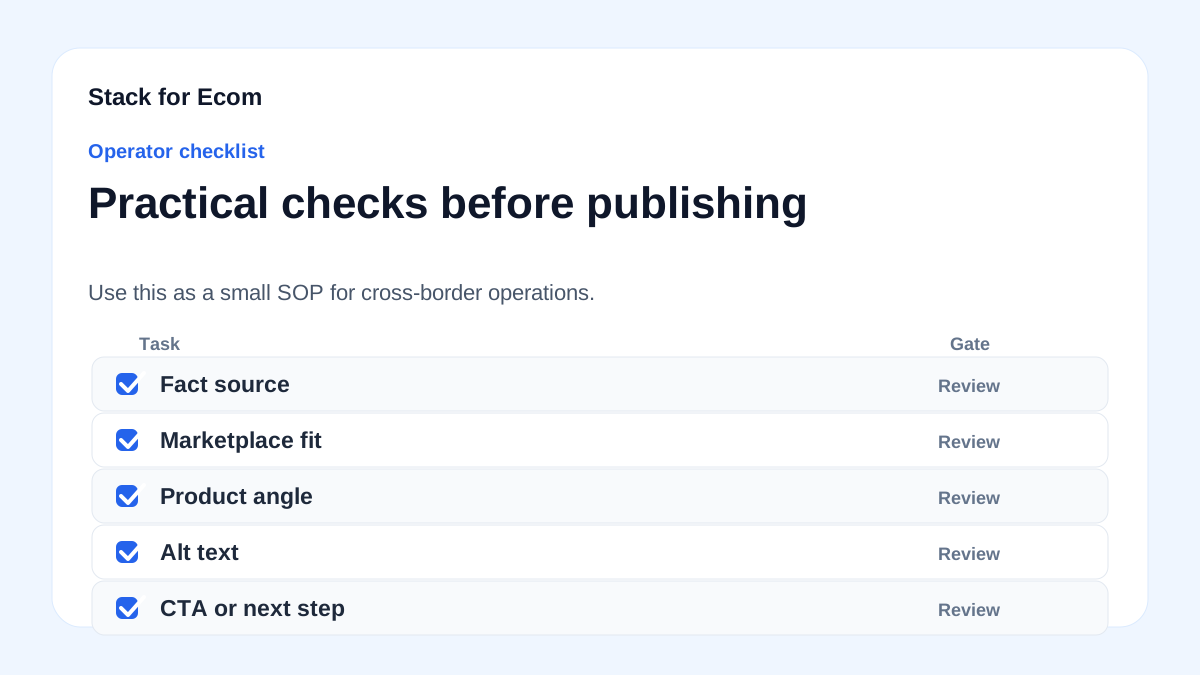
- [ ] Confirm the goods can be legally imported and identify any restrictions or special forms that apply before buying from the foreign source.
- [ ] Check whether a permit is required for the specific product and country of origin (for example, certain dairy from particular countries may require a permit).
- [ ] Verify quota restrictions based on country of origin and assess the risk of clearance delays and storage charges.
- [ ] Review the commercial invoice and packing list for a precise cargo description that is clear, concise, in plain language, and detailed enough for U.S. Customs to identify size, shape, and characteristics.
- [ ] Ensure only the cargo description is in the commodity description field; remove PII, packaging details, and carrier disclaimers.
- [ ] Confirm the declared value matches the transaction and that no misleading or inaccurate information about the nature or value of the item appears on customs documents.
- [ ] Select the shipping method (freight, courier service, or international postal service) and document who arranges each leg.
- [ ] If the seller does not arrange postal or door-to-door delivery, confirm that a customs broker is hired or that the importer will clear the goods at the port of entry.
- [ ] Estimate landed cost, including transportation and handling, and compare it to the purchase price to avoid cost overruns.
- [ ] Record the supplier audit results, date, reviewer, and reference links in a shared log for traceability.
- [ ] Re-audit when the product, country of origin, shipping method, or supplier changes.
Potential pitfalls
- Skipping importability checks. Prevention: make "importability confirmed" the first checklist item and require a reference link before purchase orders are issued.
- Vague cargo descriptions. Prevention: train suppliers on the requirement for a precise description and reject documents that use generic terms like "parts" or "goods."
- Including PII or superfluous information in the commodity description field. Prevention: use a template that separates cargo description from internal notes and carrier disclaimers.
- Assuming the supplier handles customs. Prevention: clarify in writing who arranges postal or door-to-door delivery; if not the seller, budget for a customs broker or port clearance.
- Understating value or misdescribing goods. Prevention: state clearly that misleading or inaccurate information on customs documents is illegal and can lead to legal action and fines; verify declared value against the transaction.
- Treating AI chatbot output as final advice. Prevention: double-check responses using provided references or the Export Solutions web pages on Trade.gov, and never enter PII, sensitive, or proprietary information.
- Ignoring quota and storage risk. Prevention: check quota restrictions based on country of origin and plan for potential clearance delays and storage charges.
Suggested visuals
- A one-page supplier audit checklist template with columns for item, status, reference, reviewer, and date.
- A flowchart showing the import decision path: importability check → permit/quota check → documentation review → shipping method → broker/clearance → landed cost.
- A screenshot-style mockup of a commercial invoice with a highlighted "cargo description" field showing a precise description and a crossed-out PII field.
- A bar chart or table illustrating De Minimis volume and value for Fiscal Year 2024 (1.36 billion BOLs; $64.6 billion declared value).
- A comparison table of shipping methods (freight, courier service, international postal service) with responsibility and cost notes.
- A simple workflow diagram for safe AI tool use: public research → verify on Trade.gov/CBP.gov → document in audit log, with a "no PII/proprietary data" warning.
Who this helps / Who should avoid
This guide helps exporters, importers, e-commerce sellers, and small operations teams who need a repeatable supplier audit process for foreign trade quality control. It is especially useful for teams that source from multiple countries, use freight or courier services, and must produce precise cargo descriptions. It also helps teams that want to use ITA resources, including the Global Business Navigator beta chatbot, without over-relying on AI output.
This guide is not a substitute for legal or professional advice. The chatbot's responses should not be used as legal or professional advice, and inaccurate advice would not be a defense to violating any export rules or regulations. If your product is highly regulated, perishable, or subject to complex quota rules, work with a qualified customs broker or trade attorney. If you cannot verify importability or documentation requirements, pause the order until you can. Details may vary; check references.
Conclusion
A supplier audit checklist is the practical bridge between supplier promises and customs reality. By confirming importability, auditing cargo descriptions, verifying shipping and broker arrangements, and using ITA and CBP resources correctly, you reduce the risk of fines, penalties, detention, destruction, delays, and storage charges. The importer is responsible for compliance, so the checklist should live with the importer's team, not only with the supplier.
Start with the step-by-step checklist in this article, adapt it to your product and country of origin, and keep a dated log of every audit. Use the Global Business Navigator for general orientation if helpful, but double-check its responses and never enter PII, sensitive, or proprietary information. Treat every shipment as an auditable event, and your foreign trade quality control will become a repeatable, defensible process.
References
- https://www.trade.gov/export-solutions
- https://www.trade.gov/ecommerce
- https://www.cbp.gov/trade/basic-import-export/internet-purchases
- https://www.cbp.gov/trade/basic-import-export/e-commerce